


How Does Rhinoplasty Enhance Natural Facial Features?
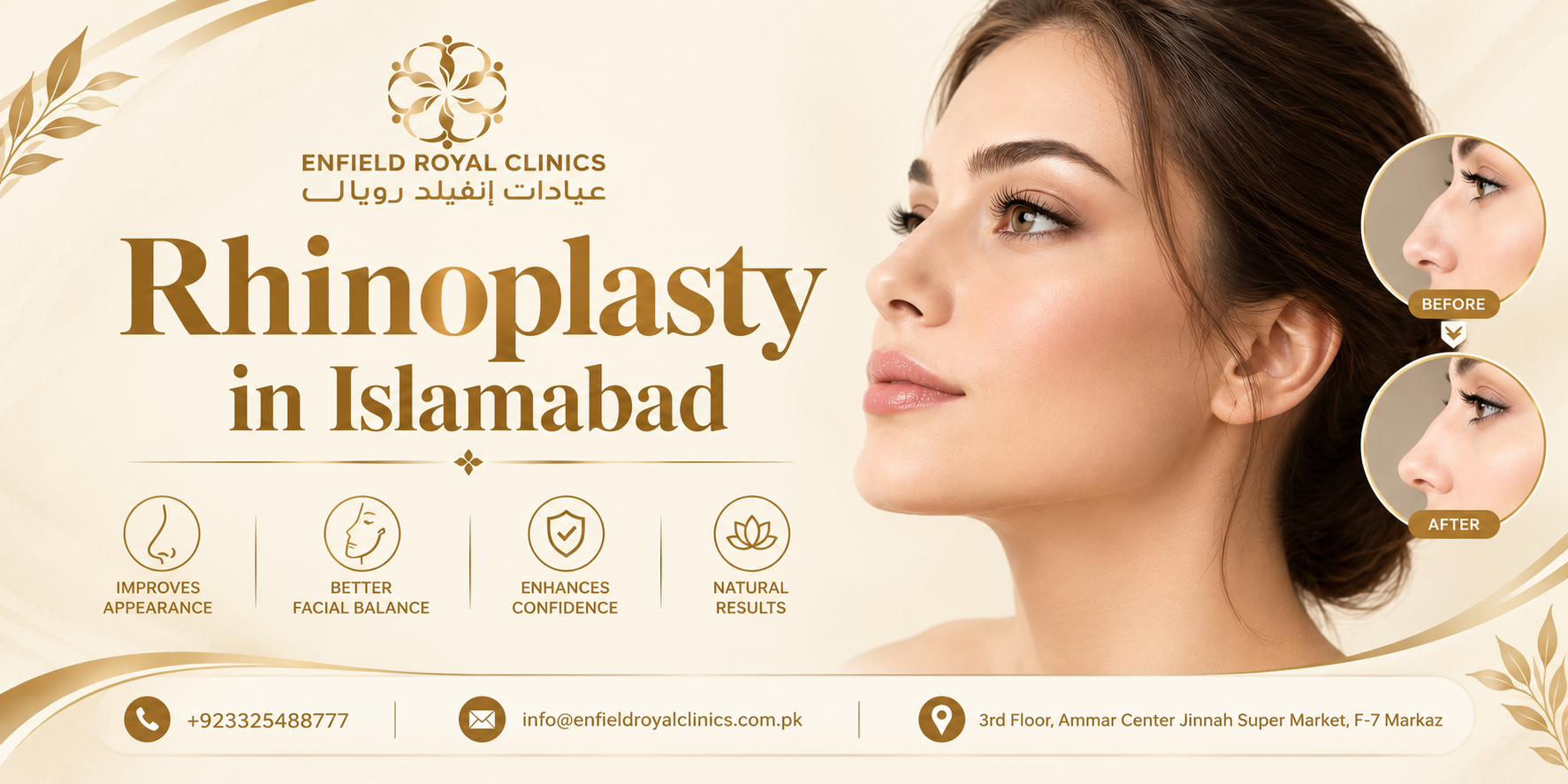
Rhinoplasty is a cosmetic and functional procedure designed to reshape the nose while maintaining harmony with the rest of the face. Since the nose is positioned at the centre of the face, even small changes to its shape, size, or proportions can influence overall facial appearance. The goal of a well-planned procedure is not to create an entirely different look but to improve existing features in a balanced and natural-looking way.
People considering Rhinoplasty in Islamabad often want to understand how nose reshaping can complement their facial structure. The procedure can address concerns such as a prominent nasal bridge, a wide nose, a crooked appearance, or an uneven nasal tip. However, achieving natural results requires careful planning, an understanding of facial proportions, and realistic expectations.
Understanding the Connection Between the Nose and Facial Harmony
Facial harmony depends on how different features relate to one another. The forehead, eyes, cheeks, lips, chin, and nose all contribute to an individual's overall appearance. When the nose appears disproportionate to these features, it may draw more attention than the rest of the face.
Rhinoplasty can help improve this balance by adjusting selected nasal features. For example, reducing a prominent bridge may create a smoother profile, while refining a wide or rounded tip can make the nose appear more defined.
The objective is to maintain the person's natural facial identity. A suitable nose shape for one individual may not look appropriate on someone with different facial proportions. Therefore, treatment planning should consider the complete facial structure rather than focusing on the nose alone.
How Rhinoplasty Improves the Nose Profile
The side profile is one of the main areas people consider when exploring nose reshaping. A noticeable hump, uneven bridge, or downward-pointing tip can affect how the nose relates to the forehead, lips, and chin.
Rhinoplasty can address several profile concerns, including:
-
Nasal bridge irregularities: Smoothing a prominent bump can create a more even bridge.
-
Nose projection: Adjusting how far the nose extends from the face can improve its proportions.
-
Drooping nasal tip: Refining the tip may create a more balanced appearance.
-
Crooked nose: Correcting certain structural irregularities can improve visible alignment.
-
Overall nose proportions: Carefully planned changes can help the nose complement other facial features.
Not every patient requires major reshaping. In some cases, relatively small adjustments can make a noticeable difference while preserving the individual's original appearance.
Can Rhinoplasty Enhance Other Facial Features?
Although rhinoplasty focuses on the nose, its results can influence the appearance of surrounding facial features. A more balanced nose may help the eyes, lips, cheeks, and chin appear more proportionate.
For instance, refining a broad nasal tip may make the central area of the face look more defined. Adjusting a prominent bridge can create a smoother transition between the forehead and nose. Similarly, correcting certain nasal asymmetries may improve the overall balance of the face.
However, rhinoplasty does not directly change the shape of the eyes, lips, or cheeks. Its influence on these features is visual rather than structural. The procedure works by improving the relationship between the nose and the surrounding facial anatomy.
This distinction is important for people considering Rhinoplasty in Islamabad, as realistic expectations help them understand what the procedure can and cannot achieve.
The Importance of Personalised Rhinoplasty Planning
Every face has its own structure, proportions, and natural characteristics. For this reason, rhinoplasty should not follow a single nose shape or beauty standard. A personalised treatment plan helps ensure that the proposed changes suit the individual's facial anatomy.
During an assessment, a qualified surgeon generally considers:
-
Facial proportions: The nose is evaluated in relation to the forehead, cheeks, lips, and chin.
-
Skin thickness: Thick or thin nasal skin can influence how clearly the underlying structure appears after surgery.
-
Nasal cartilage and bone: These structures determine the nose's shape, support, and stability.
-
Breathing function: Internal nasal structures are assessed to identify possible functional concerns.
-
Patient expectations: Desired changes are discussed to determine whether they are realistic and suitable.
This planning process helps reduce the risk of an overdone appearance. It also allows the surgeon to consider both cosmetic goals and nasal function before recommending treatment.
What to Expect During Rhinoplasty Recovery
Recovery is an important part of the overall rhinoplasty experience. After surgery, temporary swelling, bruising, congestion, and mild discomfort may occur. These effects vary depending on the surgical technique, the extent of correction, and individual healing patterns.
During the first few days, patients are generally advised to rest, keep their head elevated, and avoid activities that could place pressure on the nose. A protective splint may be used to support the nasal structure during the early healing period.
Most visible bruising and significant swelling gradually improve over the following weeks. However, subtle swelling, particularly around the nasal tip, may take several months to settle. Final results can take up to a year or sometimes longer to become fully apparent.
Patients should follow their surgeon's aftercare instructions, attend follow-up appointments, and avoid strenuous exercise until they receive medical clearance. They should also contact their healthcare provider if they experience severe pain, heavy bleeding, fever, or other unexpected symptoms.
Choosing Rhinoplasty for Natural-Looking Results
Natural-looking rhinoplasty depends on more than changing the nose's size or shape. It requires an approach that respects the individual's facial identity and maintains the structural support needed for normal breathing.
A suitable candidate should understand the potential benefits, limitations, and risks of surgery. Rhinoplasty may not be appropriate for everyone, and the decision should be based on an individual medical assessment rather than social pressure or unrealistic beauty expectations.
Potential risks include infection, bleeding, scarring, changes in sensation, breathing difficulties, asymmetry, and dissatisfaction with the cosmetic outcome. Some patients may require additional surgery if the result does not meet functional or aesthetic goals.
People researching Rhinoplasty in Islamabad should look for a qualified surgeon with relevant experience in nasal surgery. Reviewing before-and-after photographs, discussing possible outcomes, and asking about recovery and complications can help patients make an informed decision.
For more information visit Enfield royal clinic in islamabad
Frequently Asked Questions
1. Does rhinoplasty make facial features look more balanced?
Yes. Rhinoplasty can improve facial balance by adjusting the nose's size, shape, or proportions. A well-planned procedure aims to make the nose complement the surrounding features rather than dominate the face.
2. Can rhinoplasty maintain a natural appearance?
Yes. Natural-looking results are possible when the surgical plan considers the individual's facial structure, skin thickness, and nasal anatomy. The goal is usually to enhance existing features rather than create an artificial appearance.
3. How long does it take to see the final rhinoplasty results?
Initial improvements become visible as swelling decreases over the first few weeks. However, complete healing can take 12 months or longer, especially around the nasal tip.
4. Can rhinoplasty improve breathing as well as appearance?
Yes. When structural problems affect airflow, functional rhinoplasty may improve nasal breathing while addressing selected cosmetic concerns. The appropriate approach depends on an examination of the internal and external nasal structures.
Conclusion
Rhinoplasty can enhance natural facial features by improving the nose's shape, proportions, and relationship with the surrounding areas. Whether the concern involves a prominent bridge, a wide tip, or nasal asymmetry, carefully planned changes may create a more harmonious appearance without removing the individual's natural identity.
For anyone considering Rhinoplasty in Islamabad, understanding the procedure, recovery process, potential risks, and realistic outcomes is essential. A personalised consultation with a qualified surgeon can help determine whether nose reshaping is an appropriate option.

 English
 Arabic
 French
 Spanish
 Portuguese
 Deutsch
 Turkish
 Dutch
 Russian
 Romaian
 Portuguese (Brazil)
 Greek