


SEO Competitor Analysis: Find New Ranking Opportunities
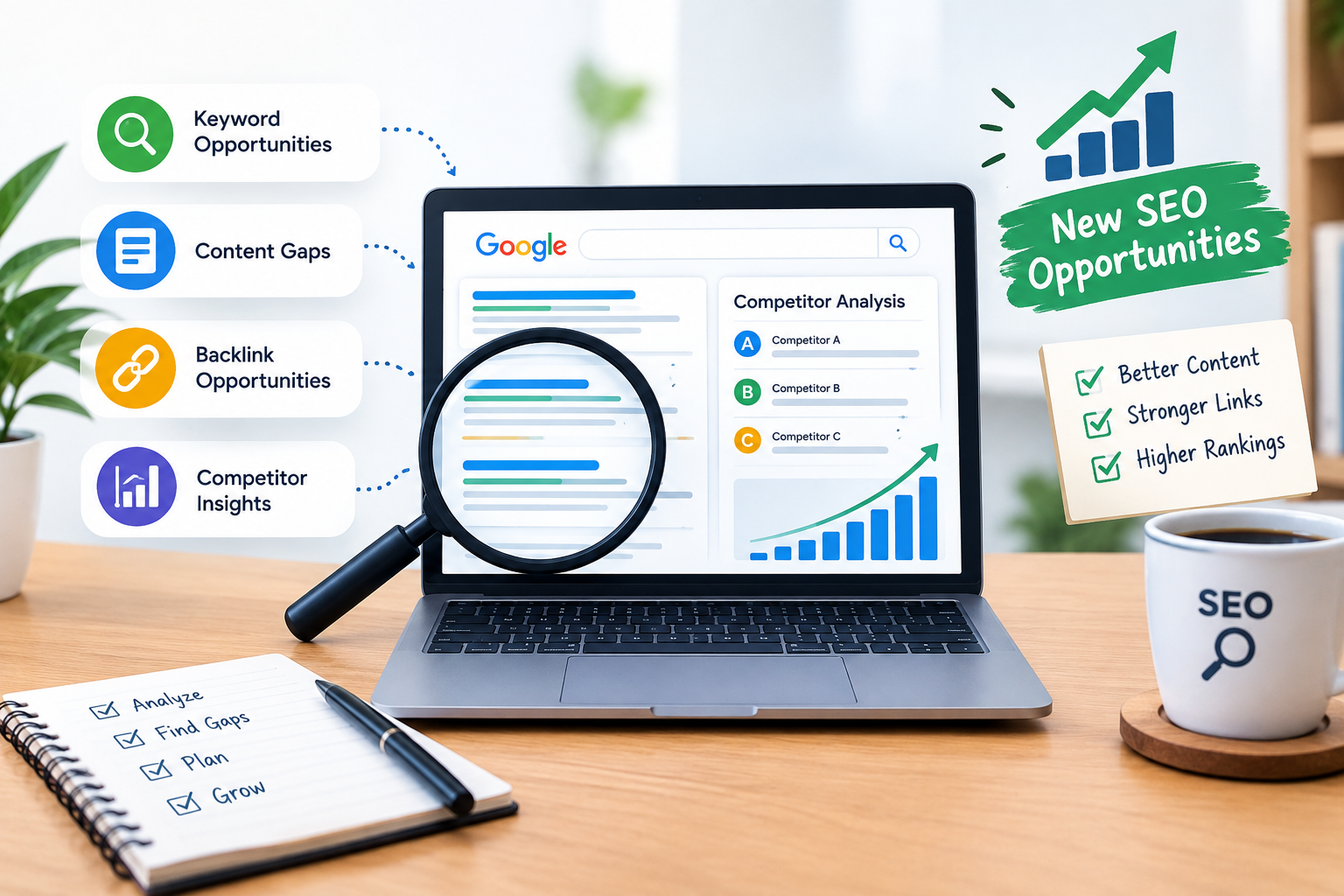
SEO can become challenging when your website is not getting the rankings, traffic, or leads you expected. One reason may be that your competitors are targeting search opportunities you have not discovered yet. SEO competitor analysis helps you understand what other websites are doing well, identify gaps in your own strategy, and find practical ways to improve your search visibility. Whether you manage a small business website or a growing brand, learning from competitors can help you make smarter SEO decisions. You can also explore the SEO approach and digital growth strategies shared on Muhammad Ayaad's website for additional insights.
What Is SEO Competitor Analysis?
SEO competitor analysis is the process of studying websites that compete with yours in search engine results. The goal is to understand which keywords they target, what type of content they publish, where their backlinks come from, and how their websites perform.
Your SEO competitors are not always your direct business competitors. For example, two companies may offer different services but compete for the same informational keyword on Google.
By examining these websites, you can discover what is working in your industry and use those insights to improve your own SEO strategy. The purpose is not to copy competitors but to identify opportunities they may have overlooked.
1. Discover Keywords Your Competitors Are Ranking For
Keyword research is one of the most valuable parts of competitor analysis. Your competitors may already be ranking for search terms that are relevant to your business but missing from your website.
Start by identifying websites that appear regularly for your target keywords. Then use SEO tools such as Ahrefs, Semrush, or Ubersuggest to explore their organic keyword rankings.
Pay attention to:
-
Relevant keywords bringing organic traffic.
-
Long-tail keywords with specific search intent.
-
Keywords where competitors rank on the second page.
-
Search terms that match your products or services.
-
Topics your website has not covered yet.
For example, if you offer web development services, a competitor might be receiving traffic from searches such as "website design for small businesses" or "how much does a business website cost?"
These keywords could inspire useful content for your own website.
2. Find Content Gaps in Your SEO Strategy
A content gap exists when your competitors cover useful topics that your website has not addressed properly.
This does not mean you should publish an article for every keyword they target. Instead, look for topics that are relevant to your audience and offer genuine value.
Compare your website with two or three competitors and review their blogs, service pages, and resource sections.
Ask yourself:
-
Are they answering questions your audience frequently asks?
-
Do they cover subtopics missing from your articles?
-
Are their guides more detailed or easier to understand?
-
Do they provide examples, comparisons, or practical solutions?
Suppose a competitor has published a detailed guide about local SEO mistakes, while your website only has a general local SEO page. You could create a more helpful article covering common mistakes, practical solutions, and useful tools.
This approach helps you build topical coverage instead of publishing content without a clear purpose.
3. Analyze Competitor Backlinks to Find Link-Building Opportunities
Backlinks remain an important part of off-page SEO. Studying competitor backlink profiles can reveal websites, publications, and industry resources that may also be relevant to your business.
Use backlink analysis tools to check which websites link to your competitors. Look for guest posting opportunities, industry directories, resource pages, and relevant business publications.
However, do not focus only on the number of backlinks. Check whether the linking websites are relevant, trustworthy, and useful to your target audience.
For example, if a competitor receives links from marketing blogs and business publications, you can research those websites to see whether they accept original guest contributions.
The aim should be to earn relevant links through valuable content and genuine relationships, not to build as many backlinks as possible.
4. Compare Website Content and On-Page SEO
Sometimes competitors rank higher because their pages provide clearer information and a better experience.
Review their important pages and compare elements such as:
-
Page titles and meta descriptions.
-
Heading structure and content organization.
-
Keyword relevance and search intent.
-
Internal linking between related pages.
-
Images, examples, and useful supporting information.
For instance, if a competitor's service page explains its process, benefits, pricing factors, and frequently asked questions, while yours contains only a short description, there may be an opportunity to improve your content.
A useful competitor review should also consider website performance and usability. Better content is important, but visitors should also be able to navigate and understand your website easily.
5. Use Data to Identify Your Biggest SEO Opportunities
Competitor research becomes more valuable when you combine it with your own website data. Instead of making decisions based on assumptions, compare keyword rankings, organic traffic, backlink profiles, and content performance.
For example, a competitor might rank for 500 keywords, but only 30 of those may be relevant to your business. Those 30 keywords could provide a more realistic starting point for your SEO campaign.
A structured data analysis service can help turn website and competitor performance information into useful insights for planning improvements.
Focus on opportunities that have a clear connection to your business goals, audience needs, and available resources.
6. Identify Competitors' Weaknesses and Uncovered Opportunities
Competitor analysis is not just about finding what others do well. It can also reveal areas where their websites are missing important information or providing a poor user experience.
Look for:
-
Outdated articles that need updated information.
-
Pages that do not fully answer search queries.
-
Missing service-related topics.
-
Weak internal linking.
-
Poor mobile usability.
-
Limited coverage of specific customer questions.
These gaps can help you create content that is more useful and relevant.
For example, if several competitors publish general guides about SEO but none explain how small businesses can prioritize SEO tasks with a limited budget, that could be a valuable content opportunity.
Practical Steps to Turn Competitor Research Into Action
Collecting competitor data is only useful when you turn it into an actionable plan. Start with a simple process:
-
Identify three to five websites competing for your target keywords.
-
Review their organic keywords and top-performing pages.
-
Find relevant keywords missing from your website.
-
Compare their backlink sources with your own.
-
Identify content gaps and areas for improvement.
-
Prioritize opportunities based on relevance, difficulty, and business value.
-
Monitor your progress through Google Search Console and SEO tools.
You do not need to fix everything at once. Start with realistic opportunities that can improve your website's visibility and attract the right audience.
Final Thoughts
SEO competitor analysis helps you understand your position in search results and discover opportunities that may otherwise go unnoticed. By researching competitor keywords, content, backlinks, and website performance, you can identify gaps and make better decisions about your SEO strategy.
Remember, successful competitor research is not about copying another website. It is about learning from available data, understanding what your audience needs, and creating something more useful. Review your competitors regularly, prioritize meaningful improvements, and use the insights to build a stronger long-term SEO strategy.
Frequently Asked Questions
1. What is SEO competitor analysis?
SEO competitor analysis is the process of reviewing competing websites to understand their keywords, backlinks, content strategies, and search performance.
2. Why is competitor analysis important for SEO?
It helps identify keyword gaps, content opportunities, backlink sources, and areas where your website can improve its search visibility.
3. Which tools can I use for SEO competitor analysis?
Ahrefs, Semrush, Ubersuggest, and Google Search Console are useful tools for researching competitors and monitoring your own website.
4. How many competitors should I analyze?
Start with three to five relevant websites. This gives you enough information to identify common strategies and useful opportunities without making the research unnecessarily complicated.
5. How often should I perform competitor analysis?
Review your main competitors every few months and whenever you notice significant changes in rankings, traffic, or industry competition.

 English
 French
 Spanish
 Portuguese
 Deutsch
 Turkish
 Dutch
 Italiano
 Russian
 Romaian
 Portuguese (Brazil)
 Greek