


Central Nervous System (CNS) Therapeutics Market to Hit USD 233.8 Billion by 2036; China Leads at 7.6% CAGR, UK Follows at 6.6%, Germany at 6.4%
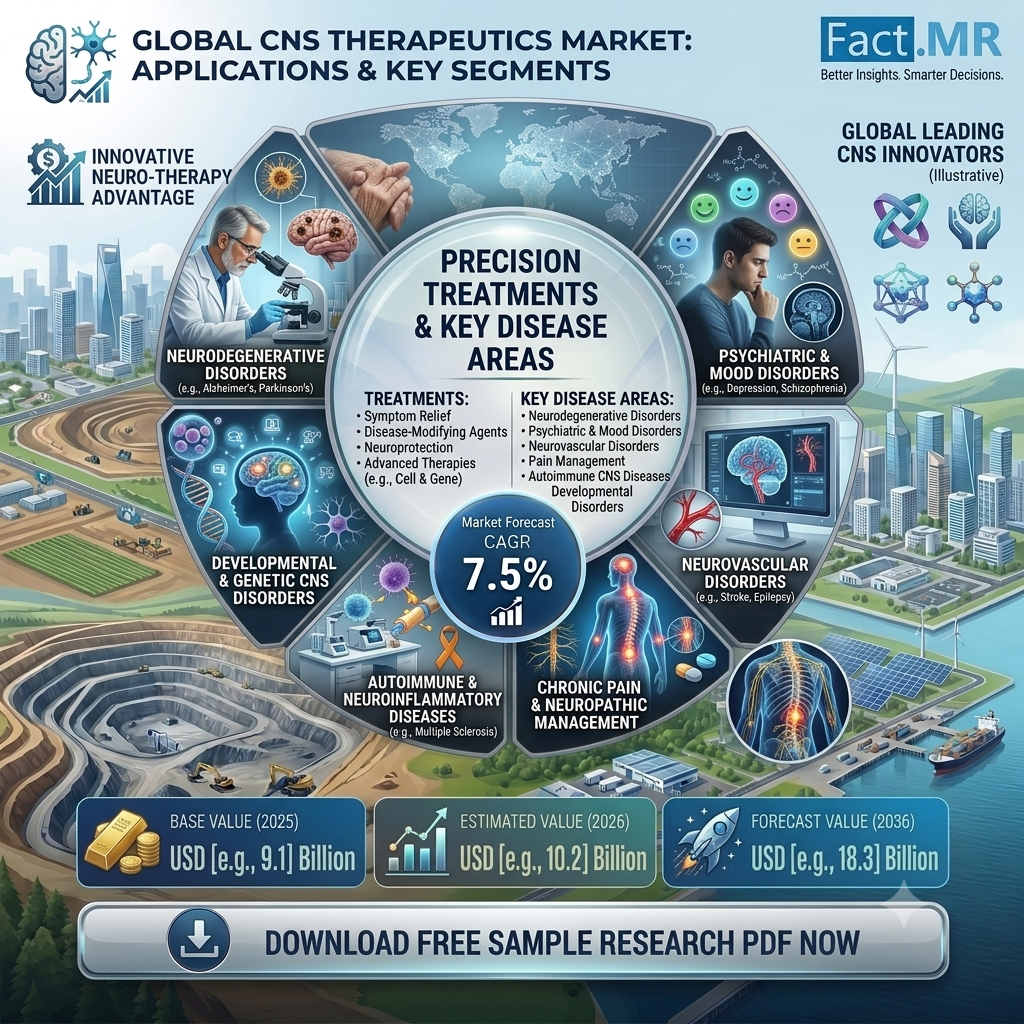
Demand for central nervous system (CNS) therapeutics is expected to increase from USD 135.6 billion in 2026 to USD 233.8 billion by 2036, registering a 5.6% CAGR over the forecast period. Fact.MR attributes this expansion to the increasing prevalence of neurological and psychiatric disorders, aging populations, and advances in biologic and gene-based therapies. The market was valued at USD 128.4 billion in 2025 and is projected to generate an incremental opportunity of approximately USD 98.2 billion between 2026 and 2036.
The growing burden of Alzheimer's disease, Parkinson's disease, epilepsy, depression, and other CNS conditions is creating sustained demand for pharmaceutical treatment. Greater awareness of mental health disorders and expanding insurance coverage are increasing access to prescription therapies. Meanwhile, pharmaceutical manufacturers are investing in monoclonal antibodies, non-opioid pain treatments, and emerging gene therapies to address conditions with limited treatment options.
Get detailed market forecasts, competitive benchmarking, and pricing trends:
https://www.factmr.com/connectus/sample?flag=S&rep_id=7292
Pain Management Retains Dominant Market Position
By therapeutic segment, pain management accounted for 26.8% of the CNS therapeutics market in 2025. Its leading position reflects the widespread prevalence of chronic pain conditions, including neuropathic pain, migraine, and musculoskeletal disorders requiring continued medication. The transition toward non-opioid therapies is also influencing treatment selection as healthcare providers seek alternatives to conventional opioid-based pain management.
Antipsychotics represented approximately 20.3% of segment demand, supported by treatment requirements for schizophrenia and bipolar disorder. Antidepressants remain another important category as diagnosis rates improve and access to psychiatric care expands.
Neurological disorders accounted for 38.7% of application demand in 2025, reflecting expenditure on Alzheimer's disease, Parkinson's disease, epilepsy, and multiple sclerosis treatments. The introduction of disease-modifying therapies for Alzheimer's disease is adding a higher-value treatment category alongside established pharmaceutical options.
Hospitals represented 49.0% of end-use demand, supported by specialist prescribing and inpatient neurological treatment. Conventional CNS therapeutics accounted for 45.8% of product demand, while drug development technology held 56.7% of technology share. Established small-molecule medicines continue to serve large patient populations, although biologic therapies are gaining commercial importance.
China, UK, and Germany Show Strong Growth Potential
China is projected to register the highest country-level growth, with CNS therapeutics demand expanding at a 7.6% CAGR from 2026 to 2036. Rapid population aging and increasing prevalence of neurodegenerative diseases are supporting market development. Expansion of the National Reimbursement Drug List is improving patient access to branded CNS medicines, including specialty treatments. Domestic pharmaceutical development is also contributing to competition alongside multinational manufacturers.
The UK is expected to record a 6.6% CAGR through 2036. The country's established healthcare infrastructure and clinical research capabilities support the introduction of neurological and psychiatric therapies. Health technology assessment and reimbursement decisions remain important considerations for manufacturers seeking access to patients receiving specialist CNS treatment.
Germany is forecast to advance at a 6.4% CAGR during the same period. Its established pharmaceutical research infrastructure, specialist hospitals, and structured reimbursement framework are supporting CNS therapeutic adoption. The country's AMNOG health technology assessment system provides market access pathways for medicines demonstrating additional therapeutic benefits. German university hospitals also contribute to clinical research involving new neurological treatments.
The United States remains the largest individual country market, contributing USD 50.738 billion in 2025 and recording a projected 7.2% CAGR through 2036. Established specialty pharmacy networks, broader insurance coverage, and growing adoption of biologic therapies are supporting expansion. Medicare coverage decisions for Alzheimer's treatments are particularly relevant to patient access.
South Korea is expected to register a 6.8% CAGR, supported by expanding national health insurance coverage for specialty CNS medicines and established clinical trial infrastructure.
Competitive Landscape
Competition in the CNS therapeutics market includes pharmaceutical manufacturers with established neuroscience portfolios, specialty drug development capabilities, and global distribution networks. Key companies profiled by Fact.MR include AbbVie Inc., Pfizer Inc., Janssen Pharmaceuticals Inc., Novartis AG, H. Lundbeck A/S, and Eli Lilly and Co.
AbbVie accounted for 16.0% of the market, supported by its neuroscience portfolio covering migraine, psychiatric disorders, and emerging neurological treatments. Pfizer and Janssen Pharmaceuticals maintain positions across established CNS treatment categories, while Novartis and H. Lundbeck focus on specialized neurological and psychiatric drug development.
Other companies covered in the report include Alkermes Plc., Neurocrine Biosciences Inc., Takeda Pharmaceutical Co. Ltd., AstraZeneca Plc., Merck and Co. Inc., and Sanofi.
Competition is increasingly influenced by clinical effectiveness, regulatory approvals, reimbursement eligibility, and treatment accessibility. Manufacturers are also investing in differentiated biologics and specialty medicines as generic competition affects revenue from established antidepressant and antipsychotic products.
Biologic Therapies and Drug Development Shape the Market
The CNS therapeutics market is entering a period of pharmaceutical innovation as companies advance biologic treatments for neurodegenerative diseases. The approval of anti-amyloid therapies, including lecanemab and donanemab, has established a new treatment category for Alzheimer's disease. These medicines are creating commercial opportunities, although clinical effectiveness, treatment costs, and reimbursement restrictions remain important considerations.
Fact.MR also highlights progress in gene therapies and cell-based treatments for rare neurological conditions. Development programs targeting spinal muscular atrophy, Huntington's disease, and other CNS disorders are expanding the range of potential therapeutic approaches.
Drug delivery remains a major challenge because the blood-brain barrier restricts access to neurological targets. Clinical trial complexity and high development costs continue to influence pharmaceutical investment decisions.
In 2025, Eli Lilly expanded commercial availability of its Alzheimer's therapy donanemab across additional markets. AbbVie also strengthened its migraine portfolio through an expanded indication for Qulipta, while H. Lundbeck advanced a next-generation antidepressant candidate into Phase 3 trials in early 2026, according to Fact.MR.
As neurological disease prevalence increases and pharmaceutical research advances, CNS therapeutics are expected to remain an important area of healthcare investment. Continued development of biologics, improved reimbursement access, and new treatment approaches will influence market opportunities through 2036.
Top Reports:
https://adamaamresearch.blogspot.com/2026/10/graphic-design-market-size-to-reach-usd.html
https://net-pals.com/blogs/62029/Global-Graphic-Design-Market-Forecast-to-Hit-USD-110-5
https://acmingle.com/blogs/34080/Global-Graphic-Design-Market-Outlook-USD-110-5-Billion-by
https://ikofficial.com/blogs/62193/Global-Graphic-Design-Market-Set-to-Reach-USD-110-5
About Fact.MR
Fact.MR is a market research and consulting company providing market intelligence, competitive analysis, and forecasting across global industries. Its research supports businesses with data-driven insights into emerging markets, technology trends, competitive dynamics, regional opportunities, and changing demand patterns.

 English
 Arabic
 French
 Spanish
 Portuguese
 Deutsch
 Turkish
 Dutch
 Italiano
 Russian
 Romaian
 Portuguese (Brazil)