


Overcrowding in Dhaka: Why Smart Residential Planning Matters More Than Ever
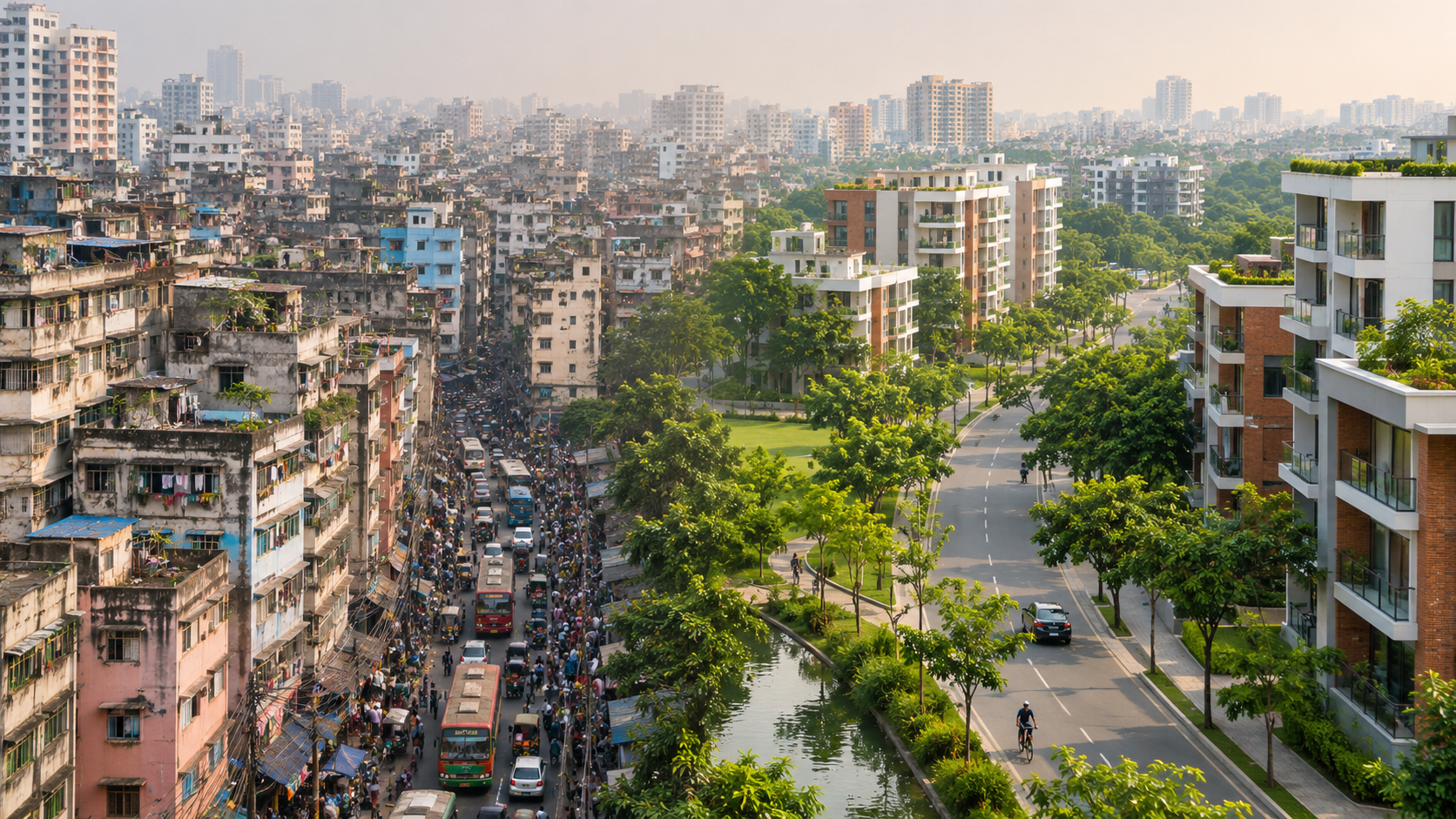
Dhaka is one of the most densely populated cities in the world, and the pressure on its residential infrastructure is only intensifying. With millions of new residents arriving every year, the way the city builds and plans its housing has never mattered more. Unplanned development, inadequate roads, and poorly designed buildings are making life harder for millions of people who deserve better. Every responsible real estate company in Dhaka has a responsibility to be part of that solution, not just a contributor to the problem.
How Bad is Dhaka’s Overcrowding Problem?
According to the Bangladesh Bureau of Statistics' Population and Housing Census 2022, as reported by The Business Standard, Dhaka South has a population density of approximately 39,350 people per square kilometre, making it one of the most densely packed urban areas anywhere in the world. Housing has not kept pace with that growth. The result is a city where informal settlements expand faster than planned ones, where road networks collapse under daily commuter pressure, and where the quality of residential life for millions of people falls short.
How Unplanned Development is Making Overcrowding in Dhaka Worse
For decades, residential development in Dhaka has grown reactively rather than proactively. Buildings go up where land is available, not where infrastructure can support them. Roads narrow under the weight of buildings that were never planned around them. Drainage systems fail because no one accounted for the density that followed.
Poor infrastructure discourages quality investment, which means fewer well-designed buildings, which means more of the same problems at a larger scale. Until the way Dhaka builds changes fundamentally, adding more housing to the city will only deepen the crisis rather than fix it.
What Does Smart Residential Planning Actually Look Like?
-
Infrastructure first: Roads, utilities, drainage, and public spaces are planned before construction begins, not fixed after problems emerge.
-
Density with design: Well-designed buildings maximise space without sacrificing light, ventilation, or liveability.
-
Mixed-use development: Combining residential, commercial, and recreational spaces within the same community reduces the need for long commutes and eases pressure.
-
Green and open spaces: Parks, water features, and landscaped areas are not luxuries.
-
Community facilities: Schools, healthcare centres, and retail within walking distance reduce dependency.
-
Long-term thinking: Smart planning accounts for how a community will grow and change over time.
How Planned Communities Are Changing the Quality of Life in Dhaka
-
Wide, maintained roads that actually function during peak hours rather than grinding to a halt
-
Reliable utilities including backup power, consistent water supply, and proper waste management built into the community from the start
-
Security infrastructure that gives residents genuine peace of mind rather than the anxiety that comes with poorly managed open access
-
Green spaces and recreational areas that give residents room to breathe in a city that offers very little of either
-
Amenities within the community that reduce the daily need to navigate Dhaka's most congested areas for necessities
What Developers Can Do Differently
Here is what responsible developers are already doing, and what more should be doing:
-
Building with infrastructure in mind: Designing projects around road widths, utility capacity, and drainage rather than ignoring them in pursuit of maximum floor space.
-
Prioritising quality over volume: Fewer, better-designed units that genuinely improve residents' lives are more valuable to a city than large quantities of poorly planned ones.
-
Integrating green spaces: Rooftop gardens, landscaped podiums, and open courtyards within developments reduce urban heat and improve liveability without sacrificing buildable area.
-
Designing for community: Buildings that include shared spaces, amenities, and facilities encourage residents to invest in where they live, creating stronger, more self-sufficient communities.
-
Committing to legal compliance: Every project should have full RAJUK approval, clear land title, and verified construction standards.
Final Thoughts
Every well-planned development, every building designed with infrastructure and community in mind, and every developer who chooses quality over shortcuts is contributing to a version of Dhaka that works better for everyone who lives in it. And the real estate companies, developers, and city planners who understand that are the ones building the Dhaka that future residents will actually want to live in.

 English
 Arabic
 French
 Spanish
 Portuguese
 Deutsch
 Turkish
 Dutch
 Russian
 Romaian
 Portuguese (Brazil)
 Greek