


Modern Production Processes for Household Juicing Equipment
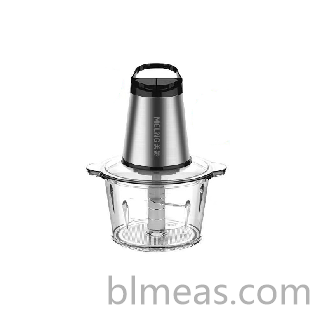
The development of household juicing appliances requires coordination between product design, mechanical engineering, material selection, and production management. As consumers become more interested in preparing fresh beverages at home, manufacturers must respond with products that are convenient to operate and maintain while meeting consistent quality expectations. An experienced Slow Juicer manufacturer needs to understand how the extraction mechanism, motor system, housing structure, and food-contact components work together throughout the product lifecycle.
The extraction system is the foundation of slow juicer design. Most models use a rotating auger to crush and press fruits or vegetables inside a dedicated chamber. The resulting liquid passes through a filter, while the remaining pulp is directed toward a separate outlet. This process depends on the interaction between several precision components. The auger profile, filter openings, chamber geometry, and outlet arrangement all influence the movement of ingredients and the overall operating experience.
Engineering the auger requires attention to geometry and material properties. Its shape must guide ingredients through the chamber without creating unnecessary resistance. Manufacturers evaluate the contact surfaces, structural strength, and dimensional consistency of this component. The filter must also maintain suitable fitting and stability during operation. Consistent manufacturing tolerances help ensure that the extraction assembly works as intended and reduces the possibility of irregular contact between moving parts.
Material development is another important stage. Juicers contain components that contact food, liquids, and moisture during regular use. These parts should be made from materials appropriate for their intended applications. Food-grade plastics can provide lightweight structures for chambers and containers, while stainless steel may be used for selected functional or structural parts. Material selection should also consider cleaning requirements, durability, and compatibility with the appliance's operating environment.
The motor and transmission assembly must be designed around the demands of the extraction mechanism. The system needs to provide stable movement while managing vibration, heat, and mechanical resistance. Manufacturers evaluate motor mounting, gear connections, internal support structures, and electrical integration during product development. Careful assembly can help prevent unnecessary movement or stress on internal connections, supporting more consistent operation.
Housing design contributes to both product appearance and functional protection. The external structure should support internal components while providing convenient access to controls and detachable parts. Stable contact surfaces can help keep the appliance properly positioned during use. Designers also consider how the housing will be assembled, inspected, and transported. A practical structure can simplify production and reduce unnecessary assembly complexity.
Electrical and mechanical safety must be integrated into the design process. Suitable insulation, secure wiring connections, stable locking structures, and appropriate control systems help reduce operating risks. Juicers also require attention to liquid management because juice and cleaning moisture may come into contact with external surfaces. Internal electrical sections should be protected through suitable structural separation and component placement.
Manufacturing involves several coordinated operations. Plastic injection molding creates many of the appliance's external and internal parts, while metal processing supports selected mechanical components. Motors and electronic assemblies are prepared separately before being integrated into the main structure. Assembly procedures should define component positioning, connection methods, and inspection requirements. Consistency at each stage helps reduce defects and supports repeatable production quality.
Quality control should cover both individual components and complete appliances. Incoming material checks can identify unsuitable components before assembly. During production, dimensional inspection and assembly verification help confirm that parts fit correctly. Finished products may undergo functional operation tests, electrical checks, noise assessment, appearance inspection, and leakage evaluation where relevant. These procedures help manufacturers identify problems before products are packed for distribution.
Cleaning convenience is also considered during product development. Filters, chambers, and outlets can collect fruit fibers and residue, so removable parts and accessible surfaces are valuable design features. Manufacturers may provide cleaning brushes or clear maintenance instructions to support users. Product designers should consider how components can be separated and reassembled without unnecessary difficulty.
For international brands and distributors, OEM and ODM cooperation can support different market positioning strategies. Customization may involve colors, logos, packaging, accessories, and product configurations. Buyers should assess sample development, production communication, inspection procedures, and the manufacturer's ability to maintain consistency across repeat orders. These factors help establish a more dependable sourcing relationship.
A professional Slow Juicer manufacturer brings together extraction engineering, suitable materials, controlled assembly, and systematic product inspection. Each stage contributes to the finished appliance's usability and manufacturing consistency. Businesses interested in household juicers and other small kitchen appliances can explore product information and cooperation opportunities at https://www.blmeas.com/.

 English
 Arabic
 Spanish
 Portuguese
 Deutsch
 Turkish
 Dutch
 Italiano
 Russian
 Romaian
 Portuguese (Brazil)
 Greek