


What Materials Does a China Corrosion-Resistant Pneumatic Diaphragm Pumps Manufacturer Offer
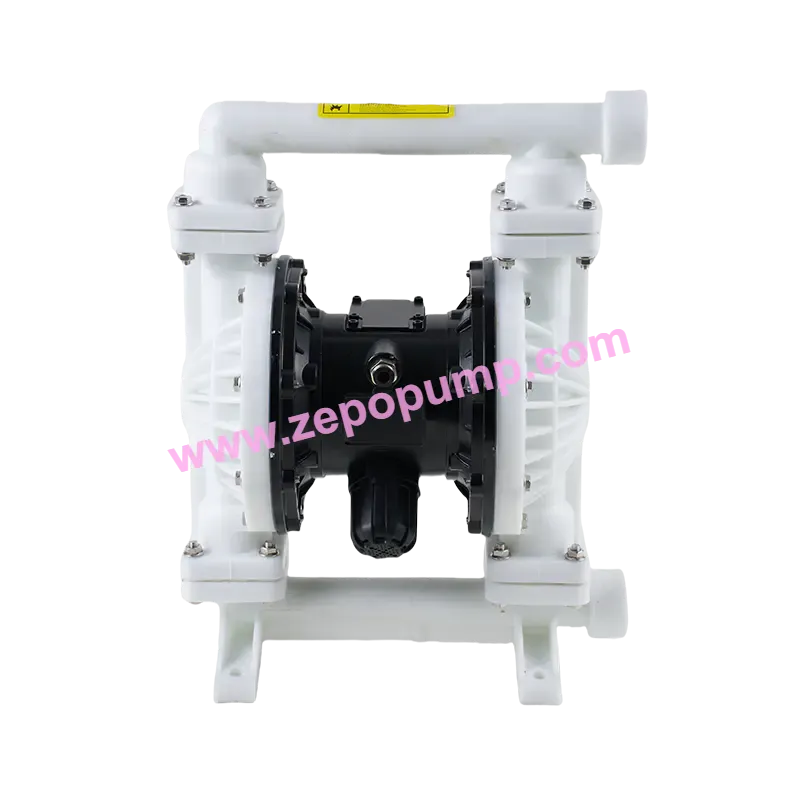
When a production line handles acids, alkalis, solvents, or chemical mixtures, pump material selection becomes an important part of equipment planning. A China Corrosion-Resistant Pneumatic Diaphragm Pumps Manufacturer such as zepopump needs to consider the liquid itself, the operating environment, and the expected service conditions before recommending a configuration. But how does this customization process turn different material choices into a pump suited to a particular application?
Customization Begins With the Actual Working Conditions
A chemical name alone is not enough to determine the correct pump material. Two facilities may transfer the same liquid but operate under different conditions. One may handle a diluted solution at room temperature, while another may pump a concentrated mixture at an elevated temperature. These differences can affect the compatibility of the pump's wetted components.
A manufacturer therefore needs practical information before selecting materials. Important details include the chemical composition, concentration, temperature, viscosity, specific gravity, and whether the liquid contains suspended particles. The frequency of operation and the expected working pressure also deserve attention.
The production process matters as well. A pump used for occasional tank transfer may face a different workload from one installed in a continuous chemical circulation system. By reviewing these conditions together, the manufacturer can assess the material requirements of the complete fluid-contacting structure rather than focusing on one component.
Selecting a Pump Body for Chemical Exposure
The pump body forms the main structure around the fluid chambers and flow passages. Its material needs to withstand the transferred medium while maintaining suitable mechanical strength during operation.
Aluminum alloy is commonly considered for general industrial applications where the fluid is compatible with the material and equipment weight is a concern. Cast iron may be used in certain heavy-duty environments, depending on the liquid's properties and the required construction.
Stainless steel is often considered when corrosion resistance, mechanical strength, and cleaning requirements are important. Different stainless-steel grades have different characteristics, so the exact grade should be checked against the chemical composition and operating temperature.
Engineering plastics and fluorine-lined flow passages provide additional options for selected chemical duties. These materials may be considered when metal surfaces are unsuitable for the transferred medium. However, no material should be treated as universally resistant. Concentration, temperature, exposure time, and the presence of other substances can all affect compatibility.
A China Corrosion-Resistant Pneumatic Diaphragm Pumps Manufacturer can compare these options with the customer's process conditions and identify a body construction for evaluation.
Matching Diaphragms and Sealing Components
The diaphragm is central to the operation of a pneumatic diaphragm pump. It moves repeatedly to create the pumping action while separating the liquid chamber from the air-driven mechanism. Its material must therefore handle both chemical contact and repeated flexing.
Nitrile rubber, chloroprene rubber, fluororubber, and PTFE are among the material options used in diaphragm pump designs. Each has its own chemical and mechanical characteristics. A material suitable for one oil or industrial liquid may not be appropriate for a strong solvent or concentrated chemical solution.
The same consideration applies to valve balls, valve seats, gaskets, and other sealing components. If the diaphragm is compatible with the liquid but a valve seat is not, the pump assembly may still experience swelling, deformation, leakage, or premature wear.
For this reason, material customization should cover the complete wetted assembly. Customers should ask which materials are used for each liquid-contacting component and whether the proposed combination has been assessed under comparable operating conditions.
Turning Customer Requirements Into a Practical Configuration
A useful customization discussion connects the customer's process information with the pump's design options. Instead of requesting a pump simply because it is described as corrosion-resistant, buyers can provide a clear application profile.
For example, a chemical plant may need to transfer a liquid from a storage tank to a mixing vessel. The manufacturer would need to understand the chemical concentration, transfer distance, required flow rate, temperature, and installation arrangement. If the liquid contains solid particles, their size and hardness should also be described.
The pump connection size, air supply conditions, inlet arrangement, and discharge requirements may influence the final configuration. In some applications, customers may also need to consider cleaning procedures, maintenance access, or compatibility with existing pipelines.
A manufacturer with several body and diaphragm material options can review these requirements and discuss possible combinations. The final selection should be based on technical compatibility and operating data, rather than on a general material label or an assumption that one construction suits every chemical.
Manufacturing and Inspection Support Material Selection
Material selection is only one part of a corrosion-resistant pump solution. Manufacturing accuracy, surface quality, assembly procedures, and inspection also influence the performance of the finished equipment.
Zhejiang Zhanbo Diaphragm Pump Manufacturing Co., Ltd. has a production base covering processes such as precision casting, CNC machining, and automated assembly. Its manufacturing and inspection procedures include material composition analysis, pressure testing, and dynamic performance testing. These processes help assess whether the pump components and assembled product meet the required production standards.
For customized orders, buyers can discuss the intended liquid and working conditions with the technical team before confirming a model. Drawings, connection details, material requirements, and expected operating parameters can help clarify the scope of the order. Where chemical compatibility is uncertain, the selected materials should be reviewed carefully and validated under conditions representative of actual use.
Questions Buyers Should Raise Before Ordering
Before placing an order, buyers should confirm the material of the pump body, diaphragm, valve balls, valve seats, and seals. They should also ask whether the selected materials are suitable for the exact chemical concentration and operating temperature, rather than relying only on a broad description such as acid-resistant or solvent-resistant.
It is useful to clarify the expected flow rate, air pressure, suction conditions, discharge pressure, and operating frequency. If the application involves changing liquids, cleaning chemicals, or temperature fluctuations, these details should be included in the discussion.
A clear technical exchange helps both sides understand the application and reduces the risk of selecting components that are unsuitable for the actual process. Buyers evaluating a China Corrosion-Resistant Pneumatic Diaphragm Pumps Manufacturer can review ZhanBo's product range and manufacturing capabilities at https://www.zepopump.com/, then provide their fluid details and operating requirements for a focused material-selection discussion.

 English
 French
 Spanish
 Portuguese
 Deutsch
 Turkish
 Dutch
 Italiano
 Russian
 Romaian
 Portuguese (Brazil)
 Greek