


Professional Guniting Services for RCC Rehabilitation
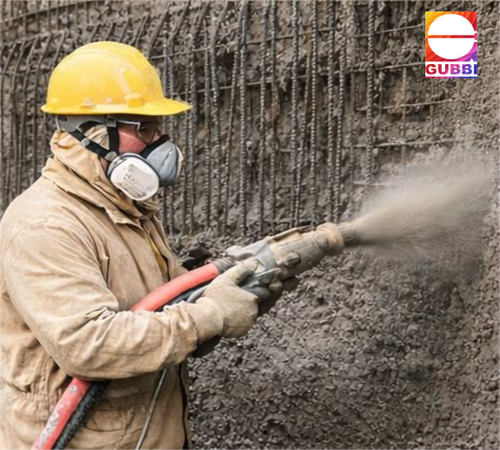
Guniting is a concrete application technique used to repair, strengthen, and protect concrete surfaces in industrial, commercial, and infrastructure projects. It involves spraying a cement-based mortar or concrete mixture onto a prepared surface using compressed air. This method helps restore damaged sections, fill surface irregularities, and improve the condition of existing structures. Guniting services are particularly useful when conventional concrete placement becomes difficult because of restricted access or complex structural shapes.
Concrete structures are regularly exposed to moisture, chemical substances, temperature changes, vibration, and mechanical stress. Over time, these conditions may cause cracks, surface deterioration, concrete spalling, and reinforcement corrosion. If these problems are not addressed appropriately, they can affect the performance and service life of a structure. Guniting work contractors help address suitable concrete defects by applying repair material directly onto prepared surfaces, following the requirements of the project.
The technique is widely used in industrial plants, bridges, tunnels, water-retaining structures, retaining walls, and other civil engineering applications. Its suitability depends on the type of damage, structural condition, accessibility, and required repair thickness. Understanding how guniting works can help facility managers, project engineers, and infrastructure owners make informed decisions about concrete maintenance and rehabilitation without automatically resorting to extensive demolition or reconstruction.
What Is Guniting in Construction?
Guniting is a spraying process in which a cementitious mortar is conveyed through a hose and projected onto a surface using compressed air. The material impacts the prepared surface at high velocity, helping it adhere and form a compact layer when the application is performed correctly. The method is commonly associated with dry-mix shotcrete, where water is introduced near the nozzle before the material reaches the receiving surface.
The term guniting is frequently used in construction discussions involving concrete repair, wall strengthening, and surface restoration. Although terminology can vary between projects and regions, it is important to distinguish dry-mix guniting from wet-mix shotcreting. In wet-mix applications, the concrete mixture is prepared with water before being pumped through the delivery system. The selection depends on project specifications, material requirements, equipment, and site conditions.
Unlike conventional concrete placement, guniting does not always require traditional formwork across the entire repair area. This can make it suitable for overhead surfaces, curved structures, vertical walls, and locations where access is limited. However, successful application requires proper surface preparation, suitable mix proportions, controlled spraying, and appropriate curing. The technique should be selected according to the engineering requirements rather than simply because spraying appears faster or more convenient.
Common Applications of Guniting Services
1. RCC Structure Repair and Rehabilitation
Reinforced cement concrete structures can develop surface cracks, honeycombing, exposed reinforcement, and local concrete deterioration because of environmental exposure or construction defects. Guniting services may be used to reinstate suitable damaged sections after loose concrete is removed and the underlying condition is assessed. The repair method must account for reinforcement condition, bonding requirements, and the original concrete quality to achieve a technically appropriate rehabilitation outcome.
2. Industrial Building and Factory Repairs
Industrial buildings experience demanding operating conditions, including equipment vibration, moisture exposure, and repeated movement of materials. These factors can contribute to deterioration in concrete walls, columns, beams, and other components. Guniting can help restore suitable concrete surfaces in factories, production facilities, warehouses, and processing plants. Before execution, contractors should identify the source of deterioration and establish whether surface repair alone is sufficient or additional structural intervention is necessary.
3. Bridge and Infrastructure Rehabilitation
Bridges and other infrastructure assets require regular inspection because concrete deterioration can affect their long-term performance. Guniting may be used for selected repairs to bridge piers, abutments, retaining elements, and other compatible concrete surfaces. The application requires attention to access arrangements, traffic restrictions, reinforcement corrosion, and environmental exposure. Infrastructure rehabilitation projects should follow approved repair specifications and inspection procedures to ensure that the treatment addresses the identified defects.
4. Tunnel and Underground Structure Repairs
Tunnels and underground structures may experience water seepage, surface deterioration, loose concrete, and damage caused by ground movement or prolonged exposure to moisture. Guniting is useful in suitable applications where sprayed material can cover irregular surfaces and reach areas that are difficult to treat using conventional placement methods. However, active water ingress, unstable rock, and significant structural movement require separate assessment before the repair material is applied.
5. Retaining Walls and Sloped Surfaces
Retaining walls, embankment protection systems, and selected sloped concrete surfaces may deteriorate because of weather exposure, drainage problems, and soil-related pressures. Guniting can provide a repair layer over appropriately prepared surfaces and help reinstate missing concrete in compatible applications. The underlying drainage and stability conditions must also be evaluated. Applying fresh material without addressing movement, water pressure, or inadequate support may result in recurring defects.
6. Water-Retaining and Water-Exposed Structures
Water tanks, reservoirs, channels, and similar structures require careful attention to concrete integrity and water penetration. Guniting may be considered for suitable concrete rehabilitation where the specified repair material is compatible with the intended exposure conditions. The surface must be prepared properly, and any active leakage or chemical attack should be investigated. Where watertightness is essential, the complete repair system must meet the relevant project requirements rather than relying on sprayed mortar alone.
Key Benefits of Guniting Work
Reduced Dependence on Conventional Formwork
One advantage of guniting is that many applications can be completed without extensive formwork. The sprayed material can be placed directly against prepared vertical, curved, and overhead surfaces, depending on the project design. Reduced formwork requirements may simplify execution in congested areas or locations with restricted access. Nevertheless, temporary supports, edge forms, or other arrangements may still be necessary to control the geometry and thickness of certain repairs.
Suitable for Irregular and Complex Surfaces
Concrete structures do not always have flat or easily accessible surfaces. Guniting allows repair material to be projected onto irregular profiles, corners, curved sections, and selected overhead areas. This flexibility can be useful in infrastructure rehabilitation and industrial maintenance work. The quality of the finished layer depends on nozzle technique, application angle, surface preparation, and material consistency. Complex shapes still require proper detailing and careful control during execution.
Efficient Application Across Suitable Repair Areas
Guniting can support efficient material placement when the work area, equipment setup, and repair specifications are appropriate. The spraying process may reduce the time needed for certain repairs compared with conventional placement methods. However, actual project duration also depends on access, preparation, reinforcement treatment, material thickness, curing, and inspection. Contractors should evaluate the entire repair sequence instead of comparing application speed alone when preparing a realistic work schedule.
Potential Savings in Repair and Maintenance
Repairing suitable damaged concrete sections can sometimes cost less than removing and reconstructing a larger structural component. Guniting may contribute to these savings when it meets the technical requirements and avoids unnecessary formwork or extensive demolition. The overall cost must include investigation, surface preparation, reinforcement protection, equipment, material, access, curing, and quality checks. A low initial quotation should not replace an assessment of the expected performance and maintenance needs.
Improved Restoration of Concrete Cover
Where concrete cover has deteriorated, a properly designed repair may help restore the required protective layer around reinforcement. Guniting can be used for suitable reinstatement work after unsound concrete is removed and the steel reinforcement is assessed and treated as specified. Adequate cover, bonding, compaction, and curing are essential. If reinforcement has lost significant cross-sectional area or the structure has a deeper structural deficiency, additional engineering measures may be required.
Step-by-Step Guniting Process
1. Inspection and Assessment of the Structure
The first step in a guniting project is to inspect the affected structure and identify the cause and extent of concrete deterioration. Engineers may examine cracks, hollow areas, exposed reinforcement, moisture penetration, and damaged concrete cover. Depending on the condition, additional testing may be required to assess concrete strength and reinforcement corrosion. This assessment helps determine whether guniting is suitable or whether another repair or strengthening method is necessary.
2. Surface Preparation and Removal of Damaged Concrete
Surface preparation is essential for achieving proper adhesion between the existing concrete and the newly applied material. Loose concrete, weak layers, dust, oil, and other contaminants must be removed from the repair area. Where reinforcement is exposed, corrosion products should be cleaned and the condition of the steel assessed. The prepared substrate must meet the project's requirements before guniting begins, as poor preparation can contribute to debonding and premature repair failure.
3. Material Preparation and Equipment Setup
For dry-mix guniting, cementitious material and appropriately graded aggregates are prepared according to the approved mix design. The mixture is conveyed through a delivery hose using compressed air, and water is introduced at the nozzle in a controlled manner. Contractors must check the spraying equipment, air supply, hoses, and water delivery system before application. Correct material proportions and consistent equipment operation help maintain suitable application characteristics throughout the repair work.
4. Pneumatic Application of the Guniting Material
During application, the nozzle operator directs the material towards the prepared surface using an appropriate angle, distance, and movement. The material builds up in layers as required by the specified repair thickness and geometry. Particular attention is needed around reinforcement, corners, and overhead sections to reduce voids and uneven coverage. Skilled application helps achieve proper compaction and bonding while controlling rebound, sagging, and material accumulation in sensitive areas.
5. Finishing, Curing, and Quality Inspection
After spraying, the applied material is finished according to the project specifications and protected during the initial setting period. Proper curing helps the cementitious material develop its intended properties and reduces the risk of premature drying and shrinkage cracking. Inspections may include checking thickness, surface condition, bonding, and specified strength requirements. Where required, test panels, cores, or other verification methods can help confirm whether the completed repair meets the approved quality criteria.
Guniting vs Shotcreting: What Is the Difference?
Guniting and shotcreting are closely related terms used for pneumatically applied concrete or mortar. Guniting generally refers to the dry-mix process, whereas shotcrete is the broader term covering both dry-mix and wet-mix applications. In dry-mix guniting, water is introduced near the nozzle. In wet-mix shotcreting, the mixture is prepared with water before being pumped through the delivery system.
The most suitable method depends on the scale of work, required output, material specifications, equipment availability, and site conditions. Dry-mix systems can offer flexibility for certain repair projects, while wet-mix systems may be advantageous for larger applications requiring consistent material delivery. Both methods require trained operators, suitable mix designs, proper surface preparation, and controlled curing. The choice should be made according to technical requirements rather than assuming that one method is always superior.
How to Choose the Right Guniting Contractors
Selecting suitable guniting contractors is important because the quality of execution directly affects the performance of the repaired surface. Project owners should evaluate the contractor's experience with similar structures, knowledge of concrete rehabilitation, equipment capabilities, and ability to follow engineering specifications. A contractor who understands industrial and infrastructure environments can better plan access, coordinate site activities, and identify potential difficulties before starting the application.
Before appointing guniting work contractors, ask for details about the proposed methodology, material specifications, surface preparation procedures, curing arrangements, and quality inspection plan. The quotation should clearly define the work scope, repair thickness, treatment of exposed reinforcement, equipment requirements, and exclusions. Comparing these details provides a more meaningful basis for selection than comparing prices alone. Clear documentation also helps avoid disagreements regarding the expected repair outcome and completion requirements.
For industrial and commercial rehabilitation projects, Gubbi Civil Engineers Limited can be considered when evaluating providers of concrete repair and structural strengthening services. Before finalising a contractor, discuss the site condition, the extent of damage, access limitations, and the expected performance of the repaired structure. Request a clear scope of work and confirm that the proposed method is appropriate for the specific application. This approach supports informed decision-making and helps align execution with the project's engineering requirements.
Factors Affecting Guniting Cost
The cost of guniting services depends on several project-specific factors, including the total repair area, required thickness, surface condition, material grade, and accessibility. Repairs involving overhead surfaces, congested reinforcement, or difficult working conditions may require additional labour and equipment arrangements. The extent of damaged concrete removal and the need for reinforcement treatment can also influence the final quotation. Therefore, a reliable estimate should be prepared after reviewing the actual site requirements.
Other cost considerations include equipment mobilisation, scaffolding or access platforms, material transportation, curing arrangements, testing, and site safety provisions. Larger projects may benefit from efficient equipment deployment, but savings depend on the quantity of work and the consistency of site conditions. When comparing quotations, consider the complete repair methodology and quality requirements. Choosing a contractor solely on the lowest initial price may result in additional expenses if preparation or essential repair activities are excluded.
Common Signs That a Concrete Structure May Need Guniting
Concrete structures may require professional inspection when visible deterioration begins affecting their surfaces. Warning signs include concrete spalling, hollow-sounding areas, exposed reinforcement, localised material loss, and recurring surface damage. Water seepage and rust staining may also indicate underlying problems that need investigation. Although guniting can repair suitable damaged sections, the correct treatment depends on identifying the source of deterioration and determining whether the defect is superficial or structural.
Industrial facility managers should also pay attention to recurring damage in columns, beams, walls, retaining structures, and other concrete components. Repeated repairs in the same location may indicate unresolved moisture exposure, chemical attack, movement, or reinforcement corrosion. A technical assessment can help distinguish between local surface repairs and more extensive rehabilitation needs. Early identification allows maintenance teams to plan appropriate interventions and reduce the risk of deterioration progressing unnoticed.
Frequently Asked Questions About Guniting Services
What is guniting used for?
Guniting is used for suitable concrete repair, surface restoration, and selected rehabilitation applications. Common uses include repairing damaged RCC surfaces, restoring concrete cover, treating retaining walls, and rehabilitating certain bridge and tunnel components. Its suitability depends on the substrate condition, material specifications, exposure environment, and required repair thickness. An engineering assessment helps establish whether guniting is appropriate for the affected structure.
Is guniting suitable for RCC repair?
Yes, guniting can be suitable for repairing selected damaged reinforced cement concrete components, including beams, columns, walls, and slabs. The damaged concrete must be removed, reinforcement inspected, and the substrate prepared before spraying. If the structure has significant reinforcement loss, movement, or a reduction in load-bearing capacity, additional structural repair or strengthening measures may be necessary. The final method should follow an appropriate engineering assessment.
How long does guniting work take?
The duration of guniting work depends on the repair area, thickness, condition of the existing concrete, access arrangements, and equipment setup. Small repairs may require less application time than extensive industrial or infrastructure projects. However, preparation, reinforcement treatment, curing, and inspection also contribute to the overall schedule. Contractors should provide a project-specific timeline that includes these activities rather than estimating completion based only on spraying speed.
Does guniting prevent water leakage?
Guniting can help restore damaged concrete surfaces in suitable applications, but it should not automatically be treated as a complete waterproofing solution. Leakage may result from cracks, construction joints, hydrostatic pressure, or defects in an existing waterproofing system. The source of water ingress must be identified before selecting the repair method. Depending on the condition, additional crack injection, joint treatment, drainage improvements, or a compatible waterproofing system may be required.
What is the difference between guniting and plastering?
Conventional plastering generally involves manually applying mortar to a surface, whereas guniting uses compressed air to project material at high velocity. This difference in application can make guniting suitable for certain demanding concrete repair and rehabilitation projects. The method may provide effective material placement on vertical or overhead surfaces when properly executed. However, guniting is not simply a replacement for ordinary plastering, because the materials, equipment, and engineering requirements can differ substantially.
Guniting is an important technique in concrete repair and rehabilitation, particularly where conventional placement methods present challenges. From industrial buildings and factory structures to bridges, retaining walls, and selected underground applications, it can help restore deteriorated concrete when the method is properly designed and executed. Its performance depends on material quality, surface preparation, application technique, reinforcement treatment, curing, and compliance with the approved repair specifications.
Choosing the right guniting contractors involves more than reviewing a quotation. Project owners should evaluate technical experience, proposed methodology, equipment suitability, safety arrangements, and quality control procedures. A proper assessment also helps determine whether guniting alone can address the problem or whether additional structural repairs are required. By prioritising the actual condition of the structure and the quality of execution, businesses can make better-informed decisions about concrete rehabilitation and long-term maintenance.

 English
 Arabic
 French
 Spanish
 Deutsch
 Turkish
 Dutch
 Italiano
 Russian
 Romaian
 Portuguese (Brazil)
 Greek