


Strike Off a Company: A Complete UK Guide
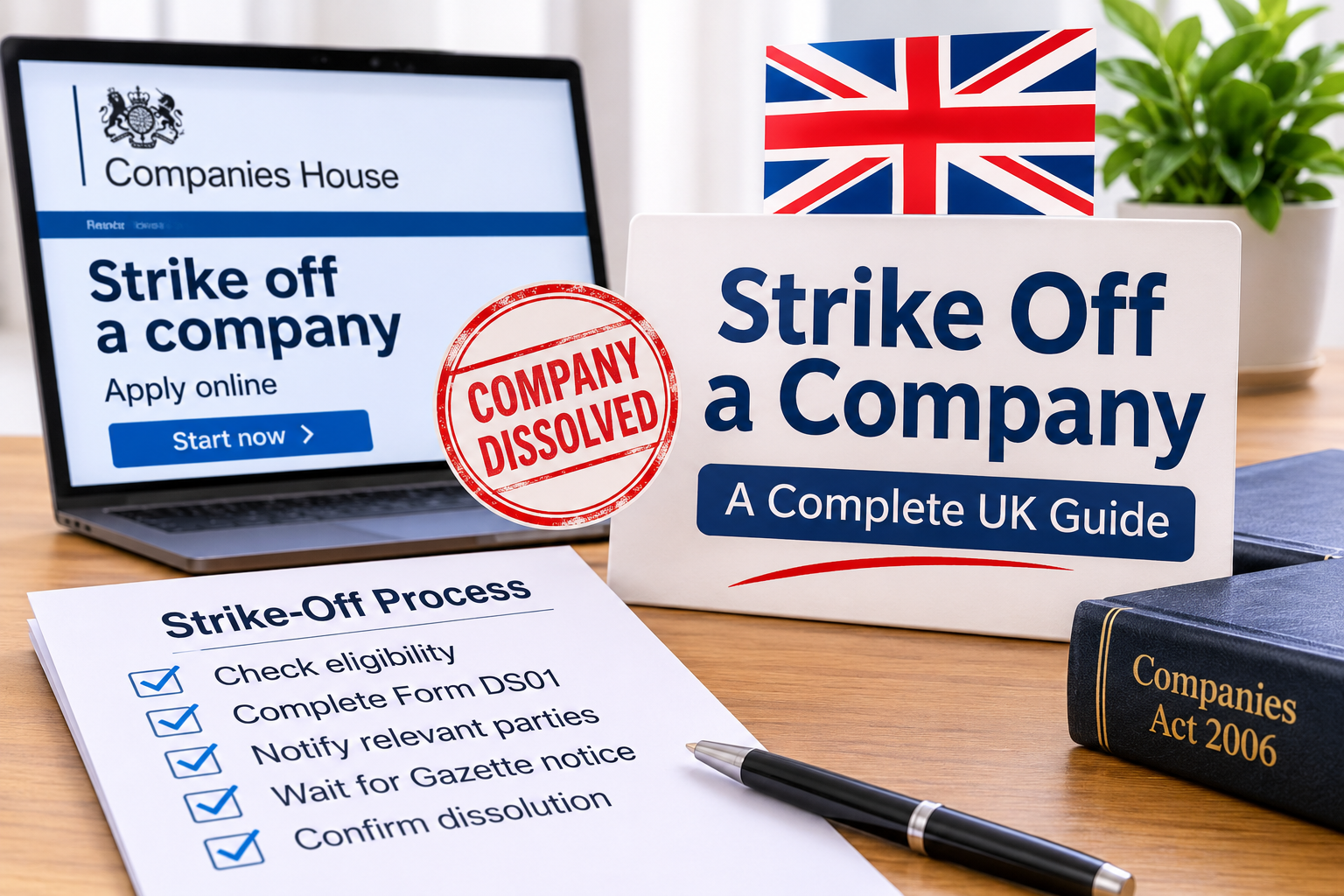
Running a company requires time, money, planning, and ongoing responsibility. However, some businesses eventually reach the end of their journey. Directors may retire, change careers, or pursue new opportunities. Others may decide to close an inactive business.In these situations, company strike-off can provide a practical solution. It allows eligible companies to leave the official Companies House register. However, directors must follow the correct procedures before applying.Understanding how to strike off a company helps prevent unnecessary complications. It also ensures that directors understand their legal responsibilities. An incorrect application can delay closure or lead to serious consequences.This guide explains the UK company strike-off process in straightforward language. It covers eligibility, application requirements, potential costs, and important legal considerations. You will also learn about striking off a company online.Whether your business has stopped trading or never became active, preparation matters. Taking the correct steps can make company closure more manageable.
What Does It Mean to Strike Off a Company?
To strike off a company means removing it from the official Companies House register. Once the process finishes, the company ceases to exist as a legal entity.This process is commonly called voluntary strike-off or company dissolution. It can suit certain businesses that no longer need to operate.For example, a director might close a small consultancy after retirement. Another business owner might shut down an inactive limited company.However, striking off is not suitable for every business. Companies with significant debts or unresolved disputes may require different arrangements.Directors should understand their company's financial position before proceeding. They must also consider creditors, employees, shareholders, and outstanding legal obligations.
Company Strike-Off Versus Liquidation
Company strike-off and liquidation are different procedures. Strike-off is generally intended for eligible companies that can close without formal insolvency proceedings.Liquidation involves a formal process for dealing with company assets and liabilities. Depending on the circumstances, an insolvency practitioner may need to manage that process.A company unable to pay its debts must consider its financial position carefully. Directors should not use strike-off to avoid legitimate creditor claims.Professional advice can help determine the appropriate closure route. Choosing correctly can reduce risks for directors and other stakeholders.
When Should You Strike Off a Company?
Company strike-off may be appropriate when a business has stopped operating. It can also suit a company that never began trading.
Directors commonly consider this option in several situations.
-
The company has permanently stopped trading.
-
The business has become inactive.
-
The owners no longer require the company.
-
The company has completed its intended purpose.
-
The directors have decided to pursue different business opportunities.
-
The company has no outstanding obligations preventing dissolution.
However, these circumstances do not automatically guarantee eligibility. The company must satisfy the applicable legal requirements.Directors should review the company's records before starting an application. They should also check whether any debts, disputes, or outstanding returns remain unresolved.If the company cannot meet its obligations, strike-off may be inappropriate. Consider professional advice before taking further action.
Eligibility Requirements for Striking Off a Company
Before applying, directors must establish whether the company qualifies. UK law places restrictions on voluntary strike-off applications.Under section 1004 of the Companies Act 2006, certain recent activities prevent an application. Generally, the company must not have traded or otherwise carried on business during the previous three months.It must also satisfy restrictions concerning recent changes and other activities. Certain disposals, name changes, and other transactions can affect eligibility.Specific exceptions may apply to particular circumstances. Directors should review the legislation and current Companies House guidance before applying.
Activities That May Prevent an Application
A company may be ineligible if it recently conducted business. Relevant activities can include trading and other commercial operations.The company must also consider whether it has recently changed its name. Certain dealings with company property can create additional restrictions.Furthermore, an application cannot simply bypass insolvency procedures. Outstanding creditor issues require careful consideration.These restrictions help protect creditors and other interested parties. They also reduce the risk of inappropriate company dissolution.
Check Debts and Outstanding Obligations
Directors should identify all outstanding liabilities before applying. These may include supplier invoices, taxes, employee payments, and loans.The company should also review its accounting and filing position. Outstanding statutory duties do not disappear simply because trading has stopped.Where necessary, settle liabilities using the appropriate procedures. Do not distribute company assets without considering creditor rights.If the company cannot pay its debts, seek suitable professional advice. A qualified adviser can explain the available closure options.
How to Strike Off a Company in the UK
The process involves preparation, an application, and a waiting period. Following the correct sequence can help prevent avoidable delays.
Step 1: Review the Company's Financial Position
Start by examining the company's accounts and financial records. Identify outstanding debts, assets, taxes, and contractual commitments.Check whether the company has unpaid suppliers or outstanding loans. Review any obligations involving employees or former employees.Directors should also consider outstanding tax liabilities. These may include Corporation Tax and other amounts owed to HMRC.Resolve outstanding matters through the appropriate legal procedures. Seek professional guidance where the company's financial position is uncertain.
Step 2: Stop Trading and Prepare for Closure
Ensure the company satisfies the legal eligibility requirements. In particular, check the restrictions concerning recent business activities.Inform relevant parties about the planned closure where appropriate. These may include customers, suppliers, employees, and business partners.Review ongoing contracts and cancel them where legally permitted. Arrange for company property and remaining funds to be handled correctly.Keep appropriate business records during the closure process. These records may be important for tax, legal, or accounting purposes.
Step 3: Complete the Appropriate Application
Eligible companies can apply for voluntary strike-off through Companies House. The application is generally made using Form DS01.The form requires the relevant company details and authorised signatures. Directors should ensure that the information is accurate and complete.Applications can be submitted using the applicable online service or paper procedure. Check the latest official guidance before choosing your submission method.Incorrect information can cause delays or other complications. Review every section carefully before submitting the application.
Step 4: Notify Relevant Parties
Applicants must follow the legal notification requirements. Relevant parties generally include members, creditors, employees, and other specified stakeholders.The required notification must normally be made within seven days. This period runs from the date the application is made.The precise requirements depend on the circumstances and applicable legislation. Check the current Companies House guidance to confirm your obligations.Failure to notify the appropriate parties can create legal problems. It may also affect the validity of the strike-off process.
Step 5: Wait for the Gazette Notice
After receiving an application, Companies House considers the submission. If accepted for processing, a notice is normally published in the relevant Gazette.The notice gives interested parties an opportunity to raise objections. Creditors and other stakeholders may object where legitimate grounds exist.An objection can delay or prevent the company being struck off. Companies House may need further information before proceeding.Directors should monitor correspondence and respond to relevant enquiries. Keep copies of the application and related documents.
Step 6: Confirm the Company's Dissolution
If no successful objection prevents the process, Companies House can proceed. A second Gazette notice confirms the company's dissolution.The company then ceases to exist as a legal entity. Directors should retain relevant records and confirm the final register position.Do not assume the company has dissolved immediately after applying. Wait for official confirmation before treating the process as complete.
Striking Off a Company Online
Striking off a company online is generally the quickest application route. Companies House provides an official service for eligible businesses.The online process includes checks to help prevent common application errors. Applicants also need the correct company information and authentication details.
What Information Do You Need?
Prepare the following information before starting your application:
-
Your company's registered name.
-
The company's Companies House registration number.
-
The company authentication code.
-
An email address for each person signing.
-
A suitable payment method.
For companies with multiple directors, more than half must sign. If two directors remain, both must sign the application.Check all details before submitting your request. Accurate information can help prevent unnecessary delays.
How Much Does Online Strike-Off Cost?
Companies House currently charges £13 for an online application. A paper application costs £18. Paper applications generally take longer to process.These are application fees, not the total closure costs. You may also need accounting, tax, or professional advisory services.Check the latest official fees before submitting your application. Charges can change over time.
What Should You Do Before Applying?
Proper preparation can help make company closure more straightforward. Directors should address financial, tax, and administrative responsibilities first.
Deal With Company Assets
Review the company's assets before submitting the application. These might include money, equipment, vehicles, property, and intellectual property.Consider bank balances, outstanding customer payments, and potential tax refunds. Transfer or distribute assets only through appropriate legal procedures.Close the company's bank account at the appropriate stage. Make sure outstanding payments and refunds have been dealt with first.After dissolution, remaining company assets generally pass to the Crown. Recovering them may require restoring the company to the register.
Resolve Tax Responsibilities
Contact HMRC where necessary to settle outstanding tax matters. Check whether Corporation Tax returns or payments remain outstanding.If the company is VAT-registered, consider cancelling its registration. Follow the applicable rules and settle any outstanding VAT liabilities.Companies employing staff must also address their employer responsibilities. This includes payroll obligations and relevant final submissions.Businesses using subcontractors should review their reporting responsibilities. Construction Industry Scheme requirements may also apply.Do not assume dissolution automatically clears tax liabilities. Complete the necessary tax procedures before closing the company.
Inform Employees and Other Interested Parties
Directors must notify relevant parties about the strike-off application. This responsibility applies even when the company has stopped trading.Affected parties may include employees, shareholders, creditors, and pension fund representatives. HMRC and other relevant organisations may also need notification.Keep evidence showing when and how notifications were sent. Accurate records can help demonstrate compliance with legal requirements.Failure to provide required notifications can result in serious penalties. Directors should understand their responsibilities before proceeding.
How Long Does Company Strike-Off Take?
The company strike-off process usually takes several months. However, the exact timescale depends on the circumstances.Companies House first reviews the application. If accepted, the proposed strike-off is normally advertised in the relevant Gazette.The notice allows interested parties to raise legitimate objections. Creditors may object if outstanding debts or other concerns remain unresolved.If no issue prevents dissolution, the company can be struck off. This normally happens no earlier than two months after publication. A further Gazette notice confirms the company's dissolution.Applications can take longer when problems arise. Incorrect details, objections, and outstanding matters may cause delays.Monitor the company's Companies House record throughout the process. Respond promptly if Companies House requests additional information.
Common Mistakes to Avoid When Striking Off a Company
Mistakes can delay an application or create legal difficulties. Understanding common problems helps directors prepare properly.
Applying Too Early
Companies must satisfy specific eligibility requirements before applying. Recent trading or certain transactions can make an application inappropriate.Review the company's activities during the preceding three months. Seek advice if you are uncertain about eligibility.
Ignoring Outstanding Debts
Company strike-off should not replace appropriate insolvency procedures. Directors must consider creditors and the company's ability to pay debts.Do not attempt to avoid legitimate creditor claims through dissolution. Consider professional advice if the business cannot pay its liabilities.
Forgetting Tax Matters
Unresolved tax issues can complicate company closure. Outstanding returns, liabilities, and refunds require careful attention.Contact HMRC when necessary to confirm your obligations. Keep records of relevant correspondence and completed submissions.
Failing to Notify Relevant Parties
Applicants must follow the statutory notification requirements. Relevant parties generally need a copy within seven days.Keep evidence of all required notifications. This helps demonstrate that you have followed the correct procedure.
Distributing Assets Incorrectly
Company assets must be handled before dissolution. Remaining assets may pass to the Crown once the company dissolves.Review bank balances, property, and outstanding refunds carefully. Obtain professional advice when asset ownership or distribution is uncertain.
What Happens After a Company Is Struck Off?
Once dissolved, the company no longer exists as a legal entity. It cannot continue operating as an ordinary registered company.Its bank account will be frozen. Any remaining balance generally passes to the Crown.Other assets belonging to the dissolved company may also pass to the Crown. This can include money received after dissolution.If the company needs to recover assets, restoration may be necessary. Restoration is subject to specific legal requirements and procedures.Directors should retain relevant company records after closure. These may be needed for tax enquiries or other legal matters.
Can You Reverse a Company Strike-Off Application?
Yes, an application can be withdrawn in appropriate circumstances. Withdrawal may be necessary if the company changes its plans.It may also be required if the company becomes ineligible. Directors should act promptly when circumstances change.You can use the relevant Companies House withdrawal procedure. Check the official guidance for the applicable requirements.If the company has already been dissolved, withdrawal is no longer sufficient. Restoration to the register may be required instead.
Frequently Asked Questions
1. How Can I Strike Off a Company in the UK?
Check eligibility and settle outstanding company matters first. Then apply through the official Companies House online service.Follow the notification requirements and monitor the application. The process finishes when the company is formally dissolved.
2. Can I Strike Off a Company Online?
Yes, eligible companies can apply using the Companies House online service. You will need the company number and authentication details.You must also arrange the required director signatures. Review the official guidance before submitting your application.
3. What Is Form DS01?
Form DS01 is the application used to strike off a company. Companies House provides a paper version for eligible applicants.The online service is generally preferred. Paper applications should normally be used when online filing is unavailable.
4. How Much Does It Cost to Strike Off a Company?
The current online application fee is £13. A paper application costs £18.Additional accounting or advisory costs may apply. Check the official Companies House website for current fees.
5. How Long Does Company Strike-Off Take?
The process usually takes several months, depending on the circumstances. The proposed strike-off must normally remain advertised for at least two months.Objections or application problems can extend the timescale. Monitor official notices for updates.
6. Can I Strike Off a Company With Outstanding Debts?
Outstanding debts require careful consideration before applying. Strike-off is not an alternative to formal insolvency proceedings.If the company cannot pay its debts, seek professional advice. Directors should understand their legal responsibilities towards creditors.
7. What Happens to Money Left in the Company's Bank Account?
The bank account is frozen when the company dissolves. Remaining balances generally pass to the Crown.Restoration may be necessary to recover company assets. Directors should address bank balances before dissolution.
8. Can Creditors Object to a Company Strike-Off?
Yes, creditors and other interested parties can object. They may raise concerns about outstanding debts or unresolved matters.A valid objection can delay or prevent dissolution. Directors should address legitimate concerns appropriately.
9. Can I Restore a Company After Strike-Off?
Restoration may be possible in certain circumstances. The appropriate route depends on the company's history and legal position.Some cases require a court application. Others may qualify for administrative restoration.Professional advice can help establish the available options. Restoration does not automatically guarantee recovery of every asset.
10. Is Company Strike-Off the Same as Liquidation?
No, these are different company closure procedures. Strike-off is generally suitable for eligible companies meeting the legal requirements.Liquidation involves a formal process for dealing with company assets and liabilities. The correct route depends on the company's financial circumstances.
Conclusion
Choosing to strike off a company can provide a straightforward route to closure. However, directors must understand the legal requirements before applying.Check eligibility, settle outstanding matters, and handle company assets appropriately. Ensure that tax responsibilities and notification requirements are also addressed.Striking off a company online can simplify the application process. Companies House provides an official service for eligible businesses.Remember that dissolution has important legal and financial consequences. Remaining assets may pass to the Crown, and restoration may become necessary.Careful preparation can reduce delays and prevent avoidable problems. When circumstances are complicated, seek appropriate professional guidance.

 English
 Arabic
 Spanish
 Portuguese
 Deutsch
 Turkish
 Dutch
 Italiano
 Russian
 Romaian
 Portuguese (Brazil)
 Greek