


Geocell for Contractors: Build Stronger, More Reliable Foundations Now
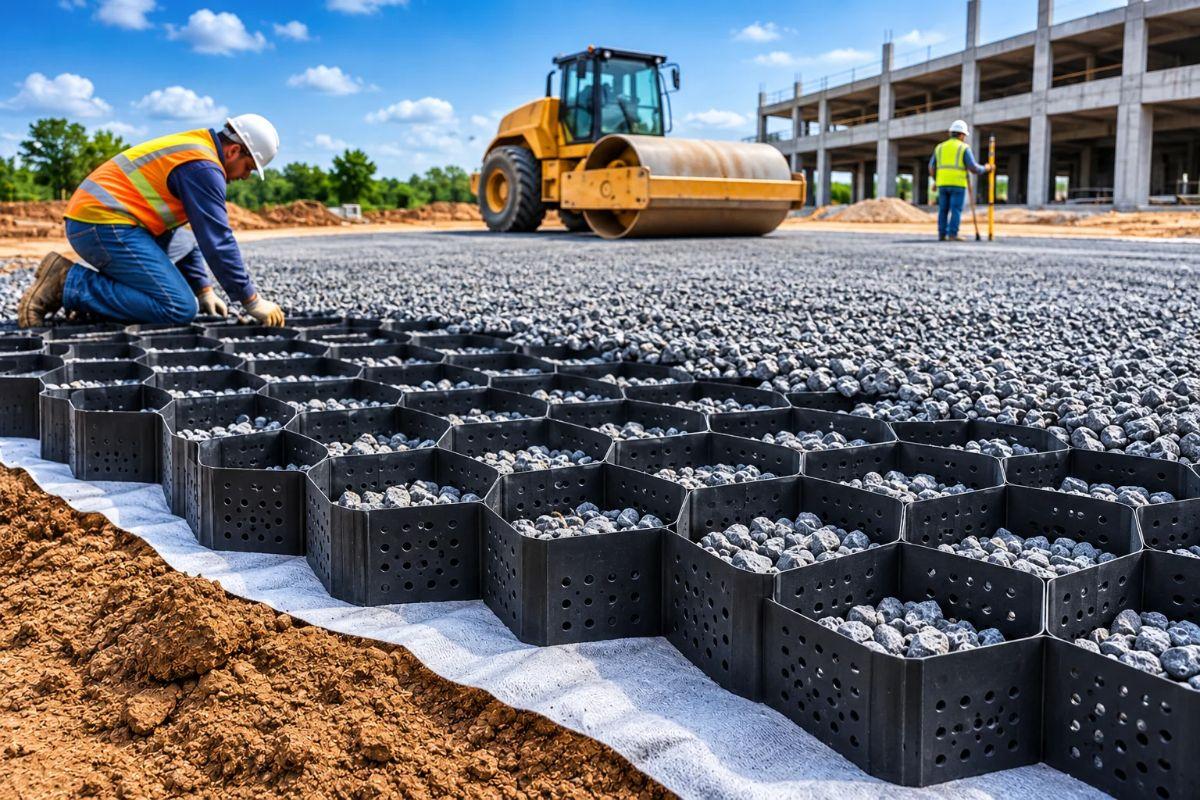
Every construction project starts with one important requirement: a strong and stable foundation. Whether contractors are building access roads, parking areas, driveways, slopes, or commercial foundations, weak soil can create serious challenges. Uneven surfaces, soil movement, erosion, and poor drainage can affect project quality and increase maintenance costs.
This is where geocell for contractors becomes a practical ground stabilization solution. Geocell technology uses a three-dimensional cellular structure to hold infill materials in place and improve ground support. It helps contractors build more stable surfaces while making better use of construction materials.
For construction companies looking for flexible and cost-conscious ground reinforcement options, geocell is worth considering.
What Is Geocell and How Does It Work?
Geocell is a cellular confinement system generally manufactured using high-density polyethylene (HDPE). The panels are lightweight, expandable, and designed to form a honeycomb-like structure when opened.
After placing the panels on a prepared surface, contractors fill the individual cells with suitable materials such as gravel, aggregate, soil, or other project-approved infill.
The connected cells help restrict sideways movement of the infill under applied loads. This creates a more stable foundation and helps distribute loads across the supporting surface.
Unlike loose aggregate that can shift under repeated traffic, geocell provides confinement that helps maintain the position of the filling material.
Why Should Contractors Consider Geocell for Construction Projects?
1. Helps Reduce Material Requirements
Construction projects often require large quantities of gravel, aggregate, and other filling materials. Managing these materials can increase transportation, labor, and overall project expenses.
Geocell panels occupy space within the foundation and confine the selected infill. BaseCore states that its geocell system can reduce aggregate, soil, and concrete infill requirements by up to 50% in suitable applications.
Actual material savings depend on the site conditions, design, and required structural performance.
2. Easy to Transport and Install
Time and labor are important considerations for every contractor. Heavy construction materials and complicated installation processes can slow down project schedules.
Geocell panels are lightweight and collapsible, making them easier to transport and handle at construction sites. Once delivered, the panels can be expanded, positioned, secured, and filled according to the installation instructions.
BaseCore also provides installation guides and videos to help contractors understand the installation process.
3. Supports Better Drainage
Water accumulation can weaken foundations and create problems for roads, parking areas, and other construction surfaces.
Perforated geocell panels allow water to pass through the cellular structure. When combined with suitable permeable infill and proper site drainage, they can help reduce water pooling and support natural drainage.
This feature can be particularly useful for projects where managing surface water is an important consideration.
4. Flexible Infill Options
Different construction projects require different foundation materials. One advantage of geocell is that contractors can select suitable infill based on the intended application.
Common options include:
-
Gravel and crushed aggregate for roads and driveways.
-
Soil and vegetation for selected landscaping and erosion-control applications.
-
Concrete for properly designed foundation and pavement systems.
Choosing the right infill is important for achieving the required strength and long-term performance.
5. Suitable for Different Commercial Applications
Geocell technology can be used across several construction and ground stabilization projects.
Where Can Contractors Use Geocell?
Geocell for Road Construction
Road construction over weak or unstable soil can be challenging. Geocell helps confine road-base aggregate and improve foundation stability. It can be considered for access roads, construction roads, and other transportation applications.
Geocell for Parking Lots
Commercial and industrial parking areas experience regular vehicle movement. Geocell can help keep aggregate in position and create a more stable parking surface when properly designed.
Geocell for Slope Protection
Slopes can experience soil movement and erosion, especially during heavy rainfall. Geocell can help confine soil and suitable infill, supporting slope stabilization and vegetation establishment in appropriate applications.
Geocell for Driveways
Gravel driveways often develop uneven surfaces because of vehicle movement and weather conditions. Geocell helps hold gravel within its cellular structure, reducing material displacement and supporting a more consistent surface.
Geocell for Erosion Control
Construction sites with exposed soil can experience erosion from rainfall and runoff. Geocell systems can help stabilize suitable surfaces and support erosion-control designs.
Important Things Contractors Should Check Before Installation
Before selecting a geocell system, contractors should consider several factors:
-
Soil conditions: Evaluate the existing ground and its load-bearing capacity.
-
Project requirements: Identify the expected vehicle loads, traffic frequency, and intended application.
-
Cell dimensions: Select suitable panel height and cell size based on engineering requirements.
-
Infill material: Choose aggregate, soil, or other approved materials suitable for the project.
-
Drainage: Plan proper water management to avoid unwanted accumulation.
-
Installation: Follow the manufacturer's instructions for ground preparation, expansion, anchoring, and filling.
Proper planning helps avoid installation problems and supports better project performance.
How Geocell Can Help Contractors Manage Project Costs
Budget management is an important part of construction work. Contractors need materials that meet project requirements without creating unnecessary expenses.
Geocell can help control costs through reduced infill requirements, easier transportation, and potentially lower installation labor compared with some traditional foundation methods.
It can also help reduce aggregate movement, which may lower the need for repeated surface repairs in suitable applications.
However, contractors should compare the complete project costs, including excavation, geocell panels, infill, labor, drainage, and maintenance, before selecting a foundation system.
Frequently Asked Questions
1. What is the main purpose of geocell in construction?
Geocell confines infill materials within interconnected cells to improve ground stability, distribute loads, and help reduce the sideways movement of aggregate.
2. Is geocell easy for contractors to install?
Yes. Geocell panels are lightweight and collapsible. Contractors can expand, position, secure, and fill them by following the manufacturer's installation instructions.
3. What materials can be used inside geocell panels?
Common infill options include gravel, crushed aggregate, soil, vegetation, and concrete for suitable designed applications. The choice depends on project requirements.
4. Can geocell support heavy construction vehicles?
Geocell can be used in applications involving heavy vehicles when the complete system is properly engineered. Panel height, cell dimensions, soil strength, infill, and expected loads must be considered before installation.
Conclusion
Choosing the right ground stabilization system can make a meaningful difference in construction quality, project costs, and long-term surface performance. Geocell offers contractors a flexible option for road construction, parking lots, driveways, slope protection, and erosion-control projects. With suitable materials and proper installation, it can help create stronger and more stable foundations. For contractors, engineers, and construction companies looking for reliable ground stabilization solutions, BaseCore offers geocell products, technical resources, and project evaluation support.

 English
 Arabic
 French
 Spanish
 Portuguese
 Deutsch
 Dutch
 Italiano
 Russian
 Romaian
 Portuguese (Brazil)
 Greek