


Can You Use a Motorcycle Racing Suit for Different Track Bikes? Fit Checks When Switching Riding Positions
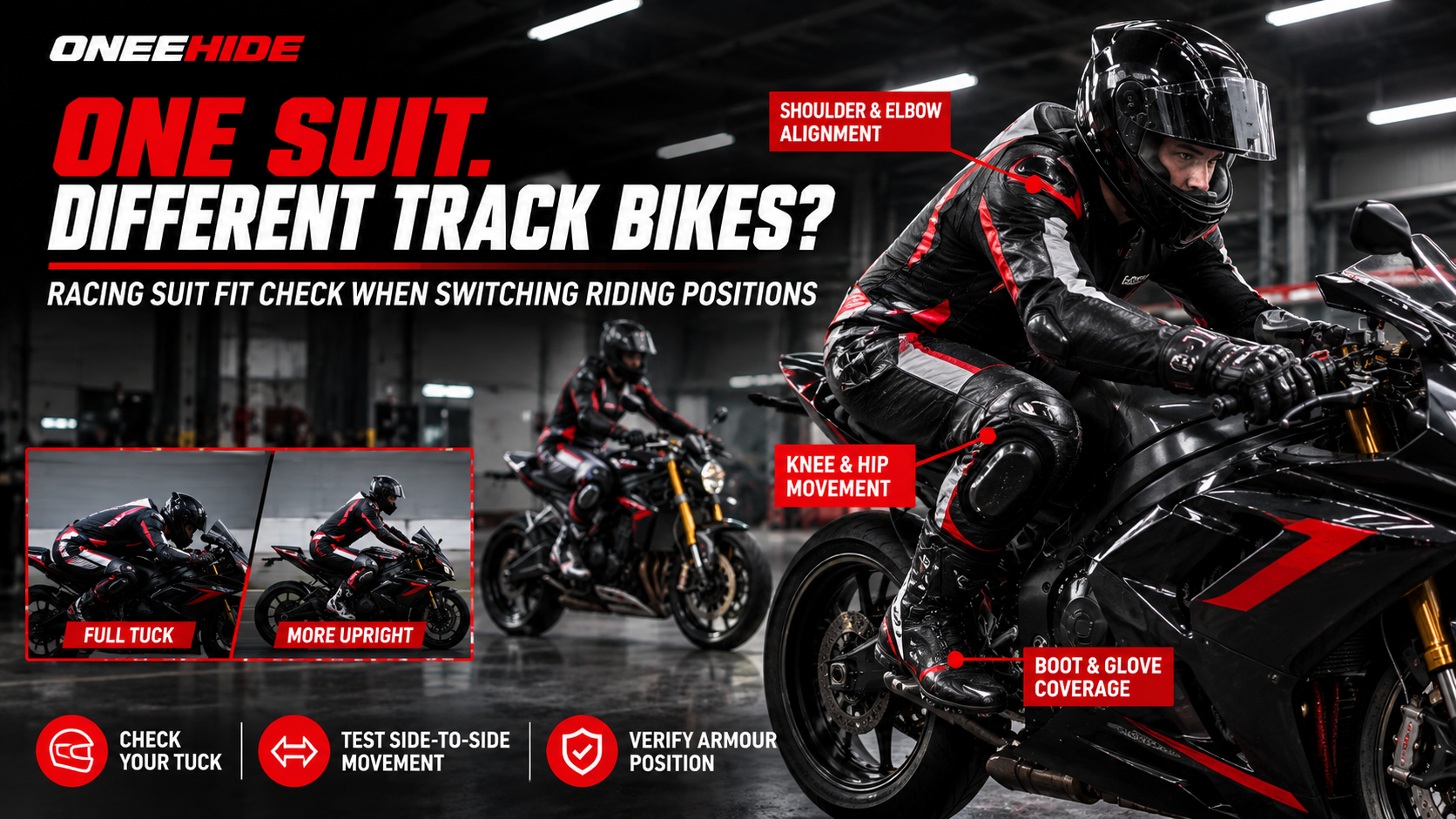
Switching between track bikes can change more than the way a motorcycle handles. A supersport bike, a superbike, and a track-prepared naked motorcycle can place the rider's hands, feet, hips, and knees in noticeably different positions. Even when the same rider uses the same leather suit, those changes can affect where the material stretches, how easily the rider moves, and whether protective components remain correctly positioned.
The good news is that a motorcycle racing suit does not necessarily need to be matched to one specific motorcycle. A properly fitted suit can work across multiple track bikes, provided its construction supports the different riding positions and the rider maintains adequate protection and freedom of movement.
However, a suit that feels comfortable on one motorcycle should not automatically be considered suitable for another. The handlebar reach, rearset position, seat shape, and tank dimensions can all change how the rider interacts with the suit. Understanding these differences makes it easier to identify when a simple fit check is sufficient and when a different size, adjustment, or suit configuration is necessary.
Can One Motorcycle Racing Suit Work Across Different Track Bikes?
Yes, a rider can generally use the same racing suit on different track bikes when the suit fits correctly in each motorcycle's intended riding position and its protective components remain properly positioned.
The important distinction is between a suit that fits the rider and one that accommodates the rider's position on a particular motorcycle. A suit is not necessarily manufactured for one motorcycle model, but its ergonomic design can favour particular riding postures.
For example, one-piece leather suits commonly feature pre-curved arms and legs. These shapes are intended to accommodate the forward-leaning posture associated with sport motorcycles. Dainese explains this design characteristic in its motorcycle suit sizing and selection guide.
When comparing different leather motorcycle racing suits, riders should therefore consider more than leather quality, external appearance, or standard sizing. The placement of stretch panels, knee and elbow protection, shoulder construction, and overall flexibility can influence how comfortably a suit accommodates different riding positions.
A suit that works well between two similar supersport motorcycles may also work on a track-prepared naked bike. However, moving from a low, aggressive superbike to a motorcycle with a more upright seating position can expose fit limitations that were not noticeable before.
Why Switching Motorcycles Changes the Way a Racing Suit Fits
Motorcycle ergonomics determine how the rider's body interacts with the machine. Three major contact areas influence this relationship: the seat, handlebars, and footrests.
Changing the position of any of these components can affect the rider's joints and the tension placed on different sections of a leather suit.
A 2024 study published in Traffic Injury Prevention, titled "Quantifying Rider Posture Variability in Powered Two- and Three-Wheelers for Safety Assessment," examined riding positions across naked, scooter, and touring motorcycles. The researchers recorded 20 volunteers and found meaningful differences in posture between motorcycle types. Variations in foot placement relative to the seat were associated with knee and hip joint-angle differences of approximately 20 degrees.
The study was not a racing-suit compatibility test, and its sample was limited to 20 male volunteers. Nevertheless, it demonstrates why changing motorcycle geometry can change the physical demands placed on the rider.
1. Handlebar Position Changes Upper-Body Movement
A motorcycle with low clip-on handlebars usually encourages a more forward-leaning posture than a bike with higher handlebars.
This difference affects the suit around the shoulders, chest, elbows, and upper back.
On a low-handlebar sportbike, the rider bends forward and extends the arms towards the controls. A suit designed for this posture may feel appropriately snug around the torso.
Switching to a naked track bike with a more upright handlebar arrangement can change the angle of the shoulders and elbows. The sleeves may fold differently, and some sections around the upper chest or back may experience additional tension.
Check whether:
-
The shoulders remain comfortable when reaching the handlebars.
-
Elbow protectors stay centred over the elbows.
-
The sleeves do not pull excessively when the arms extend.
-
The chest and upper back allow unrestricted breathing.
-
The collar does not create pressure when the rider lowers or turns the head.
A suit should not force the rider to adopt an uncomfortable upper-body position simply because its pattern was developed around a different motorcycle.
2. Rearsets and Footpeg Position Affect Lower-Body Fit
Rearsets are adjustable foot-control assemblies that can move the footpegs and associated controls into different positions.
Their location influences knee bend, hip movement, and the amount of space available between the rider and the motorcycle.
A sportbike with high rearsets generally produces a more compact lower-body posture than a motorcycle with lower footpegs. This difference can place additional tension on the leather around the thighs, knees, and crotch.
When changing bikes, examine:
-
Whether the knees can bend naturally without excessive restriction.
-
Whether the leather pulls uncomfortably around the inner thighs.
-
Whether the knee protectors remain correctly positioned.
-
Whether the rider can operate the gear and rear brake controls comfortably.
-
Whether the suit bunches excessively behind the knees.
A common mistake is assuming that a tight feeling around the legs simply means the suit needs more break-in time. Leather can become more flexible with use, but excessive pulling, numbness, and restricted movement should not be dismissed as normal stiffness.
3. Tank Shape and Seat Design Influence Body Position
The fuel tank and seat influence where the rider sits and how the body moves during braking and cornering.
A wide tank can change how the rider positions the knees, while a longer or differently shaped seat can alter the rider's fore-and-aft position.
These differences matter because racing suits are designed to move with the rider rather than remain fixed in one posture.
For example, a rider who moves farther forward on one motorcycle may experience increased tension around the hips and lower back. On another bike, a different tank shape may encourage a more natural knee position.
Check whether the suit allows movement between the front of the seat and the normal cornering position without pulling across the crotch, hips, or lower back.
Five Fit Checks to Perform When Switching Track Bikes
The most reliable way to evaluate a racing suit across multiple motorcycles is to repeat the same fit checks on each machine.
Perform these checks with the motorcycle securely supported, the engine switched off, and the rider wearing the complete protective equipment intended for the session.
1. Check the Full Tuck Position
Start by sitting on the motorcycle and adopting the normal forward-leaning position used on track.
Place both hands on the handlebars, bend the elbows naturally, and allow the knees to follow the motorcycle's tank shape.
Pay attention to the shoulders, chest, lower back, and crotch.
The suit should accommodate the tucked position without creating painful pressure points or pulling so tightly that normal body movement becomes difficult.
If the rider can achieve a comfortable tuck on one motorcycle but experiences significant restriction on another, the difference deserves further investigation.
2. Examine Knee and Elbow Protector Alignment
Protective armour must remain correctly positioned as the rider changes posture.
Check the knee protectors with both knees bent in the riding position. They should continue covering the intended knee area rather than moving noticeably away from the kneecap.
Perform a similar check for the elbows.
Move the arms into the position required to operate the handlebars and examine whether the elbow protection remains centred.
Also check the shoulder and hip protectors. A suit that feels comfortable while standing can still allow protective components to move when the rider crouches or shifts sideways.
The same principle applies when moving between motorcycles. A change in knee angle or arm extension can reveal a positioning problem that was previously less noticeable.
3. Test Cornering and Side-to-Side Movement
A track rider needs to move naturally from one side of the motorcycle to the other.
While stationary, simulate the normal body movements involved in moving into a left-hand and right-hand corner. Do not force an extreme position.
Check whether the leather stretches comfortably across the hips, thighs, shoulders, and back.
Look for excessive bunching behind the knees or around the armpits. These areas can become uncomfortable when the rider repeatedly changes position.
The knee sliders should also remain appropriately positioned relative to the rider's natural knee placement. Do not compensate for an unsuitable suit fit by forcing the knee farther outward simply to achieve ground contact.
4. Check Wrist, Ankle, and Boot Compatibility
The connection between a racing suit and the rest of the protective equipment deserves attention when switching motorcycles.
A different riding position can change the angle of the wrists and ankles. It may also reveal problems with sleeve and leg length that were less apparent on the previous bike.
Check that:
-
Glove cuffs overlap the suit sleeves according to the intended design.
-
Boot closures and suit leg openings work together correctly.
-
The wrists remain covered when reaching the handlebars.
-
The ankle area does not expose skin during normal foot movement.
-
Neither the gloves nor boots create uncomfortable pressure against the suit.
Internal and external boot configurations can have different requirements. Use the arrangement specified by the suit and boot manufacturers rather than assuming every combination is interchangeable.
5. Check Back Protection and Airbag Compatibility
Back protectors and electronic airbag systems introduce another important consideration.
A suit must accommodate the actual protective equipment being worn. Adding a thicker back protector, chest protector, or separate airbag vest can change the available space inside the garment.
Alpinestars recommends performing race-suit fitting checks with the same protective equipment and layers intended for track use. Its race-suit fitting guide also explains how to assess armour alignment and movement in the riding position.
When switching motorcycles, repeat the checks rather than assuming the previous setup remains suitable.
For electronic airbags, verify the manufacturer's compatibility requirements, including the supported suit models, required internal space, and positioning instructions. Never assume that an airbag system will work correctly merely because it fits inside the leather suit.
Which Motorcycle Changes Require More Attention?
Not every motorcycle change presents the same fit challenges. Moving between motorcycles with similar ergonomics is usually less demanding than switching to a substantially different riding position.
The following comparison provides a practical starting point.
|
Motorcycle change |
Main fit areas to inspect |
|
Supersport to superbike |
Handlebar reach, shoulder movement, knee bend |
|
Superbike to naked track bike |
Torso position, elbow alignment, lower-back comfort |
|
Sportbike to sport-touring motorcycle |
Hip position, knee angle, sleeve movement |
|
One race-prepared bike to another |
Rearset location, seat shape, tank clearance |
|
Standard track bike to modified race setup |
All major joints, armour positioning, airbag clearance |
These are inspection priorities, not guaranteed outcomes. Two motorcycles in the same category can still have different dimensions and rider-control arrangements.
When Two Sportbikes Have Similar Ergonomics
Moving between two sportbikes with similar seat heights, handlebar positions, and rearset arrangements may require relatively few adjustments to the rider's positioning.
The same suit may work comfortably on both, provided that armour alignment, movement, and overall coverage remain correct.
However, the similarity of the motorcycle category does not establish compatibility by itself. Individual riders have different proportions, flexibility, and preferred body positions.
When Moving From a Superbike to a Naked Motorcycle
This change deserves particular attention because the upright handlebar arrangement can alter upper-body posture.
A suit with heavily pre-curved arms and legs may feel different when the rider sits more upright. Check for excessive sleeve folds, shoulder tension, and discomfort around the waist.
The rider should be able to operate the controls without fighting the suit's construction.
When Switching to a Modified Track Bike
Track modifications can make a bigger difference than the motorcycle's original category.
Adjustable rearsets, alternative clip-ons, a different seat, or a modified fuel tank can change how the rider interacts with the bike.
After these changes, perform the fit checks again. A motorcycle that initially accommodated the suit comfortably may require a different body position following an ergonomic modification.
When Should You Consider a Custom Motorcycle Racing Suit?
A custom suit becomes worth considering when a standard size repeatedly creates fit problems across the rider's intended motorcycles.
For example, a rider may have an appropriate torso fit but experience excessive tension around the thighs, or the sleeves may be too restrictive when using a particular handlebar arrangement.
A made-to-measure garment can account for individual body proportions more precisely than relying entirely on standard sizing.
A custom motorcycle racing suit can be a useful option for riders who need a more individualised fit. However, custom sizing should be based on accurate measurements and a clear understanding of the riding positions in which the suit will be used.
Before ordering, discuss the following with the suit manufacturer or fitting specialist:
-
The motorcycles on which the suit will be used.
-
Typical handlebar and rearset configurations.
-
Your preferred tucked and cornering positions.
-
The dimensions of the protective equipment being worn.
-
Airbag-system compatibility, where applicable.
-
Areas where an existing suit creates uncomfortable tension or unwanted movement.
Remember that custom tailoring cannot automatically make one garment suitable for every possible motorcycle configuration. A substantial difference in riding position may still require a compromise or a separate setup.
A Final Fit Inspection Before Returning to the Track
A motorcycle racing suit should be evaluated as part of the rider's complete protective setup, not as an isolated piece of clothing.
Before using the same suit on a different track bike, repeat the inspection with the actual motorcycle and equipment.
Use this practical checklist:
-
The suit allows a natural riding position without painful restriction.
-
Shoulder and elbow areas allow normal control movement.
-
Knee and hip protectors remain correctly positioned.
-
The crotch and lower back do not experience excessive tension.
-
The rider can move comfortably into both cornering positions.
-
Glove and boot interfaces provide the intended coverage.
-
Back and chest protection remain correctly positioned.
-
Any electronic airbag system meets its manufacturer's compatibility requirements.
-
Zippers, fasteners, seams, and adjustment systems are securely closed.
-
No new discomfort, numbness, or significant restriction appears during the fit assessment.
If any of these checks fail, do not assume that the suit will become suitable simply through repeated use. Seek advice from the manufacturer or a qualified motorcycle protective-equipment fitter.
Using one racing suit across multiple track bikes is practical when the rider's protection, mobility, and coverage remain consistent. The motorcycle may change, but the standard for a correctly fitted suit should not.
Add a clearer direct answer upfrontReduce repetitive fit-check sections

 English
 Arabic
 French
 Spanish
 Portuguese
 Deutsch
 Turkish
 Dutch
 Italiano
 Russian
 Romaian
 Portuguese (Brazil)