


What Should Buyers Check Before Ordering from dingchuncup?
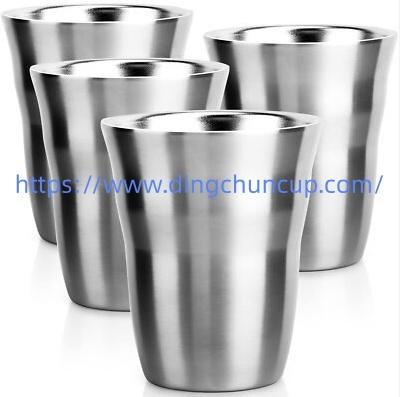
SS Cup purchasing decisions require attention to more than appearance and selling price. For importers, wholesalers, distributors, and private-label businesses, evaluating material specifications, body construction, surface treatment, and manufacturing procedures can help prevent misunderstandings during sourcing. A suitable drinking container should meet the intended application, match customer preferences, and comply with relevant market requirements. Before confirming a purchase, buyers should discuss several practical details with their manufacturing partners.
Verify the Stainless Steel Grade
Material identification is an important part of product evaluation. Buyers should ask manufacturers to specify the stainless steel grade used in each component rather than relying on general descriptions.
Grades such as 304 and 316 are commonly used in different stainless steel applications. The appropriate selection depends on the intended use, construction, and purchasing requirements.
For drinkware, buyers should also check whether the material is suitable for food contact. Relevant material documentation and testing records can help importers evaluate compliance with regulations in their destination markets.
Another detail worth discussing is wall thickness. Different thickness specifications can influence product weight, forming requirements, and manufacturing costs. Buyers should request clear specifications before comparing quotations from different factories.
Inspect the Body Construction and Rim Finish
The physical construction of a drinking container affects its appearance, handling, and daily maintenance. Buyers should examine the body shape, bottom structure, opening dimensions, and rim finishing when reviewing product samples.
Pay particular attention to the drinking edge. It should have an appropriate finish without noticeable burrs, rough areas, or irregular edges. These details can influence user comfort and the overall product experience.
The bottom section also deserves attention. A stable base can help the container remain properly positioned on desks, dining tables, and other flat surfaces.
For bulk purchasing, buyers should compare several samples rather than evaluating only one individual piece. This provides an opportunity to discuss dimensional consistency and acceptable appearance standards with the manufacturer.
Compare Capacity and Practical Dimensions
Capacity should match the intended customer group and application. Smaller drinking containers may suit coffee breaks or office desks, while larger models can accommodate customers who prefer carrying more drinking water throughout the day.
However, capacity alone does not determine product suitability. Buyers should also consider height, opening diameter, bottom width, and overall weight.
For example, businesses supplying office accessories may prefer compact designs that fit conveniently into everyday working environments. Retailers targeting outdoor customers may consider different body shapes and carrying requirements.
Manufacturers should provide accurate measurement information, including product volume and external dimensions. Buyers can use these details to compare models, prepare product listings, and plan packaging arrangements.
Evaluate Surface Finishing and Appearance
Exterior finishing is an important part of product development, especially for businesses creating customized drinkware collections.
Different treatments can produce different visual effects. Common options include brushed finishes, polished surfaces, powder coating, and colored exterior treatments.
Buyers should ask manufacturers about available colors, surface textures, logo application methods, and decoration positions. If a particular color is required, providing a reference sample or color code can help clarify expectations.
It is also advisable to review how the selected finish responds to normal handling and cleaning. Buyers can request decorated samples before approving large production quantities.
These discussions help businesses coordinate product appearance with their packaging, brand identity, and intended retail market.
Discuss Customization and Production Capabilities
For wholesalers and private-label companies, customization can support the development of distinctive product collections.
Before requesting a quotation, buyers should prepare their basic requirements, including product dimensions, preferred materials, colors, logo artwork, packaging style, and estimated order quantity.
At dingchuncup, buyers can discuss product specifications and customization arrangements with the manufacturing team. Depending on the selected model and production capabilities, available options may include logo printing, color selection, and packaging coordination.
It is also useful to ask about sample preparation, artwork confirmation, production schedules, and order requirements. Clear communication during this stage can help reduce design misunderstandings and unnecessary changes during manufacturing.
Review Quality Control and Packaging Details
Quality inspection should cover different stages of production rather than focusing only on the finished appearance.
Buyers can discuss inspection procedures for material specifications, body dimensions, rim finishing, surface condition, handle attachment, and overall product assembly.
For customized orders, logo position, color consistency, and printing appearance should also be included in the inspection requirements.
Packaging deserves similar attention. Individual boxes, protective inserts, product labels, and outer cartons should be suitable for the planned transportation and distribution arrangements.
Importers can request packaging samples to review product placement and protection before mass production. They should also clarify carton quantities, package dimensions, and shipping marks when preparing international orders.
Prepare a Purchasing Checklist Before Ordering
A clear purchasing checklist can help businesses organize supplier communication and compare different manufacturing proposals.
Before confirming an order, buyers should review the following information:
Stainless steel grade and material documentation.
Product dimensions and capacity specifications.
Surface treatment and available color options.
Sample approval and customization arrangements.
Quality inspection procedures.
Packaging details and shipping requirements.
Production schedules and order quantities.
Keeping these requirements in written records gives both parties a shared reference during production and order fulfillment.For importers, distributors, and private-label businesses, choosing a manufacturing partner involves evaluating product construction, customization options, inspection procedures, and communication arrangements. Businesses planning wholesale purchases or customized drinkware projects can visit https://www.dingchuncup.com/ to review available products and discuss their specifications and manufacturing requirements with the company.

 English
 Arabic
 French
 Spanish
 Portuguese
 Turkish
 Dutch
 Italiano
 Russian
 Romaian
 Portuguese (Brazil)
 Greek