


Advanced Wire Processing for Reliable Fasteners
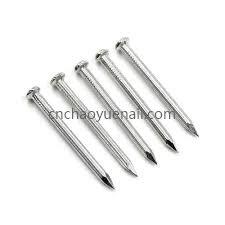
Industrial fastening applications often involve materials and operating conditions that require carefully selected fasteners. Heavy Wire Staples are designed for applications where a stronger wire profile is needed to support secure connections between suitable substrates. Their performance depends on material properties, forming accuracy, surface condition, and compatibility with the fastening equipment. For manufacturers and distributors, consistent production quality is essential to maintaining reliable assembly processes and reducing avoidable installation problems.
Steel selection is the first consideration in manufacturing. The wire must provide suitable mechanical properties for the intended fastening application while remaining workable during production. Material consistency influences drawing behavior, cutting quality, and forming stability. Manufacturers should evaluate incoming wire for surface defects, composition consistency, and other characteristics relevant to their production requirements. Proper material control helps reduce variation between batches and supports predictable processing through automated equipment.
Wire preparation involves drawing, straightening, and feeding operations. Drawing establishes a consistent wire profile, while straightening equipment prepares the material for accurate feeding into forming machinery. Lubrication can help reduce friction and support smooth movement during processing. Automated feeding systems then transfer the wire through cutting and bending stages to create the finished staple shape. Consistent feeding and coordinated machine operations are important because irregular material movement can result in uneven cutting or inconsistent forming.
Forming accuracy is particularly important for fasteners intended for demanding applications. The crown and legs must maintain a consistent shape so that products can be used with compatible fastening tools. Cutting blades, forming dies, and guide components must remain in good condition to prevent burrs, deformation, or alignment problems. Since tooling gradually wears during production, scheduled maintenance is essential. Regular cleaning, alignment verification, and timely replacement of worn parts help maintain stable manufacturing performance.
Heat treatment may be considered when the product design requires specific hardness characteristics. The process must be controlled carefully because hardness and toughness need to remain balanced for the intended use. Excessive brittleness may increase the risk of breakage, while insufficient hardness may affect resistance to deformation. Manufacturers should establish suitable processing conditions and verify product properties through appropriate inspection methods. The final requirements should reflect the actual application rather than a general assumption about all heavy-duty fastening products.
Surface finishing is another factor that affects product suitability. Bright steel finishes may be appropriate for certain protected indoor applications, while galvanized or other coated finishes may provide additional corrosion resistance where needed. Selection should take into account moisture exposure, storage conditions, substrate compatibility, and expected service life. No finish should be treated as suitable for every environment. Buyers should discuss operating conditions with suppliers to determine the most appropriate option.
Equipment compatibility also plays a major role in fastening reliability. Staple dimensions, crown configuration, leg profile, collation, and feeding arrangement must match the requirements of the intended pneumatic or electric tool. An unsuitable configuration can lead to feeding interruptions, misfires, or inconsistent installation. Industrial buyers should verify product compatibility before ordering and provide accurate equipment information during supplier communication. This is particularly important for production lines where fastening interruptions can affect overall workflow.
Quality assurance should be integrated into every production stage. Incoming material checks help control raw material variation, while in-process monitoring evaluates feeding, cutting, forming, and surface treatment. Finished-product inspections can assess shape consistency, surface appearance, and relevant mechanical characteristics. Automated visual inspection and counting systems may support repeatable checks, while production records help maintain batch traceability. These controls make it easier to investigate quality concerns and implement improvements when necessary.
Packaging should protect products from contamination, moisture, and damage during transportation. Suitable inner bags and cartons can help maintain product condition, while clear labels support identification and warehouse management. For large-volume customers, consistent packaging arrangements simplify stock control and replenishment. Manufacturers can also improve resource efficiency through accurate wire utilization, preventive maintenance, and appropriate recycling of recoverable steel scrap.
When sourcing Heavy Wire Staples, professional buyers should consider steel properties, forming quality, heat-treatment control, surface finish, and fastening-tool compatibility together. Clear communication about substrate materials, installation equipment, environmental conditions, and packaging requirements helps suppliers identify appropriate product options. To review available steel fasteners and manufacturing capabilities, visit https://www.cnchaoyuenail.com/product for more information.

 Arabic
 French
 Spanish
 Portuguese
 Deutsch
 Turkish
 Dutch
 Italiano
 Russian
 Romaian
 Portuguese (Brazil)
 Greek