


Bulk Besan for Namkeen Production | Health Mark Supplier
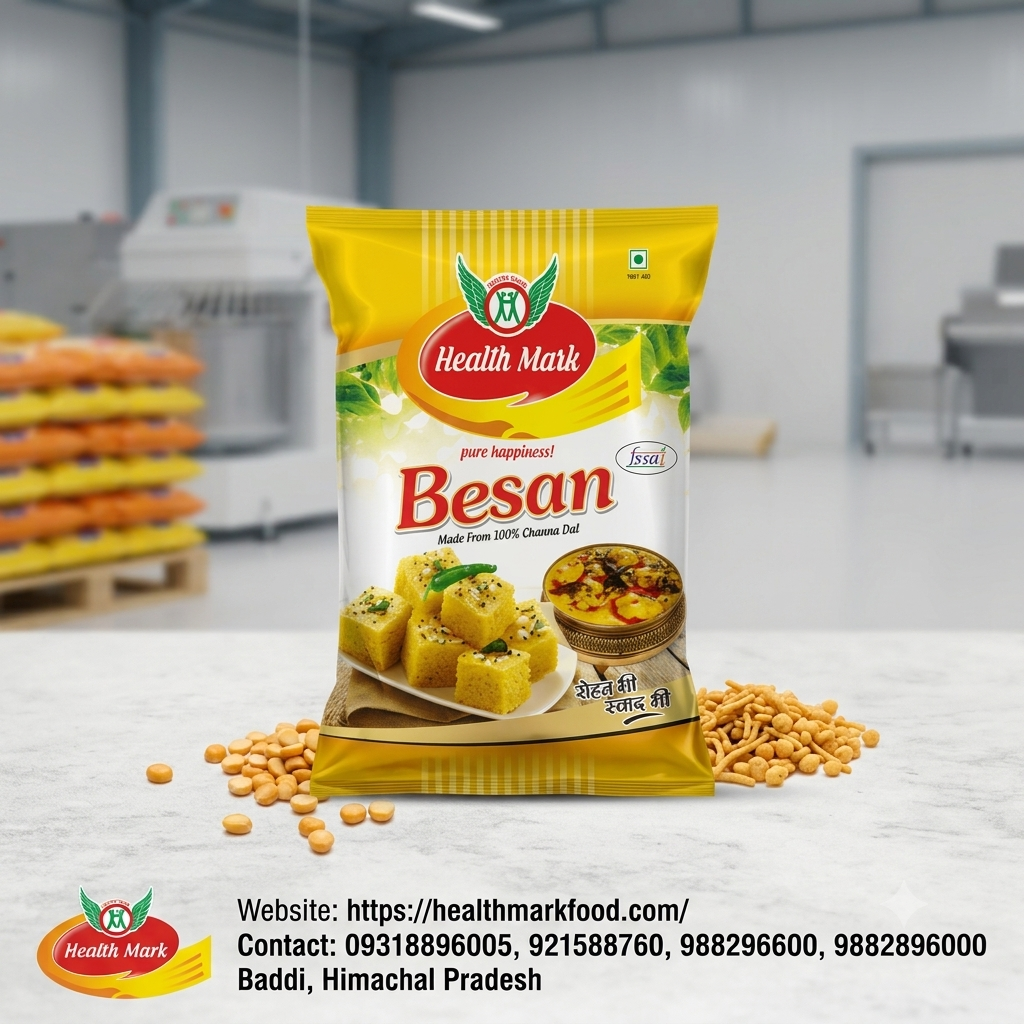
In the namkeen industry, the quality of ingredients directly influences the taste, texture, and consistency of finished snacks. Whether a manufacturer produces crispy sev, spicy bhujia, boondi, or traditional mixtures, besan plays an important role in achieving the desired results.
For businesses purchasing ingredients in large quantities, finding a dependable source is just as important as maintaining an efficient production process. Variations in gram flour can affect dough preparation, frying performance, and the final appearance of snacks.
Choosing the right bulk besan for namkeen production helps manufacturers maintain product standards while planning their raw material requirements more effectively.
This guide explores the factors that matter when purchasing gram flour for commercial snack manufacturing and how Health Mark can be considered for wholesale sourcing requirements.
Why Besan Quality Matters in Namkeen Manufacturing
Besan is prepared by grinding chana dal, also known as split Bengal gram. It is widely used throughout the Indian snack industry because of its versatility in different recipes.
However, every production process requires certain ingredient characteristics. A manufacturer preparing thin sev may prefer a different flour texture from one producing boondi or thicker fried snacks.
The consistency of raw materials influences several stages of manufacturing, including mixing, shaping, frying, and packaging.
For example, differences in flour particle size can affect how smoothly dough passes through extrusion equipment. Similarly, moisture variations may influence dough handling and frying behaviour.
Using quality besan that meets defined production specifications helps businesses reduce unnecessary process adjustments and maintain consistency between batches.
Important Factors When Choosing Besan for Namkeen
Before placing a commercial order, manufacturers should evaluate the characteristics of the flour rather than relying on price alone.
1. Flour Texture and Particle Size
The fineness of besan affects how it mixes with water and other ingredients.
For products such as sev and Besan bhujia, suitable particle size can support smoother dough preparation and more uniform shaping.
Manufacturers should test flour samples under their normal processing conditions before approving a supplier.
2. Freshness and Aroma
Freshness is particularly important when producing snacks intended for retail distribution.
Unusual odours or changes in raw material characteristics may affect the sensory quality of finished products.
Businesses should inspect incoming batches and follow appropriate storage practices to protect ingredients from moisture and contamination.
3. Moisture Content
Moisture can influence handling, storage stability, and processing behaviour.
Excess moisture may create difficulties during storage, while differences between batches can require adjustments to mixing conditions.
A reliable supplier should be able to discuss relevant product specifications and quality requirements with commercial buyers.
4. Consistent Manufacturing Performance
A suitable ingredient should deliver predictable results when used in established recipes.
Rather than selecting the best besan based on advertising claims, manufacturers should consider practical performance tests involving taste, texture, frying characteristics, and yield.
Why Buying Besan in Bulk Makes Business Sense
For snack manufacturers, purchasing ingredients in larger quantities can offer several operational advantages.
Improved Inventory Planning
Regular purchasing schedules help businesses prepare for production demand and reduce the risk of unexpected shortages.
Better Cost Management
Wholesale purchasing allows manufacturers to compare quotations based on order quantities, packaging, transportation, and payment conditions.
Simplified Procurement
Working with a dependable supplier may reduce the time spent evaluating new sources for every purchase.
Support for Seasonal Demand
Namkeen sales can increase during festivals, celebrations, and other high-demand periods. Advance purchasing discussions can help manufacturers plan raw material availability.
For growing FMCG businesses, these benefits can contribute to more organized production and distribution activities.
How to Select a Reliable Wholesale Besan Supplier
Choosing a supplier involves more than finding the lowest quotation.
An established procurement process should include product evaluation, commercial discussions, and supply planning.
When comparing businesses, consider the following:
-
Product specifications: Request relevant information about flour composition, texture, and quality parameters.
-
Sample testing: Evaluate the ingredient in your actual namkeen recipes before purchasing large quantities.
-
Packaging options: Confirm which pack sizes are suitable for your production and storage facilities.
-
Order requirements: Discuss minimum quantities and anticipated monthly consumption.
-
Delivery arrangements: Clarify transportation costs, dispatch schedules, and service locations.
-
Food safety documentation: Check relevant licenses, labelling, and quality records where applicable.
A wholesale besan supplier should be assessed on its ability to meet the manufacturer's specific operational requirements.
Health Mark: A Besan Sourcing Option for Food Businesses
Health Mark is an Indian food brand offering everyday grocery products, including besan, pulses, spices, and other kitchen essentials.
Businesses searching for a food company in Baddi can explore Health Mark when evaluating potential sourcing relationships for food products.
The brand's besan is positioned for traditional Indian cooking applications, making it relevant for buyers interested in gram flour for commercial use.
For namkeen manufacturers, discussing product suitability directly with the company is an important step before placing a large order.
Manufacturers can contact Health Mark to enquire about current availability, packaging, wholesale quotations, and other purchasing requirements.
How to Compare Besan Prices Without Compromising Quality
Price is an important purchasing factor, particularly when gram flour represents a significant portion of production costs.
However, the best besan price should be evaluated alongside product consistency and total procurement expenses.
Consider a manufacturer purchasing several tonnes of flour every month. Even a small difference in price can affect its operating budget.
At the same time, inconsistent raw materials may create processing difficulties, increase wastage, or require recipe adjustments.
A better approach is to compare the total cost of using each supplier's product.
This includes the purchase rate, transportation, storage, processing performance, and suitability for finished snacks.
Requesting quotations from shortlisted suppliers and conducting controlled production trials can support more informed decisions.
Besan Applications Across the Namkeen Industry
Gram flour is a versatile ingredient used in several popular snack categories.
Sev and Bhujia
These products require dough with suitable consistency for extrusion and frying. Flour texture can influence shaping and the finished product's crispness.
Boondi
Boondi preparation depends on batter consistency and controlled frying conditions. Appropriate flour characteristics help manufacturers achieve their preferred product size and texture.
Pakora and Fried Snack Mixes
Besan is commonly used as a coating or batter ingredient, contributing to the structure and texture of fried snacks.
Traditional Namkeen Mixtures
Many regional mixtures contain sev, boondi, or other gram-flour-based components.
Manufacturers should select ingredients according to their recipes, equipment, and target product characteristics.
Partner with Health Mark for Wholesale Besan Enquiries
For snack manufacturers, selecting raw materials is a long-term business decision. Quality assessment, supply reliability, and clear commercial communication are essential for maintaining efficient operations.
Businesses seeking premium quality besan should establish their requirements before discussing a wholesale purchase.
Health Mark provides an opportunity to enquire about besan and explore whether its offerings match your manufacturing needs.
Whether you manage a small snack unit, an expanding food brand, or a distribution business, contacting the company directly can help clarify product options and commercial terms.
Conclusion
Successful namkeen manufacturing depends on consistent ingredients, controlled processes, and dependable procurement.
Selecting bulk besan for namkeen production requires attention to flour characteristics, processing performance, pricing, and supplier reliability.
By evaluating product samples and discussing purchasing requirements with potential suppliers, manufacturers can make decisions that support both product quality and business efficiency.
Health Mark welcomes enquiries from buyers interested in exploring its gram flour offerings and other everyday food products.
Contact Health Mark for Bulk Besan Requirements
Looking for besan for your snack manufacturing business? Connect with Health Mark to discuss wholesale quantities, product availability, packaging options, and pricing.
Website: https://healthmarkfood.com/
Contact Numbers:
-
09318896005
-
9218587660
-
9882896000
Location: Baddi, Himachal Pradesh, India
Contact Health Mark today to request information about bulk purchasing options for your business.

 English
 Arabic
 French
 Spanish
 Portuguese
 Turkish
 Dutch
 Italiano
 Russian
 Romaian
 Portuguese (Brazil)
 Greek