


How to Choose the Right Electrical Cables for Your Project | Tegh Cables
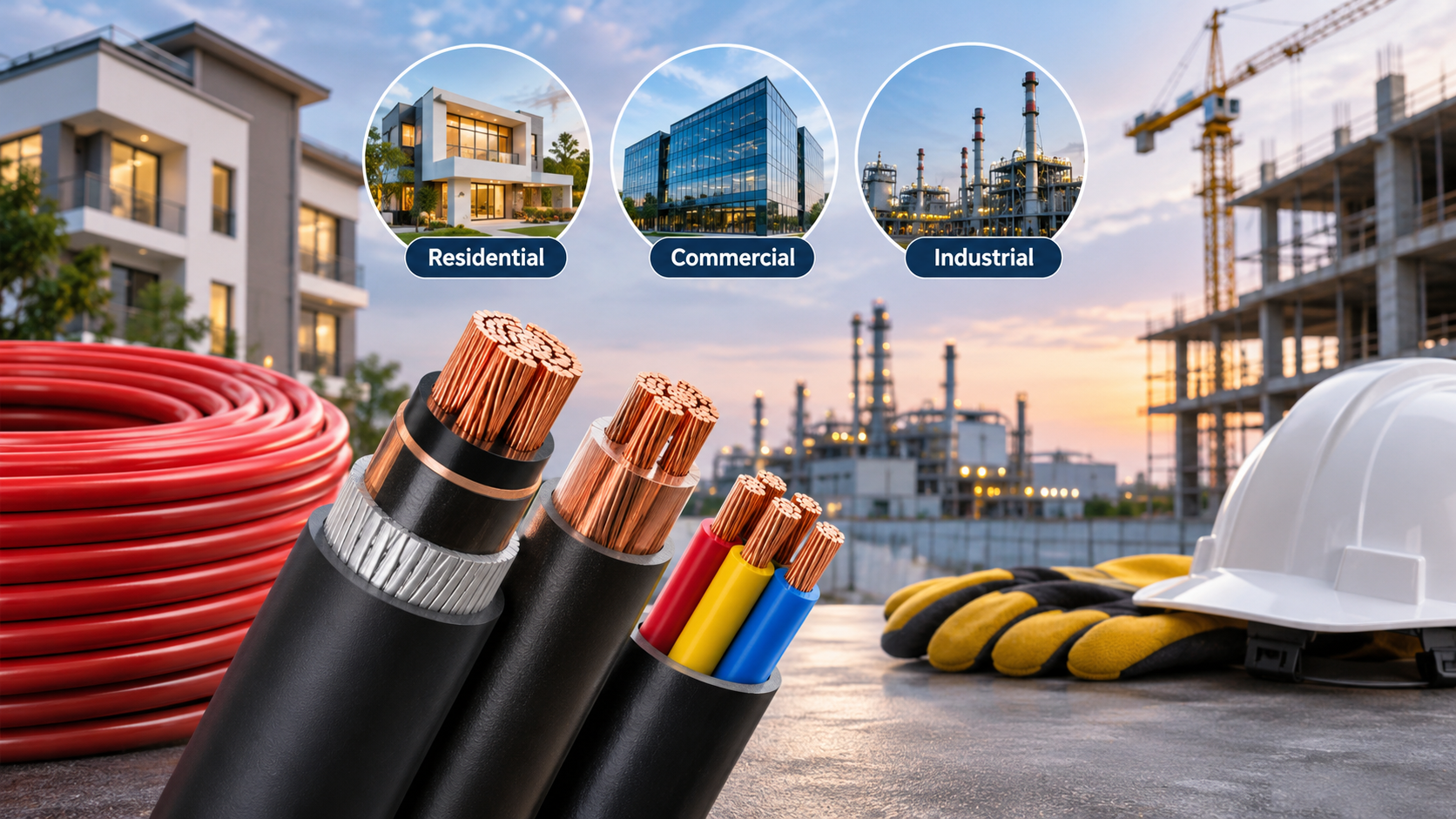
How to Choose the Right Electrical Cables for Residential, Commercial & Industrial Projects
Electricity is the backbone of modern homes, commercial buildings, manufacturing facilities and infrastructure projects. Behind every reliable electrical system is an essential component that often goes unnoticed: electrical wires and cables.
Choosing the right electrical cable is important for maintaining electrical safety, ensuring efficient power transmission and supporting the long-term performance of electrical installations. Whether you are constructing a residential property, developing a commercial complex or managing an industrial project, selecting suitable cables should always be a priority.
However, with different cable types, voltage ratings, insulation materials and applications available in the market, choosing the right product can be challenging.
In this guide, we will explore the different types of electrical cables, important selection factors and how to identify suitable cable solutions for different applications.
Why Is Choosing the Right Electrical Cable Important?
Electrical cables are responsible for transmitting electricity safely from one point to another. The quality and suitability of cables directly influence the performance and reliability of an electrical installation.
Using an incorrectly specified cable can result in excessive heating, voltage drop, insulation failure and potential electrical hazards.
Here are some important reasons to select the right electrical cables:
-
Electrical Safety: Suitable cables help reduce the risk of overheating and electrical failures.
-
Reliable Power Transmission: Proper cable selection supports consistent electricity distribution.
-
Long-Term Performance: Quality cables can provide dependable performance throughout their intended service life.
-
Reduced Maintenance: Correct specifications help minimize unnecessary repairs and replacement.
-
Project Efficiency: Selecting suitable cables helps electrical contractors and project managers meet technical requirements.
Different Types of Electrical Cables and Their Applications
Electrical cables are available in different designs and specifications depending on their intended applications. Understanding their differences makes the selection process easier.
1. LT Power Cables
Low Tension (LT) power cables are commonly used in low-voltage electrical distribution systems. They are suitable for residential complexes, commercial establishments, industrial facilities and infrastructure projects.
LT power cables are used for distributing electricity between transformers, distribution panels and electrical equipment, depending on system requirements.
They are available in different conductor materials, insulation types, core configurations and armouring options.
2. HT Power Cables
High Tension (HT) power cables are designed for medium-voltage power transmission and distribution applications.
They are commonly used in:
-
Industrial power distribution networks
-
Electrical substations
-
Utility infrastructure
-
Large commercial developments
-
Power distribution projects
HT cable selection requires careful consideration of voltage ratings, insulation systems, installation conditions and applicable technical standards.
3. House Wiring Cables
House wiring cables are essential for residential electrical installations. They connect electrical distribution boards to lighting points, switches, sockets and appliances.
Important considerations when selecting house wiring cables include:
-
Appropriate conductor size
-
Copper conductor quality
-
Insulation material
-
Current-carrying capacity
-
Flame-retardant properties where required
-
Applicable BIS standards
Choosing suitable house wiring cables helps support safe and dependable electrical installations.
4. Industrial Cables
Industrial environments require cables that can handle specific electrical, mechanical and environmental conditions.
Industrial cables are used in factories, manufacturing plants, automation systems, control panels and heavy electrical equipment.
Depending on the application, these may include:
-
Industrial power cables
-
Control cables
-
Instrumentation cables
-
Flexible cables
-
Special-purpose cables
The right selection depends on equipment requirements, operating conditions and installation methods.
5 Important Factors to Consider Before Buying Electrical Cables
Selecting electrical cables involves more than comparing prices. Buyers should evaluate several technical factors before making a purchase.
1. Voltage Rating
Every electrical cable is designed to operate within a specified voltage range.
Before purchasing, identify the voltage requirements of your electrical system and select cables with appropriate ratings.
Using cables with unsuitable voltage ratings can compromise insulation performance and electrical safety.
2. Current Carrying Capacity
Current-carrying capacity refers to the amount of electrical current a cable can safely carry under specified installation conditions.
Cable size should be determined by considering:
-
Electrical load
-
Conductor material
-
Ambient temperature
-
Installation method
-
Cable grouping
-
Permissible voltage drop
Always consult a qualified electrical engineer for cable sizing calculations, particularly for industrial and large-scale projects.
3. Conductor Material
Copper and aluminium are commonly used conductor materials.
Copper Cables:
-
High electrical conductivity
-
Good flexibility in suitable stranded constructions
-
Commonly used in residential and commercial wiring
-
Suitable for various industrial applications
Aluminium Cables:
-
Lightweight compared with copper
-
Cost-effective for many power distribution applications
-
Commonly used in distribution networks and industrial installations
The right conductor depends on electrical requirements, installation conditions and project budget.
4. Insulation Material
Insulation protects the conductor and helps prevent unwanted electrical contact.
Common insulation materials include:
-
PVC: Widely used in general-purpose wiring and power cable applications.
-
XLPE: Offers useful thermal and electrical properties for different power distribution applications.
-
FR and FRLS: Cable categories designed with specific flame-retardant and fire-performance characteristics.
The appropriate insulation should be selected according to the cable's intended application and required performance.
5. Quality Standards and Certification
Quality and compliance should never be overlooked when purchasing electrical cables.
The Bureau of Indian Standards (BIS) publishes Indian Standards covering different categories of electrical wires and cables.
For example:
-
IS 694 covers PVC-insulated wires and cables within its specified scope.
-
IS 1554 covers PVC-insulated heavy-duty electric cables.
-
IS 7098 covers XLPE-insulated electric cables.
Always verify the applicable standard, certification and product specifications before purchasing.
Choosing the Right Cables for Different Projects
Different projects have different electrical requirements. Here is a quick overview of the considerations involved.
Residential Projects
Residential buildings require suitable house wiring cables for lighting, fans, sockets, air conditioners and other electrical appliances.
Consider conductor size, insulation quality, electrical load and applicable safety standards.
Commercial Projects
Commercial properties such as offices, shopping complexes, hotels and hospitals often have more complex electrical distribution requirements.
Depending on the project, suitable solutions may include LT power cables, control cables, fire-performance cables and distribution cables.
Industrial Projects
Industrial projects require carefully specified electrical cables for machinery, motors, control systems and power distribution networks.
Factors such as operating temperature, mechanical protection, voltage requirements and environmental exposure should be considered during selection.
Common Mistakes to Avoid When Buying Electrical Cables
Avoiding these mistakes can help improve the reliability of electrical installations.
-
Choosing Only on Price: Lower prices should not come at the expense of product quality and suitability.
-
Ignoring Cable Specifications: Always check voltage ratings, conductor sizes and insulation requirements.
-
Overlooking Certification: Verify applicable BIS requirements and product documentation.
-
Selecting the Wrong Cable Type: Residential wiring cables and industrial power cables serve different purposes.
-
Ignoring Installation Conditions: Underground, outdoor and indoor installations may require different cable constructions.
Why Choose a Reliable Electrical Cable Distributor?
Selecting the right supplier is just as important as selecting the right cable.
A dependable electrical cable distributor can help buyers source genuine products, understand product specifications and coordinate supplies for different project requirements.
Tegh Cables Pvt. Ltd. is an All India Authorized Distributor and Channel Partner of Polycab India Ltd., offering electrical cable solutions for residential, commercial, industrial and infrastructure applications.
With over four decades of industry experience, Tegh Cables focuses on quality products, dependable distribution and professional customer support.
Its product portfolio includes:
-
Polycab LT Power Cables
-
Polycab HT Power Cables
-
House Wiring Solutions
-
Industrial Cables
-
Power and Control Cables
-
FR and FRLS Wires
-
Industrial and Solar Cables
Whether you are an electrical contractor, EPC company, builder, industrial buyer or infrastructure developer, choosing an experienced distribution partner can simplify electrical procurement.
Conclusion
Choosing the right electrical cables is essential for the safety, efficiency and reliability of every electrical installation.
Understanding cable types, voltage ratings, conductor materials, insulation properties and applicable standards helps buyers make informed decisions.
From residential house wiring to large industrial and infrastructure projects, selecting suitable electrical products from a reliable distribution partner makes a significant difference.
Tegh Cables Pvt. Ltd. provides Polycab wires and cable solutions for a wide range of applications across India, supported by decades of industry experience and a strong distribution network.
Looking for Reliable Electrical Cables for Your Project?
Connect with Tegh Cables Pvt. Ltd. to explore genuine Polycab cable solutions for your residential, commercial, industrial or infrastructure requirements.
Website: https://www.teghcables.com/
Email: delhi@teghcables.com
Phone: +91 7059000999

 English
 Arabic
 French
 Spanish
 Portuguese
 Deutsch
 Dutch
 Italiano
 Russian
 Romaian
 Portuguese (Brazil)
 Greek