


How to Start an Import Export Business in India in 2026: A Step-by-Step Guide
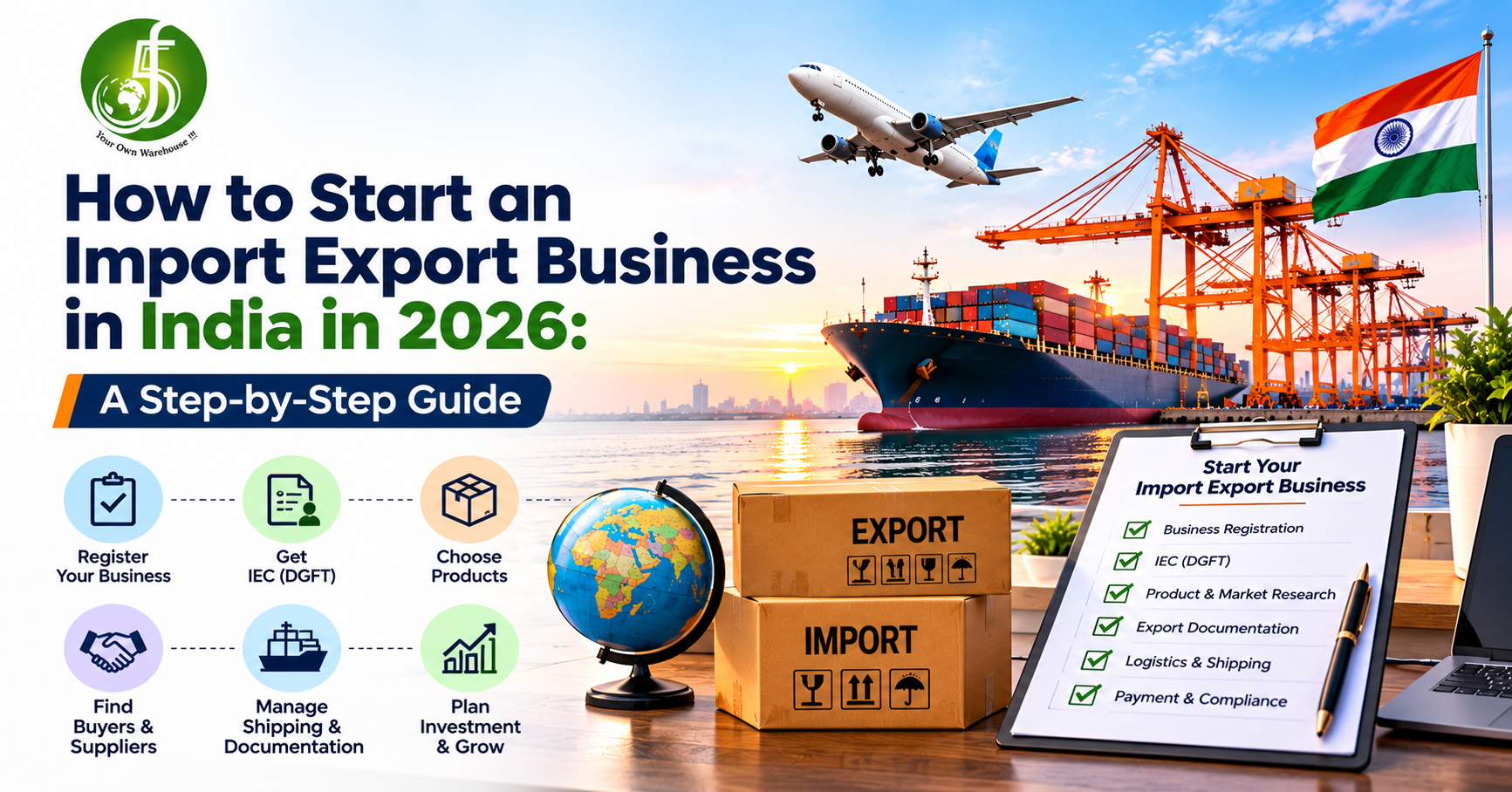
Starting an import-export business in India can create opportunities for entrepreneurs, manufacturers, and traders who want to work with international markets. However, entering global trade requires proper business registration, product research, regulatory compliance, supplier connections, and financial planning.
If you are planning to start an import-export business in 2026, understanding the registration process and essential requirements can help you avoid common mistakes. This guide explains the key steps, documents, and practical decisions involved in establishing an international trading business in India.
1. Choose Your Business Model and Product
First, decide whether you want to export Indian products, import foreign goods, or operate in both markets.
Popular sourcing categories include textiles, garments, zippers, home décor, handicrafts, and industrial products. Select products based on demand, competition, supplier availability, and destination-country regulations.
Before investing, research potential buyers and calculate your expected costs and profit margins.
2. Register Your Business and Obtain IEC
Choose a suitable business structure, such as a proprietorship, partnership, LLP, or private limited company, and complete the applicable registration requirements.
The next important step is obtaining an Importer Exporter Code (IEC) from the Directorate General of Foreign Trade (DGFT).
IEC is generally required for importing and exporting goods from India, subject to specified exemptions.
You should also:
-
Obtain PAN and the applicable business registrations.
-
Open a current bank account.
-
Complete GST registration where applicable.
-
Update IEC details annually during the prescribed period.
3. Understand Export Documents and Compliance
Before accepting an international order, understand the documentation required for your product and destination market.
Common export documents include:
-
Commercial Invoice and Packing List.
-
Shipping Bill.
-
Bill of Lading or Airway Bill.
-
Certificate of Origin, where required.
Check the product's ITC (HS) classification to understand whether it is freely exportable, restricted, or prohibited. Additional approvals may apply to regulated products.
4. Find Reliable Suppliers and International Buyers
Build relationships with verified Indian manufacturers, suppliers, wholesalers, and overseas buyers.
You can explore trade exhibitions, B2B platforms, export promotion councils, and industry networks. Always verify business credentials, request product samples, and agree on quality specifications before confirming bulk orders.
5. Arrange Logistics, Payments, and Customs Clearance
Decide whether shipments will move by sea, air, or another suitable transport method. Understand Incoterms, which define the responsibilities of buyers and sellers for delivery, costs, and risks.
Also arrange secure international payment terms through an authorised dealer bank. Exporters must follow the applicable RBI foreign-exchange rules for receiving and repatriating export proceeds.
6. Calculate Investment and Start with a Small Order
Prepare a budget covering:
-
Business registration and IEC application.
-
Product purchasing or manufacturing.
-
Packaging and quality inspection.
-
Freight, insurance, and customs-related expenses.
-
Marketing and buyer acquisition.
Start with a manageable order to understand the complete trading process before increasing your investment.
How J5Global Relates to Indian Exports
J5Global operates in the Indian sourcing and export sector, with product categories including textiles, zippers, and décor. Entrepreneurs exploring these categories can visit J5Global to understand its product focus and explore relevant sourcing opportunities.
Frequently Asked Questions
1. How much investment is required to start an import-export business in India?
There is no fixed investment amount. It depends on the product, order quantity, business model, sourcing costs, and shipping arrangements.
2. Can I start an import-export business from home?
Yes. A small trading business can operate from home if it meets applicable registration, documentation, storage, and regulatory requirements.
3. Is GST registration compulsory for every exporter?
GST requirements depend on the business and applicable tax provisions. Exporters should check their registration and return-filing obligations with a qualified tax professional.
4. How can beginners find international buyers?
Explore B2B platforms, trade exhibitions, export promotion councils, business directories, and professional networks. Verify buyers before accepting orders or sharing sensitive commercial information.
Conclusion
Starting an import-export business in India in 2026 requires careful product selection, business registration, IEC, supplier verification, and knowledge of international trade regulations. Begin with a clear business plan, research your target market, and understand all costs before accepting orders.
If you are exploring Indian product sourcing opportunities, visit J5Global to learn more about its textiles, zippers, and décor categories.

 English
 Arabic
 French
 Spanish
 Portuguese
 Turkish
 Dutch
 Italiano
 Russian
 Romaian
 Portuguese (Brazil)
 Greek