


Can I Experience Traditional Goan Culture at a Homestay in North Goa?
Introduction
North Goa is widely recognised for its beautiful beaches, lively cafés, nightlife, and holiday atmosphere. However, there is another side of the region that many travellers enjoy discovering: its traditional Goan culture. From Portuguese-influenced architecture and Konkani cuisine to colourful festivals, local markets, and village traditions, North Goa offers several opportunities to understand the region beyond its popular tourist attractions.
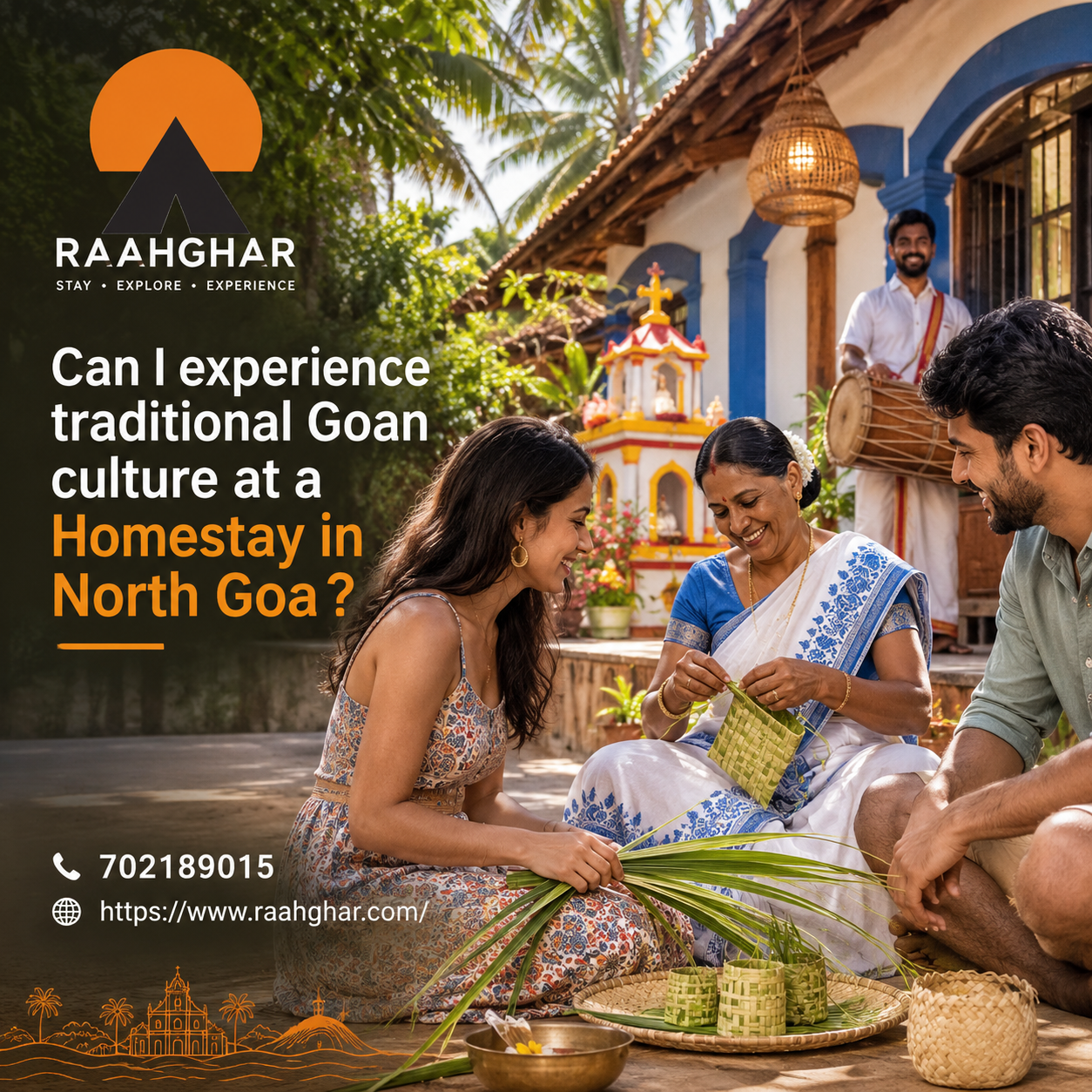
Choosing a Homestay in North Goa can make this cultural experience more personal. Instead of staying only in a conventional hotel, you may have opportunities to interact with local hosts, enjoy regional food, explore nearby villages, and learn about everyday customs.
The experience depends on the property's location and hosting arrangements. Some properties are situated in traditional residential neighbourhoods, while others are closer to beaches or commercial areas. Certain hosts may share local recommendations, arrange meals, or suggest cultural attractions worth visiting.
If you want to make your holiday more than a beach trip, here are some ways to experience traditional Goan culture during your stay.
1. Discover Traditional Goan Architecture
One of the most noticeable aspects of Goan culture is its architecture. The region's residential buildings reflect a combination of local building traditions and Portuguese-era influences.
As you explore North Goa's villages and old neighbourhoods, you may come across colourful houses, decorative balconies, tiled roofs, spacious verandas, and traditional courtyards.
Portuguese-Influenced Houses
Traditional Goan houses often feature colourful exterior walls, ornamental windows, wooden doors, and decorative balconies. Some older properties also have high ceilings and spacious interiors designed to suit the tropical climate.
These architectural features reflect the historical influences that shaped Goa over several centuries.
During your stay, ask your host about nearby heritage neighbourhoods or traditional houses that visitors can explore respectfully.
Traditional Courtyards and Verandas
Many older Goan homes include courtyards and verandas that provide shaded spaces for relaxation and family interaction.
These areas often reflect the importance of outdoor living in traditional Goan households. You may find similar design elements in some renovated homes and heritage-style properties.
If architecture interests you, look for accommodation that retains traditional features while providing comfortable modern facilities.
Explore Fontainhas in Panaji
Fontainhas, located in Panaji, is one of Goa's most recognised heritage neighbourhoods. Its narrow lanes, colourful buildings, old balconies, and distinctive architectural details make it an interesting place for visitors.
A walk through this neighbourhood can help you appreciate Goa's architectural heritage and understand how historic residential areas have evolved.
Respect residents' privacy when exploring. Avoid entering private properties without permission and ask before photographing people or their homes.
2. Experience Authentic Goan Food
Food is an important part of Goan culture. Traditional Goan cuisine reflects the region's coastal environment, local ingredients, and historical influences.
A cultural holiday becomes more enjoyable when you take time to explore regional dishes rather than relying only on familiar restaurant menus.
Try Traditional Goan Fish Curry Rice
Fish curry rice is one of Goa's well-known everyday meals. It commonly includes rice served with a curry prepared using fish, coconut, spices, and other regional ingredients.
The flavour and preparation can differ between households and restaurants. Some versions are tangy, while others have a stronger coconut or spice flavour.
If your accommodation provides home-cooked meals, ask whether traditional Goan fish curry rice is available.
Enjoy Goan Prawn Dishes
Goa's coastal food traditions include several preparations featuring prawns. These may include coconut-based curries, fried prawns, and regional masala preparations.
Local restaurants and family-run eateries can be good places to explore different versions of these dishes.
Taste Goan Sausages
Goan sausages are associated with the region's Portuguese-influenced culinary heritage. They are commonly used in spicy preparations and may be served with bread or rice.
If you enjoy exploring regional food, ask local hosts for recommendations on where to find authentic preparations.
Try Traditional Goan Sweets
Goa also has a variety of traditional sweets that are worth discovering.
Some well-known examples include:
-
Bebinca: A layered Goan dessert prepared using ingredients such as coconut milk, eggs, sugar, and ghee.
-
Dodol: A traditional sweet with a rich, chewy texture, commonly made using coconut milk, jaggery, and rice flour.
-
Neureos: Sweet-filled pastries often prepared during festive occasions.
-
Baath Cake: A traditional coconut-based cake associated with Goan celebrations.
Availability varies by season, bakery, and local tradition. Ask your host or nearby residents for recommendations.
Learn About Home-Cooked Goan Meals
Some properties may offer home-cooked meals or recommend local families and restaurants that serve traditional dishes.
You may learn about the use of kokum, coconut, curry leaves, spices, and other ingredients commonly found in Goan kitchens.
If you have dietary preferences, inform the host in advance and confirm whether suitable meals can be arranged.
3. Understand Konkani Language and Local Customs
Konkani is an important part of Goa's cultural identity. Although English, Hindi, and Marathi are also commonly heard in different parts of the state, learning a few Konkani expressions can make your interactions more enjoyable.
Learn Simple Konkani Greetings
You do not need to become fluent in Konkani to connect with local people. A few polite expressions can make everyday interactions more welcoming.
Some useful words and expressions include:
-
Namaskar: A respectful greeting.
-
Dev borem korum: Thank you.
-
Tum koso asa?: How are you? (masculine form)
-
Hanv boro asa: I am fine. (masculine form)
Usage and pronunciation can vary, so ask a local speaker to help you say these expressions correctly.
Understand Household Traditions
Traditional Goan households may follow customs connected with food, festivals, religious practices, and family gatherings.
For example, some families prepare special dishes during festive periods, decorate their homes, and gather with relatives for celebrations.
If you are staying with a local host, you may learn about these customs through everyday conversations.
Always respect household rules, especially regarding footwear, religious spaces, meal timings, and shared areas.
Experience Local Hospitality
Goan hospitality is often expressed through food, conversation, and a welcoming attitude towards guests.
Depending on the property, your host may suggest local eateries, traditional markets, village attractions, or cultural events.
These interactions can help you understand the region from a local perspective rather than experiencing it only through tourist attractions.
4. Explore Traditional Goan Festivals
Festivals are an important part of Goa's cultural life. They bring communities together through music, decorations, food, religious ceremonies, and social celebrations.
If your visit coincides with a local festival, you may have an opportunity to experience traditional customs and community activities.
Celebrate Carnival
Goa Carnival is one of the state's most recognised cultural celebrations. It is known for colourful parades, costumes, music, dancing, and public festivities.
The celebration reflects Goa's distinctive cultural influences and attracts visitors from different parts of India and abroad.
Carnival events are generally held before the Christian season of Lent, but schedules and programmes can vary each year.
Ask your host about local event dates and transportation arrangements if you plan to attend.
Experience Shigmo Festival
Shigmo is a traditional Goan spring festival associated with folk performances, colourful processions, and cultural celebrations.
Depending on the location and schedule, visitors may see traditional dances, decorated floats, music, and community events.
It is a good opportunity to discover Goa's folk traditions beyond its beach culture.
Discover Christmas Celebrations
Christmas is celebrated widely in Goa, particularly in Christian communities. Homes, churches, and neighbourhoods may be decorated with lights, stars, and festive displays.
Celebrations often include midnight Mass, family gatherings, traditional sweets, and special meals.
If you visit during this season, you may experience the festive atmosphere while exploring churches and local residential areas.
Participate Respectfully in Village Feasts
Village feasts and church celebrations are also important parts of Goan community life.
These events may include religious ceremonies, music, food, and gatherings of residents.
Visitors should follow local instructions, respect religious practices, and avoid treating private ceremonies as tourist performances.
5. Visit Historic Churches and Cultural Landmarks
Goa's history is closely connected with its churches, chapels, temples, and other heritage landmarks. North Goa offers several places where visitors can learn about the region's religious and architectural past.
Visit the Basilica of Bom Jesus
The Basilica of Bom Jesus in Old Goa is one of the region's most important historic churches. It is recognised for its architectural and religious significance.
Visitors can explore the building, learn about its history, and appreciate its historic interiors.
Follow the site's rules regarding clothing, photography, and visitor access.
Explore Se Cathedral
Se Cathedral is another important heritage attraction in Old Goa. Its scale and architectural character make it a notable destination for visitors interested in religious history.
You can combine a visit with other historic attractions in the Old Goa area.
Discover Local Temples
Goa's cultural identity also includes Hindu temple traditions. North Goa has several temples where visitors can appreciate traditional architecture, religious practices, and local celebrations.
Before visiting, check opening arrangements and follow the temple's rules.
Explore Reis Magos Fort
Reis Magos Fort is a historic attraction overlooking the Mandovi River. Its restored structure and cultural significance make it an interesting place to explore.
The fort can offer insight into Goa's historical landscape and its relationship with trade, defence, and colonial history.
Check current visiting hours and entry arrangements before planning your trip.
6. Explore Local Markets and Traditional Crafts
Markets are an excellent way to understand everyday Goan life. They offer opportunities to discover local ingredients, handmade products, clothing, souvenirs, and regional specialities.
Visit Mapusa Market
Mapusa Market is a well-known shopping destination in North Goa. It is popular for local produce, spices, fish, household items, clothing, and other products.
A visit can help you experience the region's everyday shopping culture.
Depending on the day and season, the market atmosphere can be lively. Go early if you want to explore comfortably and avoid the busiest hours.
Discover Anjuna Flea Market
The Anjuna Flea Market is associated with clothing, jewellery, handicrafts, accessories, and products from different parts of India.
It is particularly popular among visitors looking for souvenirs and creative handmade items.
The market's operation and schedule can vary, so confirm current arrangements before visiting.
Explore Local Handicrafts
Goa has several traditional craft practices, including pottery, woodwork, coconut-shell products, and other handmade items.
You may find craft products in local markets, small shops, and cultural centres.
Buying directly from local artisans, where possible, can help support traditional skills and small businesses.
Learn About Goan Cashew Products
Cashew cultivation and processing have a significant presence in Goa's agricultural and food traditions.
You may find cashew nuts and other locally produced cashew-based items in markets and shops.
Ask about the origin and production process if you are interested in learning more about local agricultural products.
7. Experience Goan Music, Dance, and Folk Traditions
Music and dance play an important role in Goa's cultural identity. The region has a mix of traditional folk forms, devotional music, and influences from different communities.
Enjoy Traditional Folk Music
Goan folk music reflects the region's social life, festivals, and cultural history.
You may encounter traditional songs during community gatherings, festive occasions, and cultural performances.
Some events also feature instruments and musical styles associated with local traditions.
Discover Fugdi and Dhalo
Fugdi and Dhalo are traditional Goan folk dance forms associated with community celebrations and cultural practices.
Fugdi is generally performed by women in a group setting, while Dhalo is traditionally connected with group singing and dance.
These forms are often associated with festivals and social occasions. Cultural programmes may offer opportunities to see them performed.
Experience Mando Music
Mando is a traditional Goan musical form that reflects a blend of local and Portuguese-influenced cultural elements.
It is known for its distinctive melodies and themes involving love, social life, and regional identity.
If you are interested in music, look for cultural performances or events where Mando is presented.
8. Explore Traditional Villages in North Goa
North Goa has several villages where visitors can discover a quieter side of the region. Exploring these areas can help you understand local architecture, food, religious traditions, and everyday life.
Aldona
Aldona is known for its village atmosphere, scenic surroundings, and traditional houses. It can be an interesting destination for travellers who enjoy exploring quieter neighbourhoods.
You may notice old houses, village churches, and beautiful landscapes while travelling through the area.
Assagao
Assagao has a distinctive residential character, with traditional houses, greenery, cafés, and heritage-inspired properties.
It can be a good place to appreciate Goa's architectural character while enjoying a relaxed atmosphere.
Siolim
Siolim is a village associated with river landscapes, traditional residential areas, and local cultural attractions.
You can explore its surroundings and discover a quieter experience away from some of the busiest coastal areas.
Saligao
Saligao is known for its traditional houses, village atmosphere, and historic church.
A visit can provide a glimpse into local residential life and architectural traditions.
When exploring villages, respect residents' privacy and avoid entering private properties without permission.
9. How to Choose Accommodation for a Cultural Experience
The location and hosting style of your accommodation can influence how much local culture you experience during your holiday.
When comparing homestays in North Goa, consider more than the distance to popular beaches. Look for properties that suit your interests and provide useful access to cultural attractions.
Choose a Location Near Cultural Attractions
If architecture and history interest you, consider a property with convenient access to Panaji, Old Goa, Mapusa, or traditional villages.
If you prefer a combination of beach activities and local culture, look for accommodation that provides practical access to both.
Check the actual location and travel distances before booking.
Ask About Local Food
If authentic Goan cuisine is important to you, ask whether the property provides home-cooked meals or recommends local restaurants.
Confirm whether meals are included, available on request, or charged separately.
Look for Hosts Who Share Local Knowledge
Some hosts may be happy to recommend cultural attractions, local markets, village walks, and traditional food experiences.
If you want to learn about local customs, ask whether the host can suggest activities that are suitable for visitors.
Check Property Facilities
Cultural experiences are important, but comfortable accommodation also matters.
Check bedroom arrangements, bathrooms, cleanliness, Wi-Fi, parking, air conditioning, and outdoor spaces.
Read recent guest reviews and confirm essential details directly with the property.
Respect the Local Environment
Choose responsible activities that respect local residents, traditions, and natural surroundings.
Avoid littering, disturbing wildlife, entering private spaces without permission, or taking photographs of people without their consent.
A respectful approach helps make cultural tourism more positive for both visitors and local communities.
10. A Simple Three-Day Cultural Itinerary for North Goa
If you want to include cultural activities in a short holiday, you can plan your days around heritage attractions, local food, markets, and village exploration.
Day 1: Explore Historic Goa
-
Start your day with breakfast at your accommodation.
-
Visit Old Goa and explore the Basilica of Bom Jesus and Se Cathedral.
-
Enjoy a traditional Goan lunch at a local restaurant.
-
Visit Reis Magos Fort if time permits.
-
Return to your accommodation and relax.
Day 2: Discover Village Life and Local Markets
-
Begin with a morning walk through a traditional village.
-
Explore Mapusa Market and discover local produce and crafts.
-
Enjoy regional food at a local restaurant.
-
Visit Saligao, Aldona, or another nearby village.
-
Spend the evening exploring local cafés or cultural events.
Day 3: Enjoy Goan Food and Coastal Traditions
-
Enjoy a relaxed breakfast and learn about traditional Goan dishes.
-
Explore Anjuna or another nearby beach.
-
Visit local shops or craft markets.
-
Try a traditional Goan sweet.
-
Finish your holiday with a relaxed evening.
This itinerary is flexible and can be adjusted according to your accommodation's location, travel dates, and local event schedules.
Conclusion
Yes, you can experience traditional Goan culture while staying in North Goa. The region offers much more than beaches and nightlife, with its distinctive architecture, Konkani traditions, regional cuisine, local markets, festivals, music, dance, and historic villages.
A Homestays in North Goa can make your holiday more personal by helping you explore the local lifestyle and discover cultural attractions at your own pace. You may enjoy traditional Goan meals, learn about household customs, visit historic churches, explore village markets, and discover the region's artistic traditions.
Before booking, consider the property's location, facilities, food arrangements, and access to cultural attractions. Ask your host about nearby experiences and choose activities that allow you to connect with the local community respectfully.
Whether you are interested in food, architecture, festivals, or village life, the right accommodation can help you enjoy a richer and more memorable Goan holiday.
FAQ Questions
1. Can I experience traditional Goan culture while staying at a Homestay in North Goa?
Yes, you can explore traditional Goan culture through local food, village visits, heritage architecture, festivals, music, and interactions with local hosts. Choosing the best homestay in North Goa for your interests can help you discover nearby cultural attractions and regional experiences. Ask the host about available activities before confirming your booking.
2. Can I enjoy authentic Goan food during my stay?
Depending on the property, you may be able to enjoy traditional Goan meals or receive recommendations for local restaurants. Popular dishes include fish curry rice, prawn preparations, Goan sausages, bebinca, and other regional specialities. Confirm meal availability and dietary options with your host.
3. Which places in North Goa are good for exploring traditional Goan culture?
Panaji, Old Goa, Aldona, Assagao, Siolim, Saligao, and Mapusa are worth considering. These destinations offer opportunities to explore heritage architecture, historic churches, village life, local markets, and cultural attractions.
4. Can I experience Goan festivals during my stay?
Yes, depending on your travel dates, you may be able to experience celebrations such as Carnival, Shigmo, Christmas, and local village feasts. Festival dates and programmes vary, so check the local schedule and ask your host about public events.
5. What should I check before booking accommodation for a cultural holiday in North Goa?
Check the property's location, facilities, recent guest reviews, meal arrangements, and access to cultural attractions. You can also ask whether the host provides local recommendations, traditional food, village walks, or information about nearby festivals and heritage sites.
Read Our Previous Blog — — — — ->Can I explore traditional Goan houses while staying at a Homestay in Moira?

 English
 Arabic
 French
 Portuguese
 Deutsch
 Turkish
 Dutch
 Italiano
 Russian
 Romaian
 Portuguese (Brazil)
 Greek