


Disc Replacement Surgery in India: Treatment, Cost, Benefits and Recovery
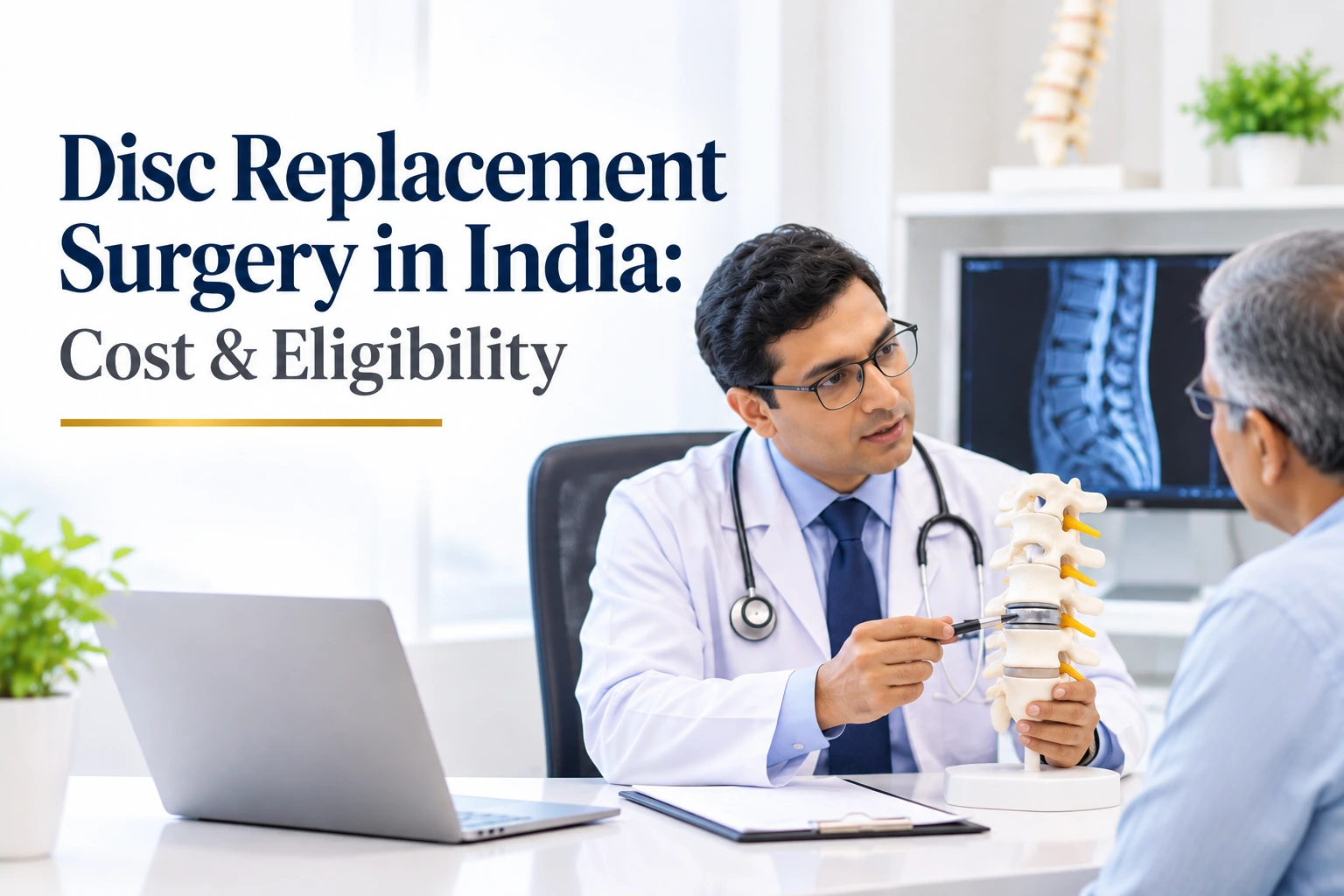
Back pain and neck pain are common health problems that can affect a person's ability to work, sleep, walk, and perform everyday activities. In some cases, these problems develop because of damaged or worn-out spinal discs. When medications, physiotherapy, and other non-surgical treatments fail to provide sufficient relief, doctors may recommend surgery to address the underlying problem.
One advanced treatment option is artificial disc replacement, a procedure in which a damaged spinal disc is removed and replaced with an artificial implant. The primary aim is to reduce pain while maintaining movement in the treated section of the spine.
Today, Disc replacement surgery in India is an option for patients seeking specialized spinal care, experienced spine surgeons, modern diagnostic facilities, and rehabilitation services. Hospitals in India offer surgical approaches for selected patients with cervical and lumbar disc problems.
Through HealthRoop, international patients can explore suitable hospitals, connect with experienced specialists, understand treatment options, and receive assistance with medical travel arrangements.
What Is Disc Replacement Surgery?
Disc replacement surgery is a spinal procedure in which a damaged intervertebral disc is removed and replaced with an artificial disc implant.
The spine contains small bones called vertebrae, separated by soft discs that act as cushions. These discs absorb pressure, support flexibility, and allow the spine to bend and move comfortably.
With age, injury, or degenerative changes, spinal discs may lose their normal structure and function. This can sometimes cause persistent pain, stiffness, or nerve-related symptoms.
During artificial disc replacement, the surgeon removes the affected disc and places an artificial implant between the vertebrae. Unlike spinal fusion, which joins two or more vertebrae together, disc replacement is designed to preserve movement at the treated level.
However, the procedure is not suitable for every patient. A spine specialist evaluates the patient's symptoms, imaging results, bone health, and overall medical condition before recommending surgery.
Types of Disc Replacement Surgery
Artificial disc replacement is mainly performed in two areas of the spine: the cervical spine and the lumbar spine.
1. Cervical Disc Replacement
Cervical disc replacement is performed in the neck region. It may be recommended for patients with damaged cervical discs that cause neck pain, arm pain, numbness, or weakness due to nerve compression.
During the procedure, the surgeon removes the affected disc through an incision in the front of the neck and inserts an artificial implant.
Potential benefits include:
-
Maintaining movement at the treated spinal level.
-
Reducing pressure on compressed nerves.
-
Improving neck and arm-related symptoms.
-
Avoiding fusion at the operated level.
-
Supporting functional neck movement during recovery.
2. Lumbar Disc Replacement
Lumbar disc replacement is performed in the lower back. It may be considered for carefully selected patients with degenerative disc disease who experience persistent lower back pain despite appropriate non-surgical treatment.
The surgeon accesses the affected disc, usually through an abdominal approach, removes the damaged disc, and inserts an artificial replacement.
Potential benefits include:
-
Preserving movement in the lower back.
-
Replacing a severely damaged disc.
-
Reducing pain associated with the affected disc in suitable patients.
-
Maintaining motion at the operated spinal level.
Lumbar replacement requires careful patient selection because certain spinal conditions, including significant facet joint disease or instability, may make the procedure unsuitable.
Conditions That May Require Artificial Disc Replacement
Not every spinal problem requires surgery. Doctors generally recommend artificial disc replacement when symptoms are significant, imaging findings support the diagnosis, and conservative treatments have not provided adequate relief.
Some conditions that may be evaluated include:
Degenerative Disc Disease
Degenerative disc disease occurs when spinal discs gradually lose their flexibility, hydration, and cushioning ability.
It may cause persistent back or neck pain, stiffness, and discomfort during movement.
Herniated Disc
A herniated disc occurs when the inner material of a spinal disc pushes through its outer layer. In some cases, this material presses against nearby nerves and causes pain, tingling, numbness, or weakness.
Artificial disc replacement may be considered in selected patients, depending on the location and extent of the damage.
Cervical Radiculopathy
Cervical radiculopathy develops when a nerve in the neck becomes compressed or irritated.
Common symptoms include:
-
Neck pain.
-
Pain extending into the shoulder or arm.
-
Tingling or numbness in the fingers.
-
Muscle weakness in the arm or hand.
When appropriate, cervical disc replacement can relieve nerve compression while preserving movement.
Chronic Lower Back Pain
Long-term lower back pain may sometimes be associated with a damaged lumbar disc. If symptoms continue despite medication, physiotherapy, and other treatments, a specialist may evaluate whether disc replacement is appropriate.
Who Is an Ideal Candidate for Disc Replacement?
Patient selection plays an important role in achieving successful surgical outcomes.
A person may be considered for artificial disc replacement when they have:
-
Persistent neck or lower back pain associated with a damaged disc.
-
Imaging findings that support the diagnosis.
-
Symptoms that have not improved sufficiently with non-surgical treatment.
-
Appropriate spinal alignment and stability.
-
Suitable bone quality.
-
No significant contraindications to the procedure.
Who May Not Be Suitable?
Artificial disc replacement may not be recommended for patients with:
-
Severe osteoporosis or poor bone quality.
-
Significant spinal instability.
-
Advanced facet joint arthritis.
-
Active spinal infection.
-
Certain spinal deformities.
-
Previous extensive surgery at the affected level.
-
Other medical conditions that increase surgical risks.
The suitability of surgery depends on individual clinical findings. A specialist may recommend spinal fusion or another treatment instead.
How Is Disc Replacement Surgery Performed?
The procedure is planned according to the location of the damaged disc, the type of artificial implant, and the patient's medical condition.
Step 1: Preoperative Evaluation
Before surgery, the medical team reviews the patient's symptoms, medical history, and previous treatments.
Diagnostic investigations may include:
-
MRI scans to examine discs, nerves, and surrounding tissues.
-
X-rays to assess spinal alignment.
-
CT scans to evaluate bone structure.
-
Blood tests to check general health.
-
Additional investigations when required.
These tests help the surgeon identify the affected spinal level and determine whether disc replacement is appropriate.
Step 2: Anaesthesia
The procedure is generally performed under general anaesthesia. The patient remains unconscious and does not experience pain during the operation.
Step 3: Removing the Damaged Disc
The surgeon makes an incision to access the affected part of the spine.
For cervical replacement, the approach is generally through the front of the neck. For lumbar replacement, the surgeon usually accesses the spine through the abdomen.
The damaged disc is carefully removed while protecting nearby nerves, blood vessels, and other important structures.
Step 4: Artificial Disc Implantation
After removing the damaged disc, the surgeon prepares the space between the vertebrae and inserts an appropriately sized artificial disc.
The implant is positioned to provide stability and allow movement at the treated spinal level.
Step 5: Closing the Incision
Once the implant is properly positioned, the surgeon closes the incision and transfers the patient to the recovery area for monitoring.
The procedure's duration varies according to the spinal region, surgical complexity, and individual patient factors.
Benefits of Disc Replacement Surgery
Artificial disc replacement offers several potential advantages for appropriately selected patients.
Preserves Spinal Movement
One of the main advantages is the ability to maintain movement at the operated spinal level. This distinguishes disc replacement from traditional spinal fusion.
Helps Relieve Nerve Compression
Removing the damaged disc can reduce pressure on nearby nerves, potentially improving symptoms such as radiating pain, tingling, and numbness.
Supports Daily Activities
After recovery, many patients experience improvements in mobility and their ability to perform everyday activities.
May Reduce Stress on Adjacent Levels
Because the procedure preserves movement, it may reduce certain biomechanical stresses on neighbouring spinal levels compared with fusion. However, the long-term protective benefit is not guaranteed and remains an important subject of clinical research.
Smaller Surgical Access in Selected Cases
Some disc replacement procedures use relatively small incisions and specialized surgical techniques. The exact approach depends on the spinal region and the surgeon's plan.
Risks and Possible Complications
Like every major surgical procedure, artificial disc replacement carries certain risks. Understanding these complications helps patients make informed decisions.
Possible risks include:
-
Infection at the surgical site.
-
Bleeding or blood vessel injury.
-
Nerve irritation or injury.
-
Persistent pain after surgery.
-
Implant movement or displacement.
-
Wear or failure of the artificial disc.
-
Formation of abnormal bone around the implant.
-
Difficulty swallowing or voice changes after cervical surgery.
-
Blood clots or complications related to anaesthesia.
The likelihood of complications depends on the patient's health, surgical complexity, and other individual factors.
Choosing an experienced spine surgeon, following postoperative instructions, and attending regular follow-up appointments can help manage potential risks.
Disc Replacement Surgery Cost in India
The cost of artificial disc replacement in India depends on several factors. There is no fixed price because every patient's medical requirements and surgical plan are different.
Some important factors affecting the total expense include:
-
Type of surgery: Cervical and lumbar disc replacement procedures may have different costs.
-
Artificial disc implant: The implant's design, material, and manufacturer can influence the overall expense.
-
Hospital selection: Costs vary according to hospital facilities, location, and available services.
-
Surgeon's experience: Specialist fees may differ depending on expertise and the complexity of the procedure.
-
Diagnostic investigations: MRI, CT scans, X-rays, and laboratory tests contribute to the total cost.
-
Hospital stay: The duration of admission and recovery monitoring can affect expenses.
-
Rehabilitation: Physiotherapy and follow-up consultations may involve additional costs.
International patients should request a personalized estimate that clearly explains what is included.
It is also useful to ask whether the quoted amount covers the implant, surgeon's fees, anaesthesia, hospital accommodation, medicines, investigations, and postoperative care.
Recovery After Disc Replacement Surgery
Recovery varies depending on the patient's age, general health, surgical approach, and the location of the operated disc.
Many patients begin walking with assistance relatively soon after surgery, depending on their medical condition and the surgeon's instructions.
Initial Recovery
During the first few days, patients are monitored for pain, wound healing, and possible complications.
Doctors may recommend:
-
Walking short distances.
-
Taking prescribed medications.
-
Avoiding sudden movements.
-
Keeping the surgical wound clean and dry.
-
Following specific movement restrictions.
Physiotherapy and Rehabilitation
Physiotherapy helps patients gradually improve strength, flexibility, posture, and mobility.
A rehabilitation programme may include:
-
Gentle walking exercises.
-
Core strengthening.
-
Posture correction.
-
Controlled stretching.
-
Gradual return to normal activities.
The exercises should be started only when recommended by the treating specialist.
Returning to Normal Activities
Many patients gradually resume light daily activities over several weeks. However, returning to work, driving, exercising, or lifting heavy objects depends on individual recovery.
Patients should avoid strenuous activities until their surgeon confirms that it is safe.
Regular follow-up visits and imaging, when required, help doctors monitor the implant and evaluate recovery.
Why Choose India for Disc Replacement Surgery?
India has developed specialized healthcare facilities for patients seeking treatment for spinal conditions. Several hospitals offer dedicated spine departments, advanced diagnostic services, and surgical facilities.
Some reasons international patients consider India include:
Experienced Spine Specialists
Patients can consult orthopedic spine surgeons and neurosurgeons with experience in treating complex spinal conditions.
Advanced Medical Facilities
Selected hospitals provide modern operating rooms, advanced imaging systems, intensive care services, and specialized spinal implants.
Comprehensive Treatment Options
Depending on the diagnosis, patients may receive medication, physiotherapy, minimally invasive procedures, artificial disc replacement, or spinal fusion.
This allows doctors to recommend treatment based on individual medical needs rather than using the same approach for every patient.
Rehabilitation and Follow-Up Care
Rehabilitation is an important part of spinal recovery. Many hospitals provide physiotherapy and postoperative monitoring to support patients after surgery.
International Patient Assistance
For overseas patients, treatment planning also involves medical reports, hospital coordination, accommodation, and travel arrangements.
HealthRoop helps international patients explore suitable hospitals and connect with specialists in India. Patients can receive assistance with consultations, treatment planning, hospital selection, medical visa guidance, accommodation, and other travel-related arrangements.
How Can International Patients Plan Their Treatment?
Patients travelling to India for spinal surgery should prepare their medical information and understand the treatment process before making travel arrangements.
Here are some important steps:
-
Share Medical Reports: Provide MRI scans, X-rays, previous treatment records, and relevant medical history.
-
Consult a Spine Specialist: Discuss symptoms, diagnosis, treatment options, and surgical suitability.
-
Compare Hospitals: Evaluate specialist experience, implant availability, hospital facilities, and rehabilitation services.
-
Understand the Cost: Request a detailed estimate covering the procedure, implant, hospital stay, and follow-up care.
-
Arrange Travel: Plan flights, accommodation, medical visa requirements, and caregiver support.
-
Follow Medical Advice: Travel only when the treating specialist confirms that the patient's condition is suitable for the journey.
HealthRoop can support international patients throughout these arrangements and help make their medical journey more organized.
Conclusion
Artificial disc replacement is an advanced surgical option for selected patients experiencing persistent neck or lower back problems caused by damaged spinal discs. By replacing the affected disc with an artificial implant, the procedure aims to relieve symptoms while preserving movement at the treated spinal level.
Disc replacement surgery in India provides patients with access to specialized spine care, modern medical facilities, diagnostic services, and rehabilitation options. However, successful treatment depends on accurate diagnosis, appropriate patient selection, an experienced surgical team, and proper postoperative care.
For international patients considering treatment abroad, HealthRoop offers assistance with hospital selection, specialist consultations, treatment coordination, and travel arrangements. With the right medical guidance and a personalized recovery plan, patients can make informed decisions about their spinal health and long-term well-being.

 English
 Arabic
 French
 Spanish
 Portuguese
 Deutsch
 Turkish
 Dutch
 Italiano
 Russian
 Portuguese (Brazil)
 Greek