


The Ultimate Guide to Buying a Handcrafted Bed Frame in the UK
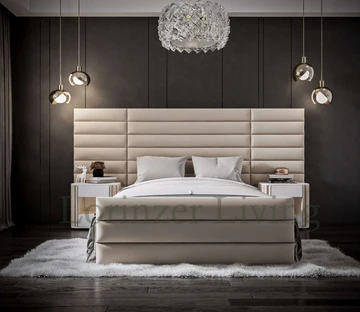
Purchasing a truly handcrafted bed frame in the UK requires verifying three core engineering pillars: a kiln-dried solid hardwood carcass (such as beech or Scandinavian redwood), traditional load-bearing joinery, and full compliance with British Fire Safety Standards (BS 5852). Unlike mass-produced frames held together by staples and particleboard, authentic handmade beds in UK workshops are built to order by master upholsterers, delivering a structural lifespan exceeding 15 to 20 years.
Who This Guide Is For and Why It Matters Now
This guide is engineered for discerning homeowners, residential interior designers, and international hospitality procurement specialists sourcing British-made luxury sleep systems. As mass-market furniture retailers increasingly label imported, factory-assembled flat-pack frames as "artisan" or "bespoke," buyers face significant transparency challenges. Understanding the structural anatomy, timber moisture tolerances, fabric abrasion metrics, and dimensional standards of authentic UK bed manufacturing protects your investment and guarantees long-term orthopedic and aesthetic performance.
Deep-Dive Context & Fundamental Analysis: The Anatomy of British Bed Making
True craftsmanship in the British bed-making sector—historically anchored in manufacturing hubs across Yorkshire, Lancashire, and the Midlands—is defined by structural integrity beneath the upholstery. When evaluating handmade beds in UK ateliers, the primary distinction lies in the internal carcass construction and tensioning mechanics.
Mass-market bed frames rely on Medium-Density Fibreboard (MDF), oriented strand board (OSB), or unseasoned softwood. Over 12 to 24 months of exposure to domestic central heating, unseasoned timber loses moisture unevenly, causing the side rails to bow and joints to creak under dynamic weight loads. Conversely, a genuine bespoke bed frame utilizes kiln-dried solid timber regulated to an internal moisture content of 8% to 10%. This precise seasoning prevents warping, splitting, and torsional flex throughout decades of daily use.
Core Technical Specifications and Industry Terminology
To evaluate a handcrafted bed frame accurately, buyers must audit five foundational components:
- Structural Carcass & Joinery: Premium frames utilize solid German beech, birch, or slow-grown Scandinavian redwood. Load-bearing corners are reinforced using glued and screwed corner blocks, heavy-duty steel brackets, or traditional mortise-and-tenon and dowelled joints—never butt-jointed with industrial staples alone.
- Base Support Architecture: The foundation directly dictates mattress longevity. Buyers typically choose between rigid hardwood slats (ideal for firm orthopedic support), sprung beech slats (cambered laminates that flex under pressure, though prone to central sagging over time), or a ventilated platform top (a solid timber deck upholstered in breathable spacer fabric, essential for heavy pocket-sprung mattresses).
- High-Density Foam & Fibre Layering: Before outer upholstery is applied, the timber frame is padded using high-resilience (HR) polyurethane foam (typically 35–50 kg/m³ density) wrapped in bonded polyester dacron or natural cotton felt to prevent fabric friction and frame telegraphing.
- Deep-Buttoned Tufting Mechanics: In authentic Chesterfield or fluted winged headboards, buttons are not merely glued to the surface. Artisans compress the foam manually and pass high-tensile nylon twine through pre-drilled holes in the timber backboard, tying off each diamond pleat under uniform tension.
- UK Regulatory Compliance (BS 5852): Under the UK Furniture and Furnishings (Fire) (Safety) Regulations 1988, every domestic upholstered bed frame sold or manufactured in Britain must pass the BS 5852 Schedule 4 & 5 ignition tests (cigarette and match resistance) and utilize Combustion Modified High Resilience (CMHR) foams or a Schedule 3 fire-barrier interliner.
Real-World Application Scenario: The Period Townhouse Specification
Consider an interior designer commissioning a Super King (180cm × 200cm) winged ottoman bed for a primary bedroom on the third floor of a Georgian townhouse in London, or a US-based homeowner importing a statement British bed frame for a historic brownstone.
A standard mass-manufactured frame arrives with a single-piece 160cm-tall headboard and a pre-welded steel perimeter frame. Upon delivery, the rigid frame cannot navigate the tight 90-degree winders of a period staircase, resulting in a failed delivery and restocking penalties.
When commissioning directly from a specialist UK workshop such as Lorinzer Living, the engineering adapts to the architectural constraints. The artisan builds the headboard as a precision-aligned horizontal split-panel system with concealed interlocking steel plates, while the ottoman storage base is constructed in modular quadrants bolted together inside the room. The result achieves zero compromise on structural rigidity while solving complex spatial logistics.
Step-by-Step Implementation: How to Commission and Audit a Handcrafted Bed
Buying a custom-built bed requires a systematic specification process. Skipping technical verification stages leads to ergonomic mismatches, premature mattress degradation, or access failures. Follow this five-stage operational workflow when ordering a handcrafted bed frame.
[1. Spatial & Access Audit] ──> [2. Carcass & Size Spec] ──> [3. Base & Hydraulic Engineering] ──> [4. Textile & Martindale Selection] ──> [5. Pre-Delivery & Installation]Step 1: Conduct a Spatial Footprint and Access Audit
Before selecting a silhouette, map both the bedroom footprint and the transit corridor.
- Measure the ceiling height, skirting board depth, and electrical socket placements along the headboard wall. Winged or Ambassador-style beds have side returns that project forward by 20cm to 35cm; if your headboard wall features low-level power outlets, the wings may obstruct plug access unless bespoke cutouts or shortened wing profiles are requested.
- Measure the diagonal clearance of your narrowest doorway, hallway turn, and staircase bulkhead. If any pinch point measures less than 190cm diagonally, specify a split-headboard design at the point of order.
Step 2: Lock in Dimensional Standards (UK vs. International Sizing)
A critical operational bottleneck—especially for expats, international buyers, or homeowners pairing an existing mattress with a new UK frame—is dimensional standardization. UK bed sizes differ significantly from US and Continental European benchmarks.
- UK Double: 135cm × 190cm (53" × 75")
- UK King: 150cm × 200cm (59" × 79") — Note: A US Queen is 152cm × 203cm.
- UK Super King: 180cm × 200cm (71" × 79") — Note: A US King is 193cm × 203cm.
- UK Emperor: 200cm × 200cm (79" × 79") or 215cm × 215cm (84" × 84").
If you own a US Queen or European King (160cm × 200cm) mattress, placing it inside a standard UK King frame will cause the mattress edges to buckle against the side rails, while placing a UK mattress into an American frame leaves unsightly 5cm to 13cm perimeter gaps. Authentic UK bespoke makers will modify rail lengths and slat widths to the exact millimeter upon request.
Step 3: Specify the Support Deck and Ottoman Hydraulics
Select your base engineering based on your mattress construction and storage requirements:
- For Heavy Natural-Fill Pocket Sprung Mattresses (50kg–85kg): Specify a solid timber slatted base with slat gaps strictly under 75mm (3 inches), or a reinforced platform top. Wide slat gaps allow individual pocket springs to dip between rails, permanently deforming the mattress core.
- For Ottoman Gas-Lift Storage Bases: Verify the Newton (N) rating of the gas-strut pistons. Standard cheap imports use 400N–600N struts that fail to hold up luxury mattresses. A handcrafted UK Super King ottoman should utilize heavy-duty 1000N to 1200N twin hydraulic pistons paired with an anti-warp tubular steel lifting mechanism and a fully boarded internal floor (rather than a Velcro dust sheet laid directly on your carpet).
Step 4: Evaluate Upholstery Textiles via the Martindale Method
Select your upholstery fabric by balancing tactile luxury with abrasion durability, measured by the Martindale Rub Test (ISO 12947):
- 20,000 – 25,000 Rubs: Suitable for light domestic bedroom use (e.g., delicate linens, pure wool blends).
- 30,000 – 50,000+ Rubs: Heavy-duty domestic and boutique hospitality grade (e.g., high-pile plush velvet, crushed velvet, heavy textural bouclé, and stain-resistant performance weaves).
- Dye-Lot Consistency: Always request a physical fabric swatch from the current workshop roll. Digital screens distort undertones, and textile dye batches can shift by 5% to 8% between production runs.
Step 5: Manage Production Lead Times and White-Glove Installation
Because genuine handmade beds are cut, joined, padded, and upholstered sequentially by skilled craftspeople, realistic manufacturing lead times range from 2 to 6 weeks. Reject sellers promising next-day delivery on "bespoke" configurations—this indicates pre-manufactured Asian flat-pack stock held in a domestic warehouse. Opt for two-person white-glove room-of-choice assembly to ensure the frame is squared properly before tightening the corner bolts; an out-of-square frame causes ottoman lids to rub against side rails.
Strategic Evaluation: Comparison & Decision Framework
When allocating budget toward a primary bedroom centerpiece, buyers typically weigh three distinct market tiers: True UK Handcrafted Bespoke Frames, High-Street "Made-to-Order" Retail Brands, and Mass-Produced Imported Flat-Pack Frames.
The table below provides an objective engineering and commercial comparison across these three manufacturing approaches:
| Evaluation Criteria | True UK Handcrafted Bespoke (e.g., Lorinzer Living) | High-Street "Made-to-Order" Retailers | Mass-Produced Imported Flat-Pack |
|---|---|---|---|
| Core Carcass Material | Kiln-dried solid hardwood (Beech/Redwood) & structural birch plywood | Mixed softwood pine, MDF, and particleboard rails | Laminated chipboard, thin MDF, and hollow tubular metal |
| Joinery & Fastening | Glued, dowelled, screwed corner blocks + heavy-gauge steel brackets | Cam-locks, wooden dowels, and pneumatic staples | Allen-key bolts threaded into pressed metal inserts |
| Slat Gap Tolerance | Custom-spaced (<60mm–70mm) solid timber or solid platform top | Fixed 80mm–100mm bent poplar sprung slats | 90mm–120mm thin pine slats or wire mesh grids |
| Ottoman Base Floor | Solid structural timber floor panels supporting 100kg+ storage | Thin 3mm MDF drop-in boards | Fabric dust sheet attached with Velcro directly on bedroom floor |
| Dimensional Flexibility | Full custom sizing (height, wing depth, rail length, split headboards) | Fixed catalog sizes only; zero structural modifications | Strictly fixed factory dimensions |
| Fire Safety Standard | Full UK BS 5852 & Schedule 3 interliner compliance | Full UK BS 5852 compliance | Often non-compliant or chemically surface-sprayed if bought via grey-market portals |
| Expected Structural Lifespan | 15 – 25+ Years (re-upholsterable carcass) | 5 – 8 Years before joint loosening | 1 – 3 Years before slat breakage or rail bowing |
Strategic Decision Matrix: Which Tier Should You Choose?
- Choose True UK Handcrafted Bespoke if: You own (or plan to buy) a premium pocket-sprung, hybrid, or natural-latex mattress; you require maximised structural ottoman storage; you need custom headboard heights to clear wall panelling or sloped eaves; or you prioritize lowest cost-per-year over a 15-year lifecycle.
- Choose High-Street Made-to-Order if: You have standard room dimensions, a medium-weight mattress, and prefer viewing a fixed floor model in a physical retail park without requiring bespoke height or width adjustments.
- Choose Mass-Produced Flat-Pack only if: You are furnishing a short-term transitional rental property where minimal upfront capital expenditure outweighs acoustic stability, comfort, and replacement frequency.
Expert Guidance, Pitfalls & Risk Mitigation
Even experienced interior specifiers and homeowners fall victim to common industry traps when sourcing handmade beds in UK markets. Below are the four most costly procurement errors and how to prevent them.
1. Falling for the "Hand-Finished" Marketing Loophole
- The Pitfall: Many online bed retailers advertise frames as "Handmade in the UK" when the timber and metal sub-frames are mass-produced in overseas factories, shipped in containers, and merely have a fabric cover stapled over them in a British warehouse.
- The Mitigation: Ask the manufacturer a direct diagnostic question: "Can you alter the headboard height by 10cm or move the wing return angle?" A true UK workshop cuts its own timber profiles in-house and will accommodate structural modifications effortlessly. An importer of pre-cut kits will tell you dimensions are strictly fixed.
2. Voiding Your £2,000+ Mattress Warranty via Slat Spacing
- The Pitfall: High-end mattress manufacturers (such as Vispring, Harrison Spinks, Hypnos, and Simba) explicitly state in their warranty terms that placing a mattress on a slatted base with gaps wider than 75mm (3 inches) immediately invalidates the 10-year guarantee. Cheaply built frames space slats 100mm+ apart to save timber costs.
- The Mitigation: Before finalizing your bed frame order, verify the exact slat width and gap spacing in writing. Ask the workshop for upgraded close-slatted solid timber boarding (50mm gaps) or a breathable platform-top base.
3. Ignoring the Headboard-to-Mattress Depth Ratio
- The Pitfall: Modern luxury mattresses accompanied by pillow-toppers frequently reach depths of 30cm to 40cm (12" to 16"). When paired with a standard off-the-shelf headboard designed for a 20cm mattress, two-thirds of the headboard's decorative fluting or buttoning disappears behind the mattress and pillows, ruining the visual proportions of the room.
- The Mitigation: Measure your mattress depth before specifying your headboard height. When ordering from a bespoke maker, request that the bottom un-tufted border (the "plinth" of the headboard) be adjusted to match your exact mattress thickness so the decorative pattern begins cleanly at mattress surface level.
4. Overlooking Carpet Pile Clearance on Ottoman Drawer & Lift Beds
- The Pitfall: Specifying a floor-standing bed frame with built-in continental drawers or a low-clearance ottoman lid in a room newly fitted with thick Saxony carpet and 12mm underlay. The drawers bind against the carpet pile and refuse to open smoothly.
- The Mitigation: For deep-pile carpeted bedrooms, choose a top-lifting hydraulic ottoman bed where the lifting hinge pivots inside the side rail perimeter, or request 35mm–50mm solid hardwood block feet or chrome glides to elevate the carcass clear of the carpet nap.
The Master Upholsterer’s Pre-Purchase Verification Checklist
Before paying a deposit on any handcrafted bed frame, confirm these six criteria:
- Timber Verification: Is the internal frame built from kiln-dried solid timber and birch ply rather than chipboard?
- Center Rail Support: Do King, Super King, and Emperor sizes include a heavy-duty central steel or hardwood spine rail with floor-standing support legs?
- Corner Bracket Gauge: Are the side rails connected to the headboard and footboard via heavy-gauge multi-point steel brackets rather than thin single-hook plates?
- Headboard Back Finishing: If the bed is floating in the room or positioned in front of a window, is the rear of the headboard upholstered in matching main fabric rather than black cambric lining?
- Fire Label Authenticity: Will the frame arrive with a permanently stitched British Fire Safety compliance label attached to the base platform?
- Access Contingency: Has the manufacturer confirmed whether the headboard comes in one piece or split construction for staircase clearance?
Future-Proof Recommendations & Next Steps
Investing in a handcrafted bed frame is both an architectural decision and a long-term commitment to sleep ergonomics. Unlike disposable fast-furniture frames that loosen, creak, and end up in landfills within a few years, a bespoke British bed built on a kiln-dried hardwood carcass retains its structural integrity for decades. Furthermore, because the timber foundation is engineered to professional upholstery standards, a handcrafted frame can be professionally re-upholstered in a new fabric 10 years down the line if you redesign your interior scheme—making it the most sustainable furniture investment in the home.
Your Immediate Action Plan
- Audit Your Mattress First: Confirm the exact width, length, weight, and depth of your current or planned mattress so your bed frame support deck and headboard proportions can be engineered around it.
- Order Physical Fabric Samples: Shortlist 3 to 5 upholstery swatches (such as plush velvet, chenille, linen, or bouclé) and view them pinned vertically against your bedroom wall under both natural daylight and warm evening bedside lighting.
- Consult Directly with the Workshop: Engage a dedicated UK manufacturer like Lorinzer Living to review your room dimensions, staircase access, storage needs, and bespoke tailoring options before locking in your production slot.
Frequently Asked Questions
How long does it take to make a handmade bed in the UK?
A genuine handcrafted bed frame made to order in a UK workshop typically takes between 2 and 5 weeks from final specification to delivery. This timeframe covers precision timber cutting, carcass joinery, multi-layer foam padding, hand-tufting, and quality assurance inspections. Expedited production slots of 7 to 14 days are occasionally available for standard dimensions using in-stock upholstery fabrics.
How can I tell if a bed frame is truly handmade in the UK or imported?
Verify whether the manufacturer allows structural customization, such as altering headboard heights in 5cm increments, modifying side rail lengths, or building split headboards for narrow staircases. True UK workshops cut and upholster raw kiln-dried timber on-site and can accommodate custom dimensions effortlessly, whereas importers selling pre-packaged factory frames only offer fixed catalog sizes. Additionally, inspect the permanent BS 5852 fire safety label for traceable UK manufacturer batch details.
Are handmade upholstered ottoman beds strong enough for heavy pocket-sprung mattresses?
Yes, provided the ottoman frame is engineered with a reinforced solid timber carcass, a central steel cross-beam, and high-capacity hydraulic gas struts rated between 1000N and 1200N. Unlike lightweight flat-pack ottomans that bow under heavy loads, bespoke UK ottoman bases easily lift and support luxury natural-fill mattresses weighing up to 85kg while offering a solid boarded storage floor underneath.
What is the best fabric for a handcrafted upholstered bed frame?
For maximum longevity and stain resistance, high-performance plush velvet, woven chenille, and heavy textured bouclé with a Martindale rub count of 30,000 to 50,000+ are the top choices. Performance velvets resist snagging, clean easily with water-based upholstery shampoo, and maintain crisp tension across deep-buttoned Chesterfield pleats and fluted panels far better than loose-weave cottons.
Can a UK handmade bed frame be built to fit US or European mattress sizes?
Yes, bespoke British bed makers regularly manufacture frames to non-standard international dimensions, including US Queen (152cm × 203cm), US King (193cm × 203cm), and IKEA/European King (160cm × 200cm). You simply provide your exact mattress width and length during the ordering process so the workshop can cut the side rails and internal slat deck to a precision tolerance.
Technical Indexing & Asset Blueprint
1. Schema Markup Recommendation (JSON-LD)
Place the following validated @graph JSON-LD script in the <head> of the page to trigger rich results and feed structured entity relationships directly into search engine knowledge graphs and AI answer engines:
{
  "@context": "https://schema.org",
  "@graph": [
    {
      "@type": "Article",
      "@id": "https://www.lorinzerliving.com/guides/buying-handcrafted-bed-frame-uk#article",
      "headline": "The Ultimate Guide to Buying a Handcrafted Bed Frame: Evaluating Handmade Beds in UK Workshops",
      "description": "Learn how to evaluate handmade beds in UK workshops. Discover timber standards, BS 5852 fire regulations, slat tolerances, and bespoke sizing frameworks.",
      "author": {
        "@type": "Organization",
        "name": "Lorinzer Living",
        "url": "https://www.lorinzerliving.com/"
      },
      "publisher": {
        "@type": "Organization",
        "name": "Lorinzer Living",
        "url": "https://www.lorinzerliving.com/",
        "logo": {
          "@type": "ImageObject",
          "url": "https://www.lorinzerliving.com/assets/logo.png"
        }
      },
      "mainEntityOfPage": {
        "@type": "WebPage",
        "@id": "https://www.lorinzerliving.com/guides/buying-handcrafted-bed-frame-uk"
      },
      "about": [
        {
          "@type": "Thing",
          "name": "Bed frame",
          "sameAs": "https://en.wikipedia.org/wiki/Bed_frame"
        },
        {
          "@type": "Thing",
          "name": "Upholstery",
          "sameAs": "https://en.wikipedia.org/wiki/Upholstery"
        },
        {
          "@type": "Thing",
          "name": "Bed size",
          "sameAs": "https://en.wikipedia.org/wiki/Bed_size"
        }
      ]
    },
    {
      "@type": "FAQPage",
      "@id": "https://www.lorinzerliving.com/guides/buying-handcrafted-bed-frame-uk#faq",
      "mainEntity": [
        {
          "@type": "Question",
          "name": "How long does it take to make a handmade bed in the UK?",
          "acceptedAnswer": {
            "@type": "Answer",
            "text": "A genuine handcrafted bed frame made to order in a UK workshop typically takes between 2 and 5 weeks from final specification to delivery. This timeframe covers precision timber cutting, carcass joinery, multi-layer foam padding, hand-tufting, and quality assurance inspections. Expedited production slots of 7 to 14 days are occasionally available for standard dimensions using in-stock upholstery fabrics."
          }
        },
        {
          "@type": "Question",
          "name": "How can I tell if a bed frame is truly handmade in the UK or imported?",
          "acceptedAnswer": {
            "@type": "Answer",
            "text": "Verify whether the manufacturer allows structural customization, such as altering headboard heights in 5cm increments, modifying side rail lengths, or building split headboards for narrow staircases. True UK workshops cut and upholster raw kiln-dried timber on-site and can accommodate custom dimensions effortlessly, whereas importers selling pre-packaged factory frames only offer fixed catalog sizes. Additionally, inspect the permanent BS 5852 fire safety label for traceable UK manufacturer batch details."
          }
        },
        {
          "@type": "Question",
          "name": "Are handmade upholstered ottoman beds strong enough for heavy pocket-sprung mattresses?",
          "acceptedAnswer": {
            "@type": "Answer",
            "text": "Yes, provided the ottoman frame is engineered with a reinforced solid timber carcass, a central steel cross-beam, and high-capacity hydraulic gas struts rated between 1000N and 1200N. Unlike lightweight flat-pack ottomans that bow under heavy loads, bespoke UK ottoman bases easily lift and support luxury natural-fill mattresses weighing up to 85kg while offering a solid boarded storage floor underneath."
          }
        },
        {
          "@type": "Question",
          "name": "What is the best fabric for a handcrafted upholstered bed frame?",
          "acceptedAnswer": {
            "@type": "Answer",
            "text": "For maximum longevity and stain resistance, high-performance plush velvet, woven chenille, and heavy textured bouclé with a Martindale rub count of 30,000 to 50,000+ are the top choices. Performance velvets resist snagging, clean easily with water-based upholstery shampoo, and maintain crisp tension across deep-buttoned Chesterfield pleats and fluted panels far better than loose-weave cottons."
          }
        },
        {
          "@type": "Question",
          "name": "Can a UK handmade bed frame be built to fit US or European mattress sizes?",
          "acceptedAnswer": {
            "@type": "Answer",
            "text": "Yes, bespoke British bed makers regularly manufacture frames to non-standard international dimensions, including US Queen (152cm × 203cm), US King (193cm × 203cm), and IKEA/European King (160cm × 200cm). You simply provide your exact mattress width and length during the ordering process so the workshop can cut the side rails and internal slat deck to a precision tolerance."
          }
        }
      ]
    }
  ]
}
 English
 French
 Spanish
 Portuguese
 Deutsch
 Turkish
 Dutch
 Italiano
 Russian
 Romaian
 Portuguese (Brazil)
 Greek