


Beyond the Lab Bench: How Computational Biology & AI Is Reshaping Drug Discovery
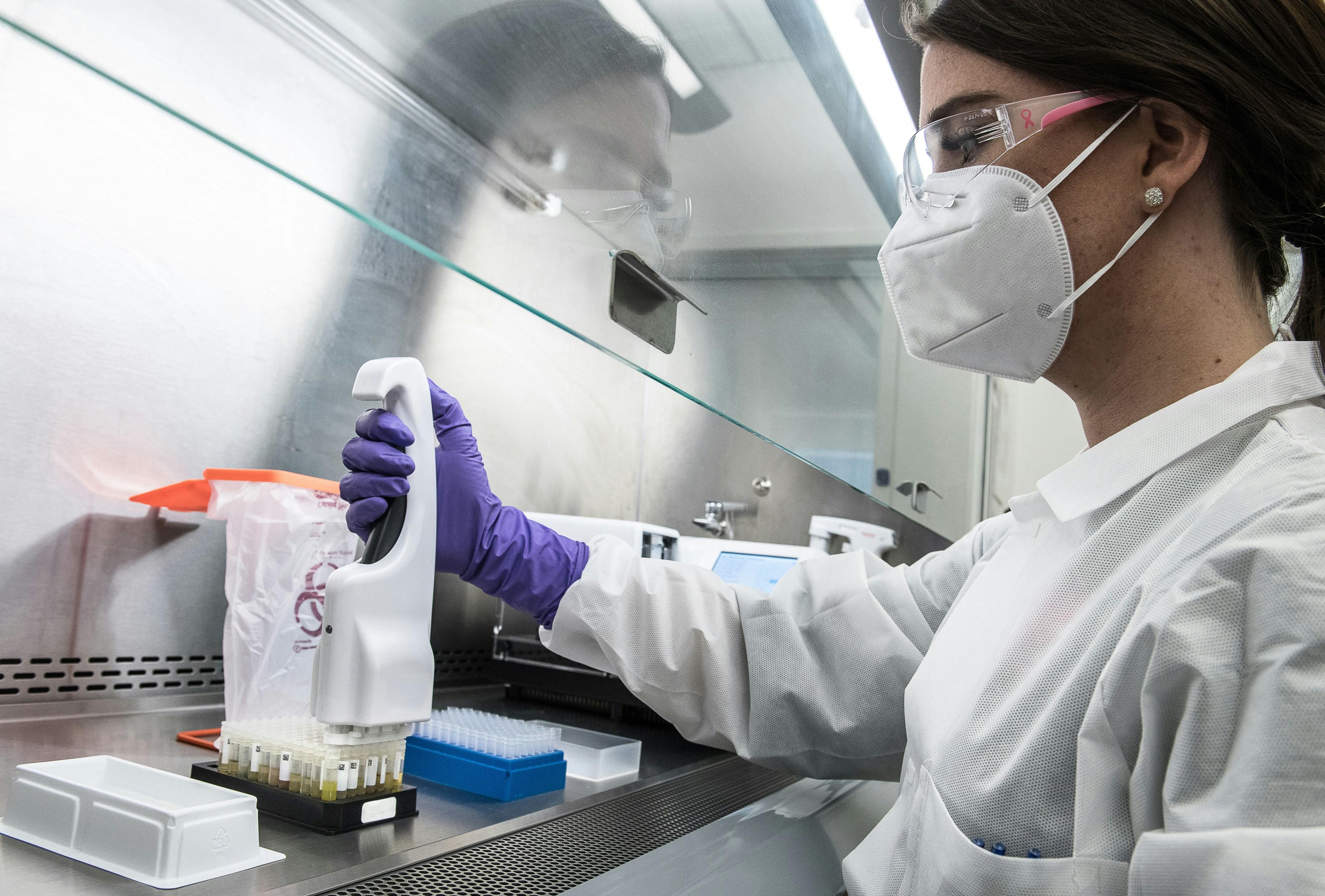
Developing a new drug is one of the most expensive and failure-prone endeavors in modern science. Drug discovery and development is a lengthy, costly, and high-risk process. Estimates vary by methodology, but bringing a new medicine to market can take 10–15 years and cost billions of dollars. Approximately 90% of drug candidates entering clinical development fail to reach approval. Computational biology and AI can help researchers prioritize candidates, generate testable hypotheses, and improve the efficiency of selected stages of drug discovery, although their impact depends on the target, available data, and experimental validation. At the heart of this shift lies a simple idea: if we can simulate biology with enough precision, we can fail faster, cheaper, and smarter in silico, long before a compound ever reaches a living cell.
The problem is not a lack of effort. It is a lack of visibility. Many of today's most promising drug targets, such as GPCRs, ion channels, and protein-protein interactions, are notoriously difficult to study because their shapes shift constantly. Many structure-based drug discovery workflows begin with a single static protein structure, which may not fully capture conformational flexibility or transient binding pockets. Molecular dynamics simulations and ensemble-based approaches can help explore these alternative conformations and identify potential opportunities for ligand binding. Worse, predicting how tightly a candidate molecule will attach to its target, the binding affinity, remains a major source of error. Without accurate predictions, researchers are forced to synthesize and test hundreds of compounds in the lab, burning time and resources on candidates that were never likely to succeed. This is precisely the gap that modern Computational Biology & AI is designed to close.
At its core, Computational Biology & AI uses computers to simulate and predict how biological molecules behave before any wet-lab work begins. The field spans a wide spectrum of techniques, from AI-based structure prediction, which estimates a protein's 3D structure from its amino acid sequence and other available inputs, to virtual screening, which can computationally evaluate large compound libraries and prioritize candidates for further investigation, with throughput depending on the screening method and available computational resources. Molecular Dynamics (MD) Simulations sit at the more rigorous end of this spectrum: instead of producing a single static snapshot, they model how every atom in a protein moves over time, capturing the flexibility and dynamic behavior that static methods miss. Together, these tools form an integrated pipeline, from sequence to structure, structure to simulation, simulation to lead compound, that allows researchers to prioritize the most promising candidates long before committing to expensive synthesis and testing.
To understand why Molecular Dynamics (MD) Simulations matter, consider a simple analogy: a photograph of a lock tells you nothing about how the key must move to open it. Proteins work the same way. Proteins undergo conformational fluctuations that can expose transient binding pockets not readily apparent in a single static structure. Molecular dynamics simulations can help explore these motions and identify potential binding sites, although their detection depends on the simulation setup and sampling. MD Simulations capture this choreography by computing the forces between every atom and tracking how the entire system evolves over nanoseconds to microseconds. The resulting trajectories provide a dynamic view of the protein's modeled behavior under the simulated conditions. When combined with free energy perturbation methods such as FEP+, molecular dynamics simulations can help estimate relative binding free-energy differences among related compounds and prioritize candidates for further testing. Prediction accuracy depends on system preparation, sampling, and the chemical series being studied, making experimental validation an essential part of the workflow. For challenging targets, this level of detail is often the difference between a dead end and a viable lead.
If MD Simulations provide the physics, artificial intelligence provides the speed. In recent years, tools such as AlphaFold 3 have expanded the scope of AI-based structure prediction to include protein–ligand complexes and other biomolecular interactions. These predictions can provide valuable structural hypotheses for drug discovery, although accuracy varies across targets and interaction types and requires appropriate validation. Generative protein-design workflows can combine tools such as RFdiffusion, which generates candidate protein backbones, with ProteinMPNN, which designs amino acid sequences compatible with those structures. These approaches can produce novel protein and binder candidates, which must then be evaluated computationally and experimentally to establish their structural integrity and biological function. The most effective workflows often combine AI-generated hypotheses with physics-based simulations. Molecular dynamics can help assess conformational behavior and refine structural hypotheses, while free energy calculations can provide additional evidence for comparing related compounds. By integrating AI-based predictions with physics-based simulations, researchers can investigate challenging drug targets, generate testable hypotheses, and prioritize compounds for further evaluation. These approaches may expand the range of targets that can be explored, although successful drug development still depends on experimental validation and favorable biological and pharmacological properties.
In practice, Computational Biology & AI now supports every stage of the drug discovery pipeline. During target identification and characterization, AI-based structure prediction can provide structural hypotheses for proteins without experimentally determined structures, helping researchers investigate potential binding sites and assess their relevance to drug discovery. During hit identification, virtual screening can prioritize large compound libraries for experimental follow-up. The time required depends on the library size, screening strategy, and computational infrastructure. At the lead optimization stage, molecular dynamics simulations combined with FEP+ can help prioritize related compounds based on predicted relative binding free energies, supporting lead optimization alongside experimental structure–activity relationship data, reserving precious lab resources for only the most promising candidates. Yet this power demands responsibility. AI models are only as good as the data they learn from, and computational predictions remain hypotheses until confirmed experimentally. The most rigorous workflows therefore pair dry-lab insights with wet-lab validation, including X-ray crystallography, surface plasmon resonance, and functional assays, ensuring that speed never comes at the expense of scientific integrity.
The shift toward Computational Biology & AI is not a passing trend. It is a fundamental change in how science approaches drug discovery. Computational biology and AI are reshaping drug discovery by complementing established experimental approaches with more efficient ways to generate hypotheses and prioritize candidates. By integrating molecular dynamics, AI-based predictions, and experimental data, researchers can explore a broader range of possibilities and make more informed decisions before committing substantial resources to synthesis and testing. The result is a pipeline that fails faster, learns faster, and ultimately succeeds faster. As computing power grows and models become more accurate, the boundary between dry-lab prediction and wet-lab validation will continue to blur. The next decade of therapeutic breakthroughs will not be written by chemistry alone. It will be written by researchers who understand that biology, at its deepest level, is an information science waiting to be decoded.

 English
 Arabic
 French
 Spanish
 Portuguese
 Deutsch
 Turkish
 Dutch
 Italiano
 Russian
 Romaian
 Greek