


How Can zjgycnc Support Your Workshop Production Plans?
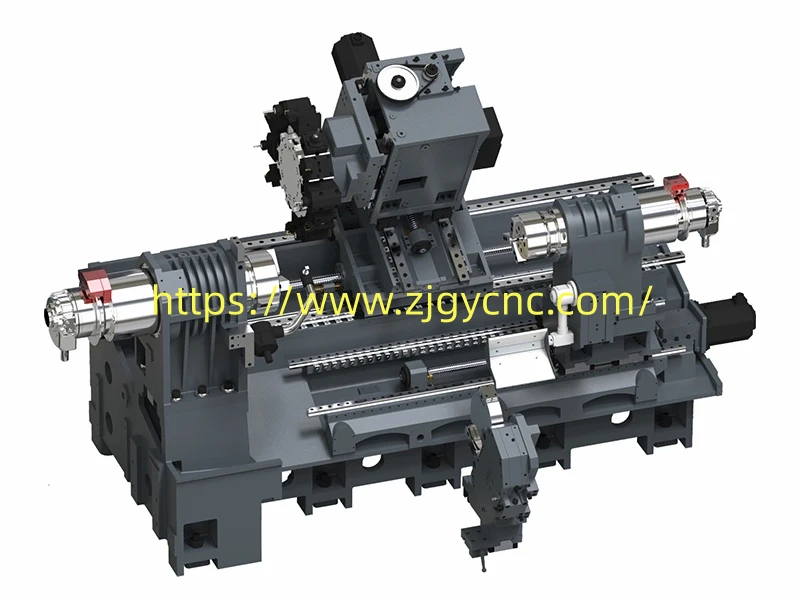
Slant-Bed CNC Lathe purchasing decisions require buyers to look beyond basic specifications and consider how the equipment will fit their manufacturing processes. Workpiece dimensions, material types, machining operations, production volume, and workshop conditions all influence the configuration required. Preparing these details before contacting a supplier helps buyers communicate their expectations and evaluate suitable equipment.
Understand Your Workpiece Requirements
Start by identifying the components your workshop plans to manufacture. Record their diameter, length, shape, material, and dimensional tolerances. These details help determine the working range and machining capabilities needed for your applications.
Different products may require turning, facing, threading, drilling, grooving, or cutting operations. List the processes used regularly and identify any special procedures that may require additional tooling or accessories.
It is also helpful to prepare several representative part drawings. Technical drawings provide manufacturers with specific information about component dimensions and machining requirements, making configuration discussions more practical.
Review the Structural Design
The structural design influences installation arrangements, daily operation, and maintenance access. Buyers should check the construction materials, equipment weight, external dimensions, and internal component layout.
The inclined structure can help direct chips toward the collection area under suitable machining conditions. However, the actual chip removal process depends on the machine layout, cutting method, and material being processed. Ask about the collection tray, cleaning access, and capacity when discussing equipment details.
Workshop space should also be measured before ordering. Consider the room needed for workpiece loading, tool changes, operator movement, and routine inspection. Proper planning can help avoid installation difficulties after delivery.
Check Spindle and Workholding Compatibility
Spindle specifications should match the materials and dimensions of the parts being processed. Buyers can review spindle speed, power, chuck size, and available workholding options.
For example, small precision components may require different cutting conditions from larger metal parts. Material hardness, cutting depth, tool geometry, and production cycle time can influence the required configuration.
Ask the manufacturer about available chuck types, fixtures, and clamping arrangements. If your products have unusual shapes or specific holding requirements, provide drawings and discuss them before confirming the order.
Evaluate Tooling and Control Systems
Tooling arrangements affect how machining operations are organized. Buyers should review the turret type, number of tool positions, supported tool dimensions, and tool-changing method.
Consider whether the proposed arrangement can complete the operations required for your regular components. If several processes are involved, discuss how the tooling setup can support the planned workflow.
The control system also deserves attention. Confirm the controller model, programming functions, operating interface, and compatibility with existing workshop procedures. Buyers introducing new equipment should ask whether operation manuals, training materials, and technical guidance are available.
Define Accuracy and Inspection Standards
Accuracy requirements should reflect the finished products rather than general expectations. Identify the dimensional tolerances, surface finish, and repeatability required for your components.
Ask how the manufacturer checks machine performance before shipment. Inspection procedures may cover geometric accuracy, positioning performance, spindle operation, and trial machining.
If sample testing is available, provide representative drawings and agree on the testing conditions. It is also useful to establish written acceptance criteria before placing the order, so both parties understand which specifications will be checked.
Consider Maintenance and Installation
Installation planning should include electrical requirements, foundation conditions, workshop access, and material handling arrangements. Buyers should confirm that the equipment can be moved into the designated area and positioned according to the installation requirements.
Maintenance arrangements are equally important. Review lubrication points, cleaning procedures, service access, and replacement part availability. Ask about recommended inspection intervals and the process for requesting technical support.
These details can help workshops prepare maintenance schedules and organize responsibilities for daily equipment management.
Compare Supplier Proposals and Service Scope
When evaluating quotations, consider more than the initial purchase price. Review standard accessories, optional configurations, warranty conditions, delivery schedules, installation guidance, and after-sales responsibilities.
Providing the same technical requirements to different suppliers makes their proposals easier to compare. If any specification or service item is unclear, request written confirmation before proceeding.
For businesses with special machining tasks, customization should also be discussed during the quotation stage. Sharing component drawings, expected output, and production conditions allows the supplier to assess the project in greater detail.For businesses preparing to expand machining capacity or update existing production processes, choosing suitable equipment requires careful consideration of component dimensions, machining operations, and workshop conditions. Visit https://www.zjgycnc.com/ to review product information and explore available manufacturing solutions. Before submitting an inquiry, prepare your workpiece drawings, technical specifications, and expected production volume. Providing these details can help the technical team discuss suitable configurations, accessory requirements, installation arrangements, and support options for your project.

 English
 Arabic
 French
 Spanish
 Portuguese
 Deutsch
 Turkish
 Dutch
 Russian
 Romaian
 Portuguese (Brazil)
 Greek