


What Load Capacity Should Buyers Check for a Mini Dumper?
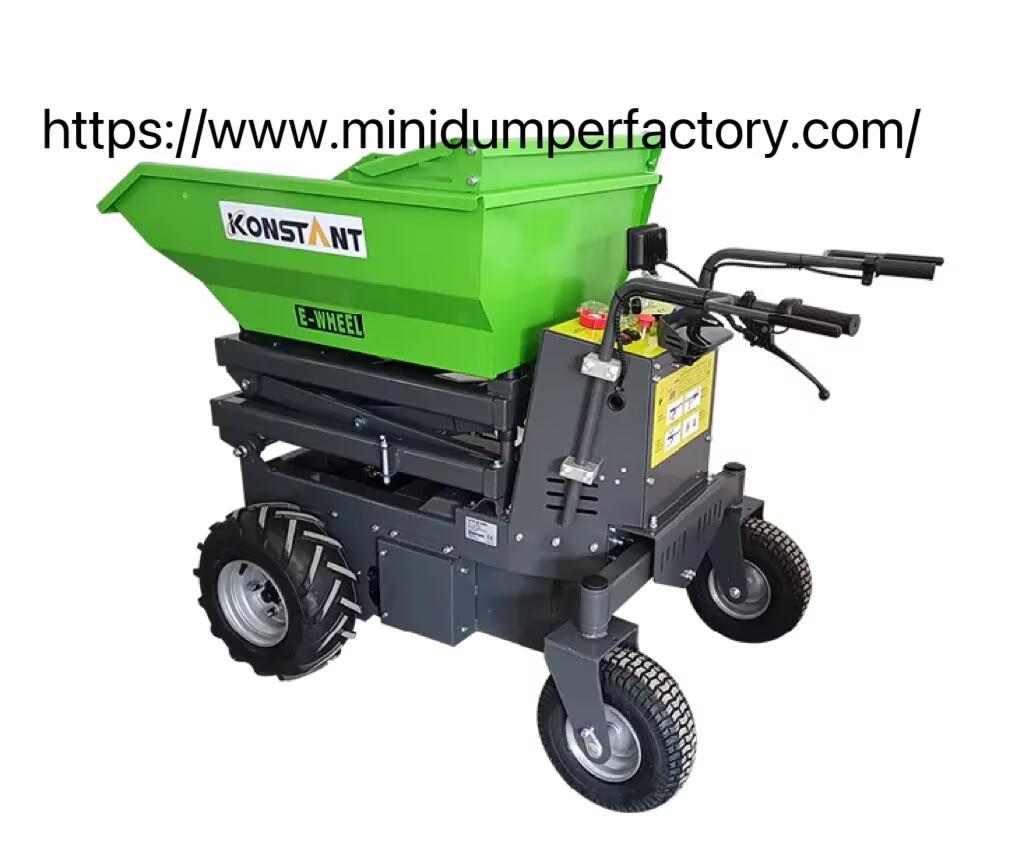
Mini Dumper is a practical equipment category for construction contractors, landscaping companies, agricultural businesses, equipment distributors, and rental service providers. Before purchasing, buyers should evaluate the rated payload, machine dimensions, chassis structure, drive configuration, unloading system, and maintenance requirements. The right purchasing decision depends on the actual working environment, material type, transportation distance, and expected daily workload.
Calculate the Required Payload for Daily Operations
Carrying capacity should be one of the earliest considerations during product selection. Buyers need to identify the typical weight of materials transported during each working cycle rather than choosing a machine based only on hopper volume.
Soil, gravel, sand, bricks, and construction waste have different densities. A container filled with lightweight material may have a different total weight from one carrying dense aggregate.
Purchasers should compare the rated payload with their expected working load. They should also check whether the manufacturer provides clear information about operating weight, loading capacity, and recommended working conditions.
For contractors handling several material types, selecting an appropriate capacity can help organize transportation tasks and reduce unnecessary trips.
Measure the Working Area and Access Routes
Machine dimensions can influence whether equipment can enter and move around a particular worksite. Before requesting a quotation, buyers should measure narrow entrances, pathways, turning areas, and available storage spaces.
Compact dimensions may be useful for garden renovation, property maintenance, and construction projects with restricted access. However, the machine must also have enough room to turn, load materials, and unload safely.
Ground clearance and overall width should be considered alongside length and height. Buyers working in buildings or enclosed areas should also check overhead clearance and ventilation requirements according to the selected power system.
Providing these measurements to a manufacturer can help identify a suitable configuration before production begins.
Compare Track and Wheel Configurations
The running system influences movement across different ground conditions. Wheeled models may suit firm surfaces, paved yards, and transportation routes with relatively even ground.
Tracked configurations may be considered for soft soil, uneven paths, and landscaping projects where traction and ground contact are important. However, buyers should examine the actual track design, ground pressure information, and operating limits of the selected model.
The decision should be based on the main worksite conditions rather than appearance alone. Contractors should also consider replacement parts, routine inspection, and the availability of maintenance support.
Examine the Loading and Unloading Design
The loading structure affects how materials enter the container and how they are discharged at the destination.
Buyers should check the hopper dimensions, opening shape, tipping direction, and unloading height. Standard front-tipping designs may suit open discharge areas, while elevated unloading configurations may be required when materials need to enter a higher container.
Some projects may also benefit from a self-loading attachment or a different container arrangement. These options should be evaluated according to the materials handled and the equipment used for loading.
Before ordering, request drawings or product demonstrations to understand the complete loading and unloading process.
Review the Power System and Hydraulic Components
The power system should match the working environment, operating schedule, and local requirements. Buyers may compare petrol, diesel, and electric configurations according to fuel availability, charging access, noise considerations, and maintenance arrangements.
For models using hydraulic functions, purchasers should ask about the lifting mechanism, cylinder arrangement, control system, and inspection procedures.
The manufacturer's technical documentation should explain the operating requirements and applicable limitations. Buyers should avoid assuming that different configurations share identical performance specifications.
It is also useful to ask about routine service intervals and the availability of commonly replaced components.
Check Operator Safety and Maintenance Access
Equipment selection should include an evaluation of operator controls, braking arrangements, visibility, and access to service points.
Buyers should request the operating manual and review the manufacturer's instructions concerning load distribution, turning, gradients, and unloading procedures. Operators should receive appropriate training before using the equipment.
Maintenance access is another practical consideration. Check whether inspection points, filters, hydraulic connections, and other service components can be reached conveniently.
A regular inspection routine can help identify worn tracks, damaged hoses, loose fasteners, or other problems before they affect normal operations. Actual maintenance procedures should follow the instructions supplied with the machine.
Evaluate Manufacturing Capabilities and Order Details
For wholesalers, importers, and equipment distributors, supplier evaluation involves more than comparing product specifications. Buyers should understand the factory's production arrangements, quality inspection procedures, and customization capabilities.
Possible customization requirements include container dimensions, machine colors, engine configurations, control arrangements, branding, and packaging. Availability depends on the manufacturer's production setup and should be confirmed before an order is finalized.
Purchasers should also discuss minimum order quantities, sample arrangements, production schedules, spare parts supply, warranty conditions, and shipping terms. Written confirmation of specifications can reduce misunderstandings during manufacturing.minidumperfactory provides compact material transport equipment for business customers. Buyers can discuss their required payload, working environment, machine configuration, and customization preferences when planning a purchase. To review available models and manufacturing options, visit https://www.minidumperfactory.com/product/ and contact the company with your project requirements.

 English
 Arabic
 French
 Spanish
 Deutsch
 Turkish
 Dutch
 Italiano
 Russian
 Romaian
 Portuguese (Brazil)
 Greek