


Selecting Durable Equipment for Fluid Handling
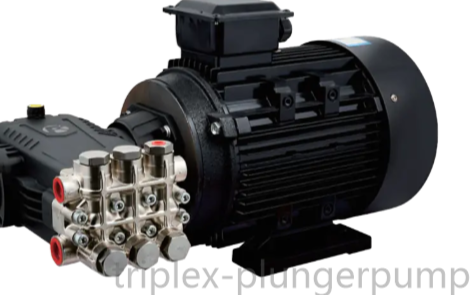
Industrial fluid handling depends on equipment that can move liquids reliably under different operating conditions. A Piston Pump uses the reciprocating movement of a piston inside a cylinder to draw in and discharge liquid. This mechanical principle makes it suitable for applications where controlled fluid delivery and pressure generation are required. Its performance is influenced by cylinder design, piston movement, valve operation, sealing arrangements, and the characteristics of the liquid being handled. Understanding these factors helps buyers assess whether this pumping technology fits their operational needs.
The pumping cycle begins when the piston moves away from the liquid chamber's discharge side. This movement increases the available chamber volume and creates a pressure difference that allows liquid to enter through the inlet valve. When the piston moves in the opposite direction, the chamber volume decreases, the inlet valve closes, and liquid is forced through the outlet valve. Repeated cycles provide continuous fluid transfer at the system level, although the actual delivery pattern depends on the pump design and operating configuration.
Mechanical coordination is important for reliable operation. The piston, cylinder, connecting rod, crankshaft, valves, and drive components must work together with suitable alignment and clearances. Poor alignment can increase friction and accelerate wear, while unsuitable valve performance may affect fluid intake and discharge. Sealing components help prevent leakage around moving parts and maintain the intended operating conditions. For this reason, component quality and correct assembly have a direct influence on equipment reliability.
Different industries use reciprocating pumping systems for different purposes. Industrial cleaning applications may require pressurized water to remove grease, residue, and accumulated dirt from machinery or work areas. Manufacturing facilities may use pumping equipment for process-related fluid transfer, while maintenance operations can require dependable liquid delivery for specialized cleaning tasks. Other applications may involve compatible liquids used in industrial systems. The correct configuration depends on the fluid's properties, required pressure, flow demand, and expected operating frequency.
Material compatibility should be evaluated before equipment selection. The cylinder, piston, valves, seals, and other wetted components may come into contact with water, detergents, process liquids, or suspended particles. Different fluids can affect metals and sealing materials in different ways. Corrosion, abrasion, chemical exposure, and temperature changes may all influence service life. Buyers should provide detailed information about the liquid and working environment so that suppliers can recommend appropriate materials and construction options.
The drive system also contributes to overall performance. Mechanical power must be transferred efficiently to the piston, and the motor or other driving equipment should match the intended operating conditions. Incorrect matching may result in unnecessary energy consumption, unstable movement, or excessive mechanical stress. Installation quality is equally important. Secure mounting, suitable piping, proper alignment, and an adequate liquid supply help the system operate within its recommended conditions.
Maintenance should focus on the components that experience repeated movement and fluid contact. Regular checks of the piston, cylinder surface, seals, valves, connections, and drive mechanism can help identify wear or leakage. Changes in operating sound, vibration, or fluid output may indicate that inspection is needed. Operators should also follow the manufacturer's guidance on lubrication, cleaning, replacement intervals, and the use of compatible spare parts. A preventive maintenance routine can reduce unexpected interruptions and help preserve equipment performance.
Safety requirements depend on the operating environment and the liquid being handled. Pressurized fluid can cause injury if released unexpectedly, so hoses, fittings, and connections should be inspected before operation. Operators should use suitable protective equipment and follow the equipment manual. Before opening the pump or replacing components, the system must be stopped, isolated, and depressurized as instructed. Where chemical liquids are involved, additional precautions may be necessary to protect personnel and surrounding equipment.
When evaluating a Piston Pump, industrial buyers should consider the intended application, pressure and flow requirements, fluid compatibility, drive configuration, installation conditions, and maintenance support. Comparing these factors provides a more practical basis for purchasing than focusing on a single feature. A correctly selected system can support reliable fluid movement and predictable operation when maintained appropriately.
Long-term value comes from matching equipment to the actual workload and maintaining it according to technical guidance. Distributors and industrial users should also confirm spare-part availability and supplier support before placing an order. FEIKE offers pumping solutions for industrial fluid handling requirements, and buyers can review available products and configurations at https://www.triplex-plungerpump.com/product/pumps/.

 English
 Arabic
 French
 Spanish
 Portuguese
 Deutsch
 Turkish
 Dutch
 Italiano
 Russian
 Romaian
 Portuguese (Brazil)