


Can TMS Therapy Help with Chronic Pain, OCD and PTSD?
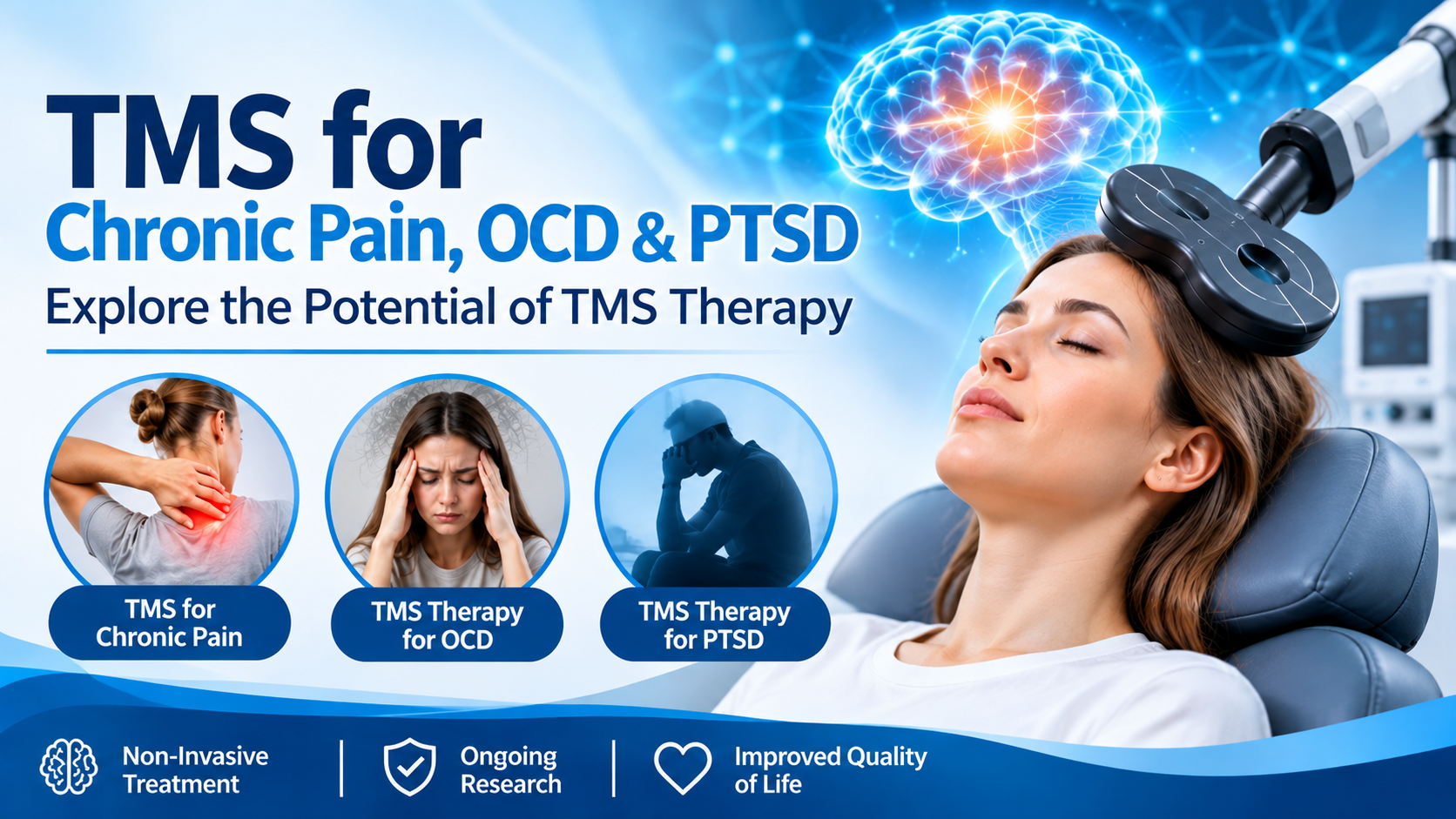
Living with chronic pain, obsessive-compulsive disorder (OCD), or post-traumatic stress disorder (PTSD) can affect many aspects of everyday life. These conditions may influence sleep, concentration, emotional well-being, relationships, and the ability to manage daily activities. Although conventional treatments can help many people, some individuals continue to experience symptoms despite trying different approaches.
Transcranial Magnetic Stimulation (TMS) is a non-invasive brain stimulation technique that researchers are investigating for several neurological and mental health conditions. While it is an established treatment option for certain forms of depression, its potential role in chronic pain, OCD, and PTSD is still being explored.
Understanding how TMS works, what current research suggests, and when a professional assessment may be appropriate can help individuals make informed decisions about their care.
What Is Transcranial Magnetic Stimulation (TMS)?
Transcranial Magnetic Stimulation (TMS) is a non-invasive treatment that uses magnetic pulses to stimulate specific areas of the brain. These pulses generate small electrical currents that influence the activity of targeted nerve cells and brain circuits.
Repeated TMS sessions may help modify communication between neural networks through a process known as neuroplasticity. The treatment does not involve surgery or general anaesthesia and is generally provided in an outpatient setting.
The stimulation area, frequency, intensity, and treatment schedule depend on the condition being investigated and the individual's clinical assessment.
1. TMS for Chronic Pain: Understanding Its Potential
Chronic pain is pain that continues or returns over an extended period. It may be associated with conditions such as fibromyalgia, neuropathic pain, musculoskeletal disorders, or persistent back pain.
Pain is not controlled by the body alone. The brain and nervous system also play important roles in how pain signals are processed and experienced. This is one reason researchers are studying brain stimulation approaches as potential additions to chronic pain management.
How Can TMS for Chronic Pain Work?
Research into repetitive Transcranial Magnetic Stimulation (rTMS) suggests that stimulating selected brain regions may influence neural pathways involved in pain processing.
Depending on the protocol, researchers have investigated whether TMS may:
-
Influence brain networks involved in pain perception.
-
Help regulate abnormal neural activity associated with persistent pain.
-
Support changes in how the nervous system processes pain signals.
-
Improve certain pain-related symptoms in some research participants.
A 2025 systematic review and meta-analysis of 23 randomised controlled trials involving 1,158 participants reported potential reductions in musculoskeletal pain following rTMS. However, treatment protocols and individual responses varied, so further research is needed.
Is TMS Suitable for Everyone Experiencing Chronic Pain?
No. Chronic pain can have many underlying causes, and TMS is not a universal treatment for every pain condition. A specialist needs to consider the diagnosis, previous treatments, medical history, and available evidence before determining whether this approach may be appropriate.
TMS should be considered only as part of an individualised care plan rather than a replacement for necessary pain management.
2. TMS Therapy for OCD: Exploring a Different Treatment Approach
Obsessive-compulsive disorder (OCD) is a mental health condition involving recurring unwanted thoughts, known as obsessions, and repetitive behaviours or mental rituals, known as compulsions.
These symptoms can become distressing and time-consuming, sometimes affecting work, relationships, and everyday responsibilities.
Common examples include:
-
Repeatedly checking doors, appliances, or locks.
-
Persistent concerns about contamination or germs.
-
A strong need for symmetry or things to feel just right.
-
Repetitive thoughts that are difficult to control.
-
Performing routines to reduce anxiety or distress.
OCD is commonly managed through evidence-based psychological therapies, including exposure and response prevention (ERP), and medication when appropriate. However, some individuals continue to experience significant symptoms despite treatment.
How Does TMS Therapy for OCD Work?
Researchers are studying TMS therapy for OCD because certain brain circuits are involved in repetitive thoughts, compulsive behaviours, and emotional regulation.
Specific TMS protocols aim to influence targeted brain regions associated with these circuits. Research has examined stimulation of areas such as the dorsomedial prefrontal cortex and anterior cingulate cortex.
Certain deep TMS protocols have received clearance from the United States FDA for OCD treatment. However, device clearances and treatment availability vary between countries, and this does not automatically establish suitability or approval in Australia.
What Does the Research Say?
Clinical studies have reported encouraging findings for some people with treatment-resistant OCD, but results vary depending on the stimulation protocol, treatment setting, and individual characteristics.
TMS is not a guaranteed cure for OCD and should not automatically replace established treatments such as ERP or prescribed medication. A qualified clinician can explain whether an individual may be suitable for an available TMS approach.
3. TMS Therapy for PTSD: Understanding the Research
Post-traumatic stress disorder (PTSD) can develop after experiencing or witnessing a traumatic event. It may affect emotional well-being, sleep, concentration, and a person's sense of safety.
People experiencing PTSD may have symptoms such as:
-
Unwanted memories or flashbacks.
-
Nightmares and disturbed sleep.
-
Avoidance of reminders associated with trauma.
-
Increased alertness or feeling constantly on guard.
-
Emotional distress and difficulty concentrating.
Treatment may involve trauma-focused psychological therapies, medication, or a combination of approaches, depending on the individual's needs.
How Is TMS Therapy for PTSD Being Studied?
TMS therapy for PTSD is being investigated because brain circuits involved in emotional regulation, fear responses, and stress processing may function differently following trauma.
Researchers are examining whether repeated magnetic stimulation of selected brain regions can influence these networks and help reduce certain PTSD symptoms.
Research has explored:
-
Changes in brain activity associated with stress responses.
-
Potential effects on emotional regulation.
-
Possible improvements in selected PTSD symptoms.
-
The role of different stimulation protocols and treatment schedules.
Is TMS an Established Treatment for PTSD?
The research is developing, but the evidence is not yet conclusive. Some studies have reported reductions in PTSD symptoms, while others have identified limitations involving study size, treatment protocols, and long-term outcomes.
TMS should therefore be discussed as an area of ongoing clinical research rather than a guaranteed or universally established treatment for PTSD.
Understanding the Differences Between These Conditions
Although chronic pain, OCD, and PTSD are different conditions, all involve complex interactions between the brain, nervous system, and individual experiences.
| Condition | Main area of concern | TMS research focus |
|---|---|---|
| Chronic Pain | Persistent physical pain | Brain networks involved in pain processing |
| OCD | Obsessions and compulsions | Circuits associated with repetitive thoughts and behaviours |
| PTSD | Trauma-related symptoms | Networks involved in emotional regulation and stress responses |
The stimulation approach for one condition cannot automatically be applied to another. Each treatment protocol requires condition-specific clinical consideration.
What Happens During a TMS Assessment?
Before considering TMS, an individual should undergo an appropriate clinical assessment. This helps determine whether the treatment is suitable and whether other approaches may be more appropriate.
An assessment may involve:
-
Medical history: Reviewing existing health conditions, previous treatments, and relevant medications.
-
Symptom assessment: Understanding the nature, duration, and impact of the symptoms.
-
Treatment suitability: Considering clinical evidence, potential benefits, and possible risks.
-
Treatment planning: Discussing the appropriate approach, expected schedule, and monitoring requirements.
-
Progress reviews: Evaluating changes in symptoms and deciding whether the treatment plan needs adjustment.
TMS may cause temporary side effects such as scalp discomfort or headaches. Rare but serious risks, including seizures, should also be discussed with the treating clinician. Certain implanted devices or metal objects may affect treatment suitability.
Exploring TMS Services at TMS Hubb
TMS Hubb provides Transcranial Magnetic Stimulation services in Queensland, Australia, with clinics in Brisbane and surrounding areas.
The clinic's website lists chronic pain among the conditions it addresses and identifies OCD and PTSD as conditions where TMS is being explored or trialled. Treatment availability and suitability depend on individual assessment and the clinical approach offered.
For individuals considering TMS, speaking with a qualified practitioner can help clarify:
-
Whether TMS may be appropriate for their condition.
-
What evidence supports the proposed treatment.
-
Which treatment options are currently available.
-
What costs, referrals, and funding arrangements may apply.
It is also important to note that Queensland Health's service directory states that TMS treatment for chronic pain, OCD, and PTSD is not covered by Medicare through the listed service. Individuals should contact TMS Hubb directly to confirm current eligibility, availability, and fees.
Final Thoughts
TMS is an evolving area of treatment and research, with studies exploring its potential role in chronic pain, OCD, and PTSD. Although early findings are encouraging in some areas, the strength of evidence and treatment availability differ between conditions.
Understanding the research and seeking professional guidance are important steps before considering any new treatment approach.
If you are exploring TMS in Queensland, TMS Hubb can provide information about its services, assessment process, and available treatment options.

 English
 Arabic
 French
 Spanish
 Portuguese
 Deutsch
 Turkish
 Dutch
 Russian
 Romaian
 Portuguese (Brazil)
 Greek