


How Fish Shops Can Get More Local Customers with SEO
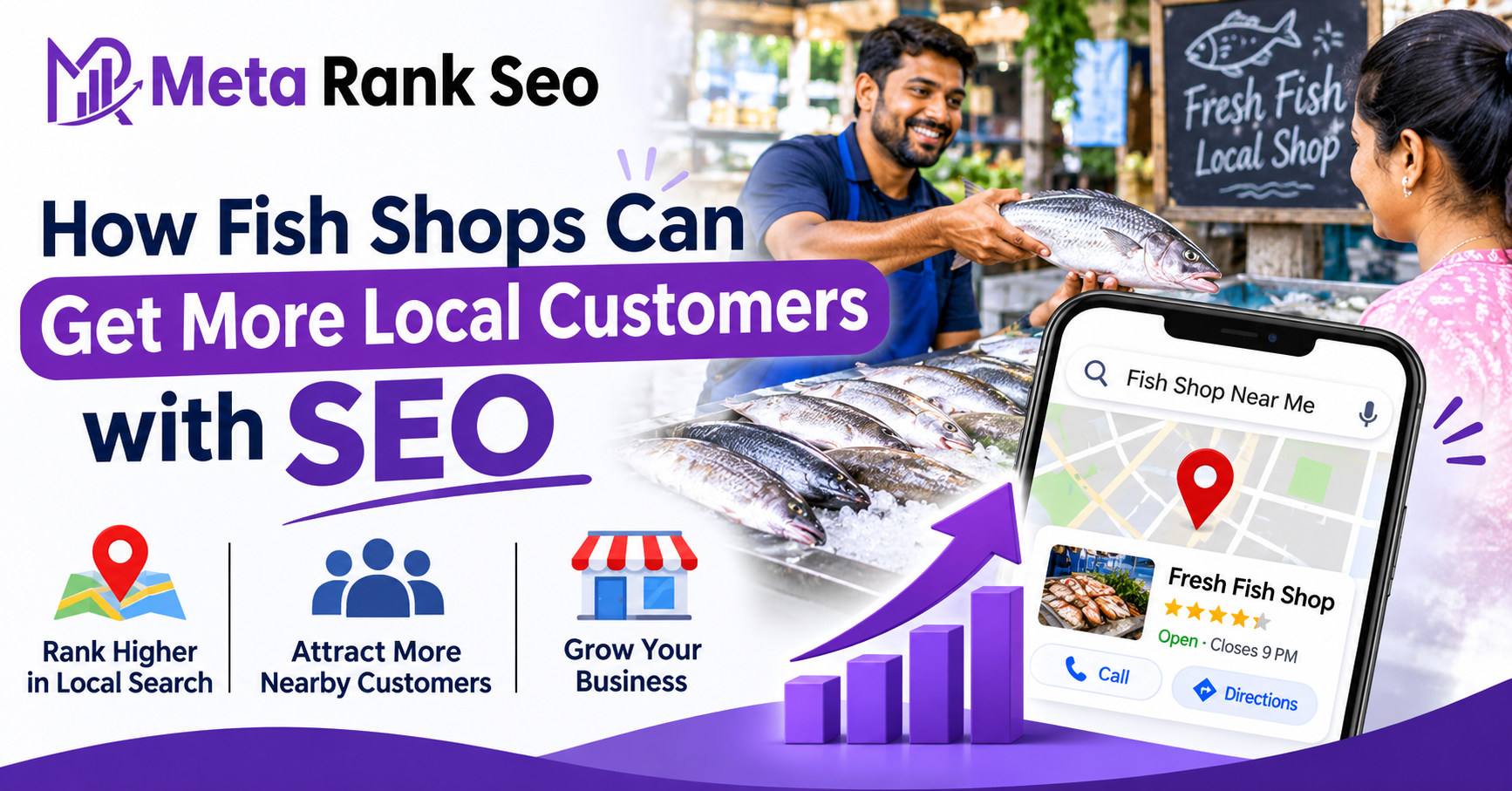
Someone is standing in their kitchen right now wondering where to buy fresh salmon for dinner. They will not browse a printed directory. They will type “fish shop near me” into Google and, most likely, visit one of the first few shops they see. If your shop is not there, that sale goes to a competitor, even when your catch is fresher.
Local search engine optimization (SEO) fixes that. This guide explains how it works for fish shops and seafood markets, step by step, from the first search to the sale at your counter. If you would rather have specialists handle it, our Fish Shops SEO Services are built for exactly this kind of business.
Why Local SEO Matters for Fish Shops
Fish is a fresh, urgent and local purchase. Shoppers want it today, from a place they can reach quickly, and they check hours, reviews and photos before they leave home. That is why searches such as “fish market open now” or “live crab near me” are so valuable: the person typing them is often ready to buy within hours.
When Google sees a search with local intent, it usually shows a map with a few business listings, often called the local pack, above the regular results. According to Google’s own local ranking guidance, three factors decide who appears there:
• Relevance: how well your profile and website match what the person searched for.
• Distance: how close your shop is to the searcher.
• Prominence: how well known and trusted your shop is, based on reviews, links, citations and mentions across the web.
You cannot change where your shop is, but you can improve relevance and prominence. Everything below focuses on those two.
How Shoppers Find a Fish Shop: The Customer Journey
Not every searcher is ready to buy. Good fish shop SEO meets people at each stage and guides them toward the counter.
• Awareness (top of funnel): people are learning. They search “how to tell if fish is fresh” or “best fish for grilling.” Helpful guides and recipes introduce your shop as a trusted source.
• Consideration (middle of funnel): people are comparing options. They search “fresh fish market near me” or “live crab shop in [city].” Your Google Business Profile, species pages and reviews decide whether you make the shortlist.
• Decision (bottom of funnel): people are ready to act. They search “fish shop open now” or “order salmon fillets today.” Clear hours, a tap-to-call button and directions win the visit.
Step 1: Build a Complete Google Business Profile
Your Google Business Profile (GBP) is the single most important local asset for a fish shop. Treat it as a second storefront.
• Choose the right primary category, such as Fish Store or Seafood Market, and add secondary categories only if they are true.
• Use your real shop name, address and phone number exactly as they appear on your signboard.
• Keep regular, holiday and market-day hours accurate. Wrong hours cost customers and reviews.
• List products and services such as whole fish, fillets, shellfish, cleaning and cutting, and delivery or pick-up.
• Upload your own photos of the counter, the daily catch and your team. Original images build trust that stock photos cannot.
• Post weekly updates about new arrivals, seasonal species and offers.
Step 2: Optimize Your Website for Local Keywords
Your website should confirm what your profile says. Create one clear page for each important service or species group, and one page for each area you genuinely serve. Include the city or neighborhood naturally in titles, headings and body text, for example “Fresh Seafood Market in [City].”
Add your address, phone number, opening hours and an embedded map to the homepage and contact page. Use LocalBusiness schema markup so search engines read these details accurately, and make sure the site loads quickly and works well on mobile, because most local searches happen on a phone.
Step 3: Build Trust the Way Google Expects (EEAT)
Google’s quality guidelines look for Experience, Expertise, Authoritativeness and Trustworthiness, known as EEAT. For a food business, trust matters even more. Here is how a fish shop can show each signal honestly:
• Experience: show real, first-hand proof such as photos of your daily catch, your cutting counter and short notes from the people who handle the fish.
• Expertise: have your fishmonger or head chef write or review your guides on selecting, storing and cooking fish, and name them as the author.
• Authoritativeness: earn mentions from local food bloggers, restaurants, suppliers and community websites that link to your shop.
• Trustworthiness: keep your name, address and phone number identical everywhere, publish sourcing and hygiene information, use HTTPS, and never post fake reviews.
Ask satisfied customers to leave a review after a purchase, and reply to every review, including negative ones, politely and promptly. Reviews are a major prominence signal, and your replies show future customers how you treat people.
Step 4: Publish Helpful Content for Every Stage
Content brings in shoppers before they are ready to buy and proves your expertise. Start with questions customers already ask at your counter:
• How to tell if fish is fresh, and what to look for at the counter.
• Which fish suits grilling, frying, curries or sushi-style dishes.
• How to store, thaw and cook popular species safely.
• A seasonal guide to what is freshest this month.
Link these posts to the relevant species or service pages so readers can move naturally from learning to buying. A visitor who read your freshness guide is far more likely to trust your shop for the purchase.
Step 5: Turn Searches into Sales
Rankings only matter if they bring people through the door. Make the next step effortless:
• Add a tap-to-call button and a direction link on every mobile page.
• Offer pre-orders for busy periods and festivals, with clear cut-off times.
• Show current offers, delivery areas and minimum order details.
• Keep a short “catch of the day” update on your homepage and profile.
Even a simple note at the counter asking “How did you find us?” helps you learn which channels send real customers.
How to Measure Local SEO Results
Check your numbers monthly. Google Business Profile shows profile views, calls and direction requests. Google Search Console shows which searches bring people to your site, and Google Analytics shows what they do next. Track rankings for a small set of local keywords, review count and rating, and the number of calls and walk-ins you can attribute to search.
Be realistic about timing. Local SEO is a steady process, and most shops need a few months of consistent work before results become clear. Be cautious of anyone who guarantees a number one ranking.
When to Work with an SEO Specialist
Doing the basics yourself is possible, but many shop owners are busy at the counter from morning to night. A good provider of fish shop SEO services should start with an audit of your profile, website and competitors, explain the plan in plain language, report on calls and visits rather than vanity metrics, and follow Google’s guidelines with no fake reviews or shortcuts.
Frequently Asked Questions
How long does SEO take to bring customers to a fish shop?
Small improvements to your Google Business Profile can show within weeks, while stronger website and review gains usually take a few months. Results depend on competition in your area.
Do I need a website, or is a Google Business Profile enough?
A profile is the best starting point, but a website gives you more places to rank, builds trust and lets you capture pre-orders and enquiries. The two work best together.
How many reviews does my fish shop need?
There is no fixed number. Aim for a steady stream of genuine reviews and compare yourself with the shops ranking above you.
Can SEO help if I only serve one neighborhood?
Yes. Local SEO is built for this. Focusing on one area lets you target “near me” and neighborhood searches precisely.
Final Thoughts
Fish shops win online the same way they win in person: freshness, honesty and being easy to find. Complete your Google Business Profile, build helpful pages, earn real reviews and make it simple to call or visit. If you want an expert team to handle it, talk to MetaRank SEO, an SEO company that helps local businesses get found by customers nearby.

 English
 Arabic
 French
 Spanish
 Portuguese
 Deutsch
 Turkish
 Dutch
 Russian
 Romaian
 Portuguese (Brazil)
 Greek