


Smart Automation for Button Processing Applications
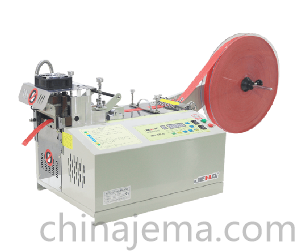
Buttons are important components in many types of clothing, including shirts, coats, trousers, uniforms, children's garments, and fashion products. They provide a practical fastening function while contributing to the visual identity of a finished garment. Their placement and attachment influence how easily clothing can be opened and closed, how the garment looks, and how it performs during regular use. In this context, button attachment is an essential stage of apparel manufacturing that requires consistent positioning and appropriate fastening methods.
Buttons are available in a wide range of materials, such as plastic, resin, metal, wood, shell, and other decorative materials. Their shapes and surface finishes can also vary, from simple flat designs to textured, curved, or specially decorated styles. Garment fabrics are equally diverse, including lightweight cotton, woven synthetics, denim, wool, canvas, and heavier workwear materials. Manufacturers need to consider these differences when organizing the attachment process.
Positioning is one of the most visible aspects of button assembly. Shirts require consistent spacing so that their front panels align properly. Coats and uniforms depend on button positions that match the intended design and fastening arrangement. If buttons are installed unevenly, buttonholes may not align correctly, making the garment less convenient to wear. Repeatable positioning helps manufacturers maintain a balanced appearance across production batches.
Secure fastening is equally important. Buttons experience repeated pulling and movement whenever a garment is opened or closed. If a button becomes loose or detached, the wearer may need to repair the garment before continuing to use it. A reliable production process should therefore support appropriate attachment while protecting the surrounding fabric and preserving the garment's appearance.
From the consumer's perspective, buttons influence both convenience and personal style. On children's clothing, easy fastening can make dressing routines simpler. On uniforms and workwear, dependable buttons support everyday functionality. Decorative buttons can also become distinctive design features on fashion garments. Consistent attachment helps manufacturers preserve these functional and visual qualities.
Automation can improve the management of repetitive attachment tasks. Manual operations may remain suitable for customized clothing, prototypes, and small production batches. However, larger manufacturing orders involve repeated positioning and fastening across many garments. Automated machinery can help standardize these movements and reduce the need for continuous manual handling. Operators can then concentrate on garment preparation, machine supervision, and inspection of finished components.
Production flexibility is another important consideration. Manufacturers may switch between garment styles that use different button sizes, materials, colors, and placement arrangements. Equipment and production procedures should accommodate these changing requirements while keeping setup and quality checks manageable. Flexible workflows help businesses respond to customer orders and product development without unnecessarily disrupting their manufacturing schedules.
Quality inspection should consider both positioning and fastening. A button may appear correctly positioned but still require checking to ensure that it is secure. Similarly, a firmly attached button may create a visual inconsistency if its location differs from the design. Identifying such problems early can reduce rework and help maintain consistent product quality across larger quantities.
Efficient attachment can also contribute to better material utilization. Incorrectly installed buttons may require replacement components, additional labor, or garment rework. These corrections consume resources and can slow down the production line. Consistent processing helps manufacturers reduce avoidable mistakes and organize their production activities more effectively.
Operators continue to play an important role in automated manufacturing. They prepare components, monitor machine performance, check finished garments, and respond to changing production requirements. Machinery should support these responsibilities through practical operation and predictable performance. When automation handles repetitive tasks effectively, skilled workers can focus more attention on quality control and workflow coordination.
JEMA develops textile machinery solutions to support garment processing and production automation. With suitable equipment and consistent inspection practices, button attachment can become a more predictable part of apparel assembly, helping manufacturers maintain product appearance, improve production efficiency, and reduce repetitive manual work. Companies exploring machinery for garment manufacturing can discover further solutions at https://www.chinajema.com/product/.

 English
 Arabic
 French
 Spanish
 Portuguese
 Deutsch
 Turkish
 Italiano
 Russian
 Romaian
 Portuguese (Brazil)
 Greek