


How to Hire a BigCommerce Developer for Your Ecommerce Store
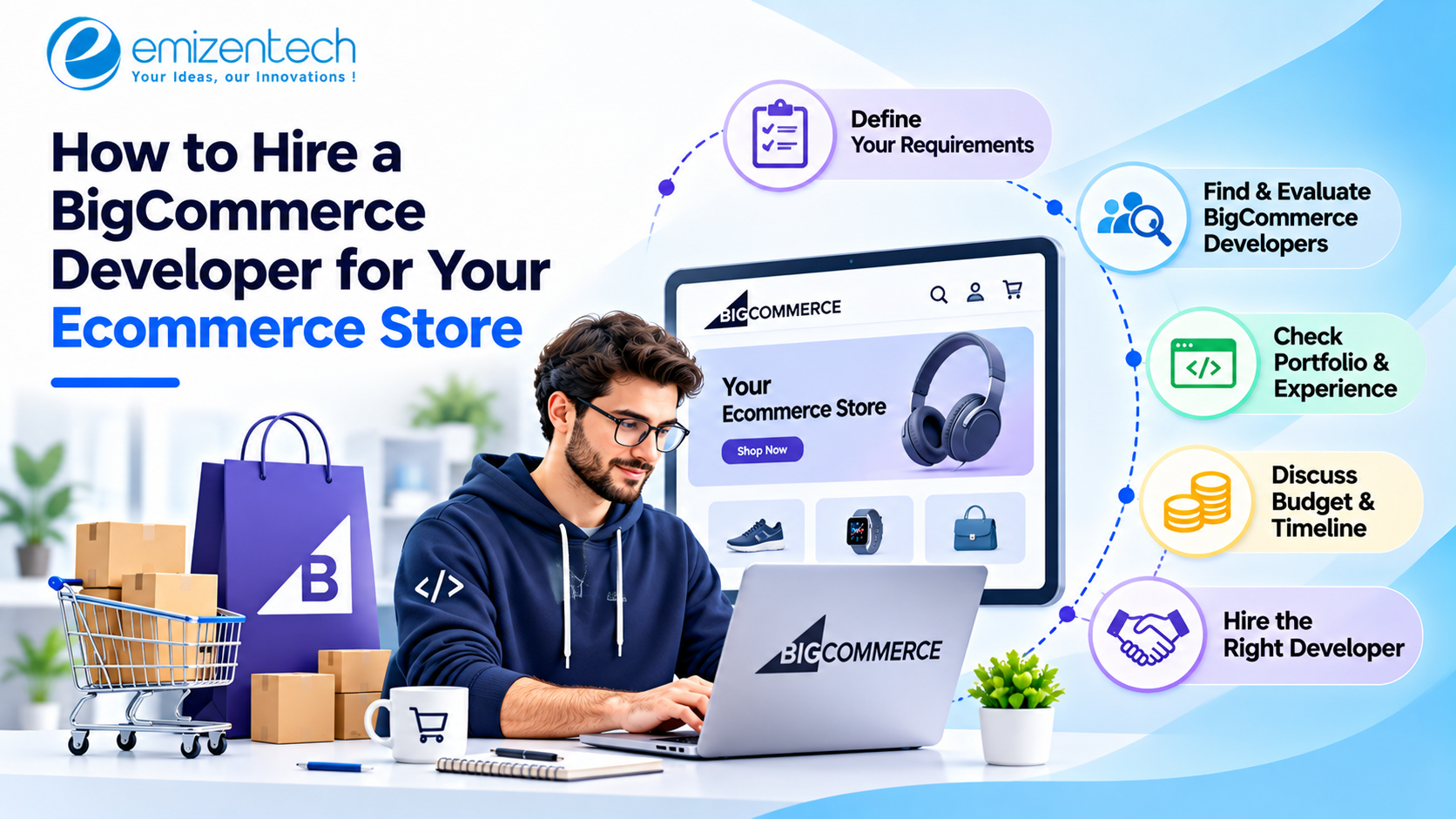
Hiring a BigCommerce developer requires more than comparing prices or reviewing portfolios. Businesses need to find a professional who understands their store requirements, has relevant platform experience, and can deliver the expected functionality within the available budget.
The right hiring decision depends on your project scope, technical requirements, and need for ongoing support. This guide explains how to identify suitable candidates, evaluate their expertise, compare hiring options, and select a developer for your ecommerce store.
When Should You Hire a BigCommerce Developer?
Businesses should consider hiring a BigCommerce developer when they need technical expertise beyond standard platform configuration.
A developer can help with:
-
Building a new store: Develop a storefront with the required design, product catalog, and checkout functionality.
-
Customizing an existing store: Modify themes, improve navigation, and implement additional features.
-
Integrating business systems: Connect BigCommerce with ERP, CRM, inventory, payment, and shipping applications.
-
Improving store performance: Address technical issues affecting page speed and the shopping experience.
-
Migrating from another platform: Transfer products, customer records, and order data while maintaining store functionality.
Identifying these requirements helps businesses determine the experience and technical skills they should prioritize when hiring.
What Skills Should You Look for in a BigCommerce Developer?
Evaluating a developer's skills helps determine whether they can handle your specific project requirements.
BigCommerce Platform and Stencil Expertise
Look for experience with BigCommerce's architecture, theme customization, product management, and checkout functionality.
Developers should understand Stencil, BigCommerce's theme framework, and know how to customize storefronts without introducing unnecessary technical complexity.
Frontend Development Skills
A developer should have practical experience with HTML, CSS, JavaScript, and responsive design.
These skills are essential for creating storefronts that function consistently across desktop and mobile devices.
API Integration and Backend Development
If your project involves external applications, evaluate the developer's experience with BigCommerce APIs, webhooks, and integration workflows.
This expertise is important for connecting your store with inventory management, payment processing, and other business systems.
Ecommerce Performance and Security
Check whether the developer understands page speed optimization, checkout performance, and secure API credential management.
These skills are particularly important for stores handling high traffic or complex transactions.
Where Can You Hire a BigCommerce Developer?
Businesses can choose between freelance developers, development agencies, and dedicated developers. The right option depends on the project's scope, budget, and expected duration.
Freelance BigCommerce Developers
Freelancers are suitable for smaller projects, individual tasks, and short-term development requirements.
They can help with theme customization, bug fixes, and specific integrations. Before hiring, confirm their availability and ability to complete the required work within your timeline.
BigCommerce Development Agencies
A development agency is a suitable option for complex projects requiring multiple specialists and structured project management.
Working with a BigCommerce development company gives businesses access to frontend developers, backend developers, designers, and quality assurance specialists. This can simplify resource management, improve coordination, and help maintain consistent development quality.
Agencies are particularly useful for custom storefront development, major migrations, and projects involving multiple integrations.
Dedicated BigCommerce Developers
Dedicated developers are suitable for businesses that need continuous development support.
They can work on new features, store improvements, and maintenance over an extended period. This model is useful when a business requires consistent technical support rather than hiring for individual tasks.
How to Evaluate and Shortlist BigCommerce Developers
Once you identify potential candidates, assess their experience and suitability for your project before making a hiring decision.
Review Their Portfolio
Examine previous BigCommerce projects to determine whether the developer has handled similar requirements.
Look for custom storefronts, integrations, and migration projects. Reviewing live stores can also help you assess functionality and responsiveness.
Check Client Reviews and References
Client feedback can provide insight into a developer's reliability, communication, and ability to meet deadlines.
Review independent ratings and testimonials, and request references when appropriate.
Conduct a Technical Interview
Use interviews to assess how candidates approach practical development challenges.
Ask them to explain their technical decisions and how they would handle your project's specific requirements. A small, paid assignment can also help evaluate their practical skills.
What Is the Cost to Hire a BigCommerce Developer?
The cost of hiring a BigCommerce developer depends on their experience, location, engagement model, and the complexity of your project.
A developer handling basic theme customization will generally require less development time than one building a custom storefront or integrating multiple business systems. The cost also varies depending on whether you need a freelancer, a dedicated developer, or a BigCommerce specialist for a specific project.
Hourly Rates vs. Monthly Hiring Costs
Businesses can hire developers through hourly contracts, fixed-price projects, or monthly dedicated engagements. The right model depends on the scope of work and the level of technical support required.
|
Hiring model |
Best suited for |
|---|---|
|
Hourly hiring |
Small tasks, bug fixes, and occasional development |
|
Fixed-price projects |
Clearly defined development requirements |
|
Monthly dedicated hiring |
Ongoing development and long-term store management |
Hourly hiring provides flexibility, while fixed-price projects offer greater budget predictability when requirements are clearly defined. Monthly hiring can be more practical when a store requires regular technical support.
When planning your budget for BigCommerce specialist hiring, consider the developer's expertise, project requirements, and expected duration of engagement. A specialist with experience in custom storefronts, API integrations, or complex migrations may require a higher investment but can help address technical challenges more efficiently.
Factors That Affect Hiring Costs
Consider the following when comparing developer estimates:
-
Developer experience and technical specialization
-
Complexity of custom functionality
-
Number of third-party integrations
-
Migration and data transfer requirements
-
Testing, deployment, and maintenance needs
Compare proposals based on the same scope and deliverables rather than selecting a developer solely because their initial quote is lower.
How to Hire a BigCommerce Developer: Step-by-Step Process
Follow these steps to move from identifying your requirements to selecting a suitable developer.
Step 1: Define Your Project Requirements
List the features, integrations, and improvements your store requires.
Determine whether you need a new storefront, customization, migration, or ongoing maintenance. Clear requirements make it easier to evaluate candidates and estimate costs.
Step 2: Set Your Budget and Hiring Model
Decide how much you can allocate to development and whether you need short-term or long-term support.
Choose between freelance, agency, or dedicated hiring based on the expected workload and project complexity.
Step 3: Shortlist Suitable Candidates
Identify developers with relevant BigCommerce experience and a portfolio that demonstrates their technical capabilities.
Prioritize candidates who have completed similar projects and can explain how they would approach your requirements.
Step 4: Evaluate Their Technical Skills
Review portfolios, conduct interviews, and assess practical problem-solving abilities.
Focus on whether the developer can deliver the required functionality rather than relying only on certifications or years of experience.
Step 5: Discuss Timelines and Deliverables
Agree on project milestones, deadlines, testing requirements, and communication schedules.
Confirm how progress will be reviewed and how changes to the project scope will be handled.
Step 6: Finalize the Contract
Document the project scope, payment terms, intellectual property ownership, and support responsibilities.
Once the agreement is finalized, provide the necessary access and project documentation to begin development.
Questions to Ask Before Hiring a BigCommerce Developer
Ask these questions to determine whether a candidate is suitable for your project:
-
How many BigCommerce stores have you developed or customized?
-
Have you worked on projects with similar requirements?
-
How would you approach our required integrations?
-
What is your estimated development timeline?
-
What testing and post-launch support do you provide?
The answers should demonstrate relevant experience, clear communication, and a realistic understanding of your project.
Common Mistakes to Avoid When Hiring a BigCommerce Developer
Avoid these mistakes when evaluating candidates:
-
Choosing based only on price: A low quote may exclude essential development, testing, or maintenance work.
-
Ignoring platform-specific experience: General ecommerce knowledge does not guarantee familiarity with BigCommerce.
-
Starting without a clear scope: Unclear requirements can lead to delays and unexpected costs.
-
Overlooking communication: Poor coordination makes it difficult to track progress and resolve issues.
-
Leaving ownership and support undefined: Clarify ownership of the source code, custom assets, and documentation, along with maintenance responsibilities.
Addressing these issues before development begins helps reduce hiring risks.
Hire a BigCommerce Developer for Your Ecommerce Store
Choosing the right developer requires a clear understanding of your project requirements, technical expectations, and budget. Evaluating candidates against these criteria helps businesses select a developer who can deliver the required functionality and support future improvements.
EmizenTech provides BigCommerce development services for businesses requiring custom storefronts, integrations, migrations, and ongoing store improvements. With 12+ years of development experience, the team supports ecommerce projects based on their technical requirements and business objectives.
FAQs
1. How much does it cost to hire a BigCommerce developer?
The cost depends on experience, location, project complexity, and hiring model. Basic customization generally requires less investment than custom storefront development or complex integrations.
2. What skills should a BigCommerce developer have?
A developer should understand BigCommerce, Stencil themes, HTML, CSS, JavaScript, API integrations, and ecommerce performance optimization.
3. Should I hire a freelance BigCommerce developer or an agency?
Freelancers are suitable for smaller tasks and short-term projects. Agencies are generally better for complex projects requiring multiple specialists and coordinated project management.
4. How long does it take to hire a BigCommerce developer?
The timeline depends on project requirements and candidate availability. Straightforward hiring may take a few days, while specialized projects can require a longer evaluation process.
5. Can I hire a BigCommerce developer for ongoing store maintenance?
Yes. Businesses can hire a dedicated developer or engage an agency to handle maintenance, bug fixes, performance monitoring, and new features.

 English
 Arabic
 French
 Spanish
 Portuguese
 Deutsch
 Turkish
 Dutch
 Italiano
 Russian
 Portuguese (Brazil)
 Greek