


BIS Certification for Domestic Manufacturers: Understanding the ISI Scheme
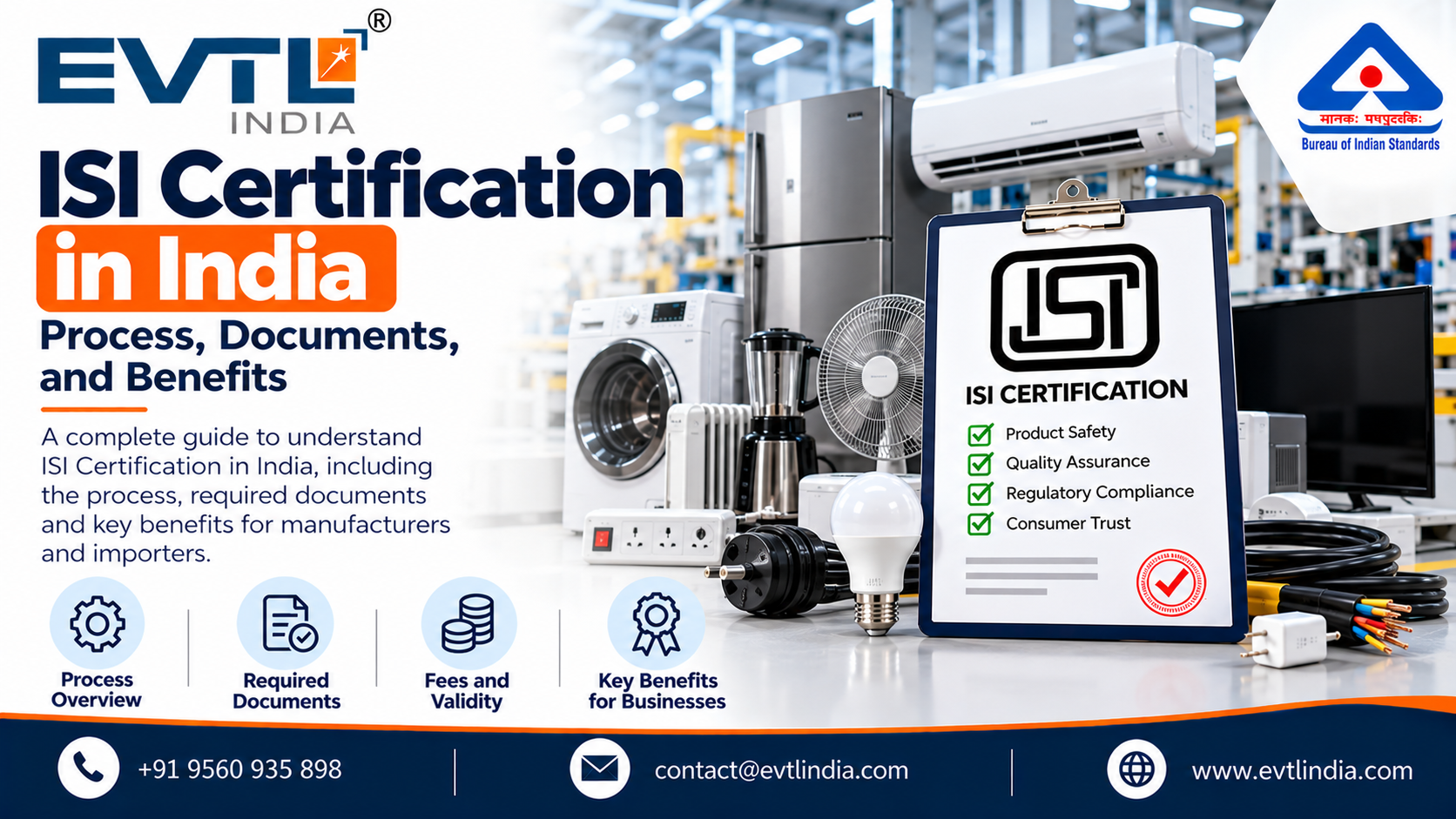
ISI Certification is an important quality and safety certification for Indian manufacturers who want to establish product credibility and meet applicable Indian regulatory requirements. The certification is granted by the Bureau of Indian Standards (BIS), India's national standards body, under its product certification scheme. It allows eligible manufacturers to use the ISI Mark on products that conform to the relevant Indian Standards.
For manufacturers operating in India, obtaining ISI Mark Certification can be essential when their products are covered under a mandatory Quality Control Order (QCO). It also helps businesses demonstrate their commitment to maintaining consistent product quality and safety.
What Is ISI Certification?
ISI Certification is a product certification scheme operated by BIS under Scheme-I of the BIS (Conformity Assessment) Regulations, 2018. The ISI Mark indicates that a certified product complies with the applicable Indian Standard.
The certification process involves evaluating the manufacturer's production facilities, quality control arrangements, testing capabilities and product conformity. BIS assesses whether the manufacturer can consistently produce goods according to the specified quality and safety requirements.
The ISI Mark is commonly associated with products such as cement, electrical appliances, steel products, pressure cookers, helmets and various industrial components. However, the applicable certification scheme depends on the specific product and its regulatory requirements.
Importance of ISI Mark Certification for Indian Manufacturers
ISI Mark Certification plays an important role in helping Indian manufacturers maintain product quality and comply with government regulations.
Some important benefits include:
-
Regulatory Compliance: Helps manufacturers meet mandatory BIS certification requirements applicable to their products.
-
Consumer Confidence: The ISI Mark provides customers with an indication that the product has been assessed against the relevant Indian Standard.
-
Market Opportunities: Certification helps manufacturers meet the compliance requirements of distributors, buyers and institutional customers.
-
Product Quality: Encourages manufacturers to maintain proper production processes and quality control systems.
-
Brand Reputation: Demonstrates a manufacturer's commitment to product safety, reliability and quality.
ISI Certification Process for Indian Manufacturers
Indian manufacturers must follow the applicable BIS certification procedure to obtain an ISI licence. The general process includes the following steps:
Step 1: Identify the Applicable Indian Standard
The manufacturer must identify the correct Indian Standard (IS Code) applicable to the product. Product specifications and testing requirements should be reviewed before applying.
Step 2: Prepare Manufacturing Facilities
The manufacturing unit must have the required production infrastructure, quality control arrangements, testing equipment and competent technical personnel to manufacture products according to the applicable standard.
Step 3: Submit the BIS Application
The manufacturer must register on the BIS Manakonline portal and submit the product certification application with the prescribed information and supporting documents.
Step 4: Product Testing
Product samples are tested according to the applicable Indian Standard. Testing may be conducted through a BIS-recognised laboratory or through the applicable factory testing procedure, depending on the certification option.
Step 5: Factory Inspection
BIS officials assess the manufacturing premises, production facilities, quality control procedures and testing capabilities to verify compliance with certification requirements.
Step 6: Grant of ISI Licence
After satisfactory evaluation of the application, factory assessment and product conformity, BIS may grant the licence. The manufacturer can then use the authorised ISI Mark according to the licence conditions.
These steps are subject to the applicable product-specific guidelines and certification option.
Documents Required for ISI Mark Certification
The documents required may vary depending on the product and manufacturing unit. Generally, manufacturers may need:
-
Business registration documents.
-
Factory address and manufacturing details.
-
GST registration certificate, where applicable.
-
Details of manufacturing machinery and equipment.
-
Factory layout and manufacturing process information.
-
Testing equipment details.
-
Quality control personnel information.
-
Product specifications and technical details.
-
Test reports, wherever applicable.
-
Details of raw materials and suppliers.
Manufacturers should check the relevant BIS product manual for the exact documentation and technical requirements.
Is ISI Certification Mandatory for Indian Manufacturers?
BIS product certification is generally voluntary. However, the Central Government makes certification mandatory for specific products through Quality Control Orders (QCOs) and other applicable regulations.
If a product is covered under a mandatory QCO requiring an ISI Mark, manufacturers must obtain the appropriate BIS licence before manufacturing or selling the covered product after the applicable implementation date.
Therefore, Indian manufacturers should verify the latest QCO notifications and applicable Indian Standards before starting production or introducing products into the market.
How EVTL India Helps with ISI Certification
Obtaining ISI Certification requires proper documentation, product testing, manufacturing infrastructure and compliance with BIS guidelines. EVTL India helps Indian manufacturers understand the certification requirements and navigate the application process.
Our team provides assistance with applicable Indian Standard identification, documentation preparation, application support, product testing coordination and factory inspection readiness.
Whether you are an established manufacturer or planning to introduce a new product, EVTL India can help you understand the applicable BIS requirements and work towards obtaining your ISI Mark Certification.
Get in touch with EVTL India for professional assistance with ISI Certification and BIS licensing requirements in India.

 English
 Arabic
 French
 Spanish
 Portuguese
 Deutsch
 Turkish
 Dutch
 Italiano
 Russian
 Portuguese (Brazil)
 Greek