


CDSCO Certification Consultant in India: Simplifying Medical Device Compliance
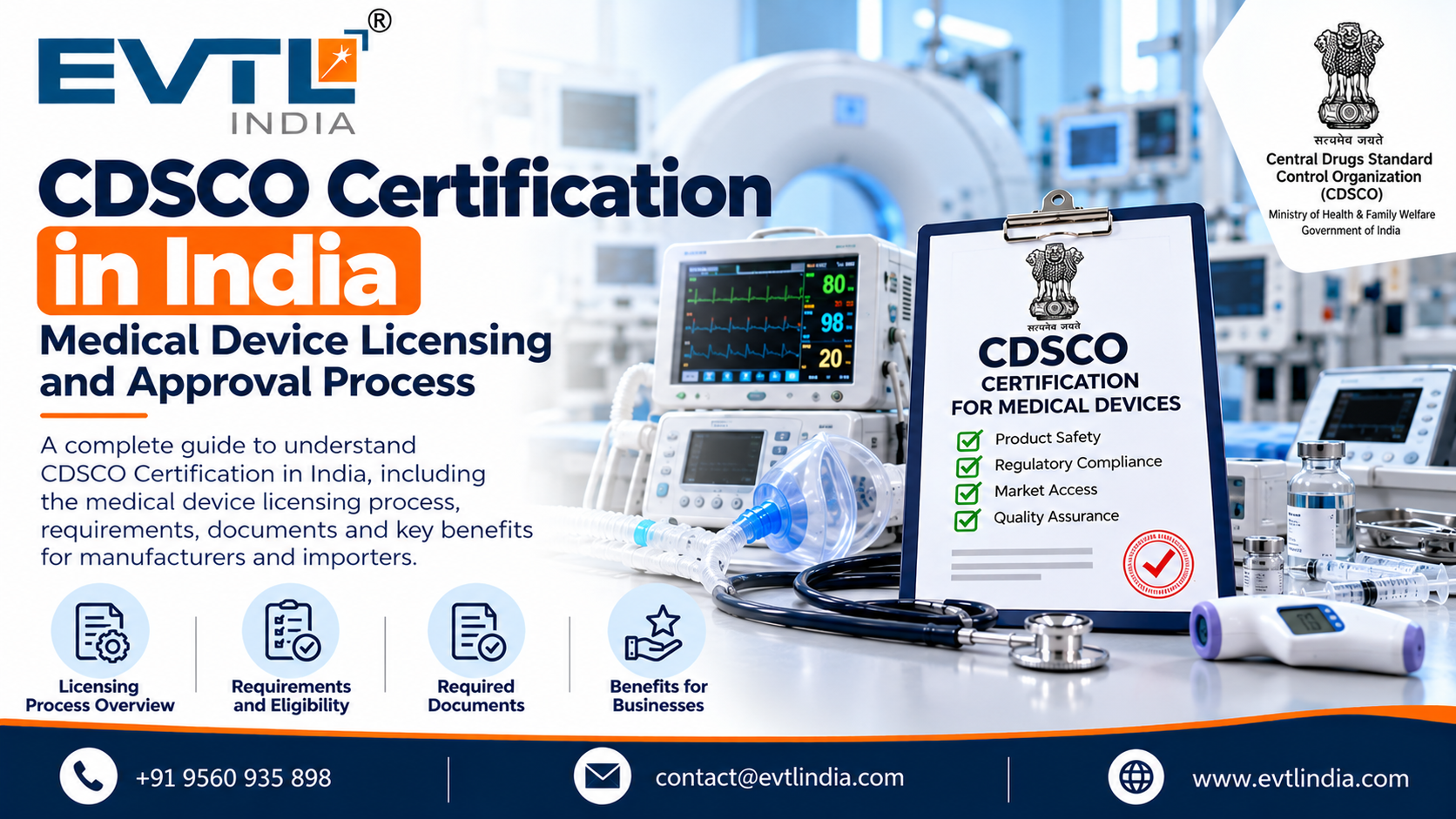
The CDSCO Certification process is an important regulatory requirement for businesses involved in manufacturing, importing, distributing, or marketing regulated medical devices in India. The Central Drugs Standard Control Organisation (CDSCO) is India's national regulatory authority responsible for ensuring the safety, quality, and performance of medical devices and other regulated products.
CDSCO operates under the Ministry of Health and Family Welfare, Government of India, and regulates medical devices under the Drugs and Cosmetics Act, 1940, and the Medical Devices Rules, 2017. These regulations establish requirements that manufacturers and importers must follow before placing applicable medical devices in the Indian market.
What Is CDSCO Certification?
CDSCO Certification refers to the regulatory approval, registration, or licensing required for medical devices under applicable Indian regulations. It helps ensure that medical devices meet prescribed safety, quality, and performance requirements before they are manufactured, imported, or marketed in India.
The CDSCO regulatory framework covers different types of medical devices, including diagnostic equipment, surgical instruments, implants, monitoring equipment, and certain medical software.
Businesses must first identify whether their products fall under the definition of a medical device and determine the applicable regulatory requirements. Depending on the product category, risk classification, and business activity, the applicant may need to obtain a CDSCO registration or manufacturing/import licence.
CDSCO Certification for Medical Devices: Risk Classification
Under the Medical Devices Rules, 2017, medical devices are classified into four categories according to their associated risk. The classification determines the regulatory requirements and licensing authority.
The four medical device classifications are:
-
Class A – Low Risk: Includes medical devices with a relatively low potential risk to patients and users.
-
Class B – Low-Moderate Risk: Covers devices associated with a higher level of risk than Class A.
-
Class C – Moderate-High Risk: Includes devices that require more stringent regulatory controls.
-
Class D – High Risk: Covers medical devices with the highest potential risk to patients and users.
The classification depends on the intended purpose, usage, duration of contact, and other factors specified in the Medical Devices Rules. Manufacturers should verify the applicable classification before submitting an application.
CDSCO Registration Process in India
Obtaining CDSCO Registration involves several regulatory steps. Manufacturers and importers should prepare the necessary technical and administrative documents before applying.
The general process includes:
-
Product Identification: Identify whether the product qualifies as a medical device under Indian regulations.
-
Risk Classification: Determine whether the medical device belongs to Class A, B, C, or D.
-
Documentation Preparation: Arrange product details, technical specifications, manufacturing information, quality documents, and other applicable records.
-
Online Application: Register on the CDSCO SUGAM portal and select the appropriate application category.
-
Application Submission: Submit the prescribed application form, supporting documents, and applicable government fees.
-
Regulatory Review: CDSCO or the relevant State Licensing Authority examines the application and may request additional information or clarification.
-
Approval and Licensing: Once the regulatory requirements are fulfilled, the applicable registration certificate or licence is issued.
The exact application pathway depends on whether the applicant is an Indian manufacturer, foreign manufacturer, or importer.
CDSCO License Requirements for Manufacturers and Importers
A CDSCO License is required for regulated medical device activities according to the applicable provisions of the Medical Devices Rules, 2017.
For manufacturing, the licensing authority depends on the medical device's risk classification. The Central Licensing Authority handles Class C and Class D manufacturing licences, while the State Licensing Authority handles the relevant Class A and Class B manufacturing licences.
For importing medical devices into India, applicants generally need an import licence in Form MD-15 after submitting the application in Form MD-14 through the prescribed online system.
It is important to understand that certain Class A non-sterile and non-measuring medical devices are exempt from the licensing regime under the applicable notification. Therefore, businesses should check the latest regulatory provisions before applying.
Documents Required for CDSCO Registration
The documentation requirements may vary depending on the product category, manufacturing location, and type of application. However, applicants may need to prepare the following documents:
-
Company registration certificate and business details.
-
Manufacturing licence or relevant business licence, where applicable.
-
Details of the manufacturing facility.
-
Product specifications and technical information.
-
Device Master File (DMF).
-
Plant Master File (PMF).
-
Quality Management System (QMS) documents.
-
ISO 13485 certificate, where applicable.
-
Free Sale Certificate for applicable imported devices.
-
Power of Attorney for an authorised Indian agent.
-
Product labels and Instructions for Use (IFU).
-
Clinical evaluation or performance-related documents, where required.
Foreign manufacturers may also need to appoint an authorised Indian agent to handle regulatory activities and applications in India. The final document checklist should be confirmed against the relevant CDSCO application requirements.
Why Is CDSCO Certification Important?
CDSCO compliance is important for businesses that want to manufacture, import, or market regulated medical devices in India. It helps manufacturers demonstrate that their products meet applicable regulatory requirements.
Some important benefits include:
-
Regulatory Compliance: Helps businesses fulfil applicable Indian medical device regulations.
-
Market Access: Enables eligible manufacturers and importers to obtain the necessary approvals for entering the Indian medical device market.
-
Product Safety: Supports compliance with prescribed safety and performance requirements.
-
Business Credibility: Demonstrates a commitment to regulatory compliance and product quality.
-
Import Compliance: Helps foreign manufacturers and Indian importers follow the applicable licensing requirements.
How EVTL India Helps with CDSCO Certification
Obtaining CDSCO Certification can involve multiple regulatory procedures, technical documentation, product classification, and application requirements. For manufacturers and importers unfamiliar with Indian regulations, managing these activities can become challenging.
EVTL India provides regulatory consultancy and compliance assistance to businesses seeking CDSCO Registration and CDSCO Certification for Medical Devices in India.
Our support includes product classification guidance, documentation review, application preparation, regulatory requirement assessment, and assistance throughout the applicable licensing process.
Whether you are an Indian manufacturer or an international medical device company planning to enter the Indian market, EVTL India can help you understand the regulatory requirements and navigate the CDSCO approval process.
Conclusion
CDSCO Certification and Registration play an important role in regulating medical devices in India. Manufacturers and importers must understand the Medical Devices Rules, 2017, identify their product classification, and obtain the applicable licence or approval before undertaking regulated activities. Working with an experienced regulatory consultant like EVTL India can help businesses manage documentation, understand compliance requirements, and navigate the licensing process more efficiently.

 English
 Arabic
 French
 Spanish
 Portuguese
 Deutsch
 Turkish
 Dutch
 Italiano
 Russian
 Romaian
 Greek