


How to Avoid Greenwashing in Malaysian Sustainability Reports
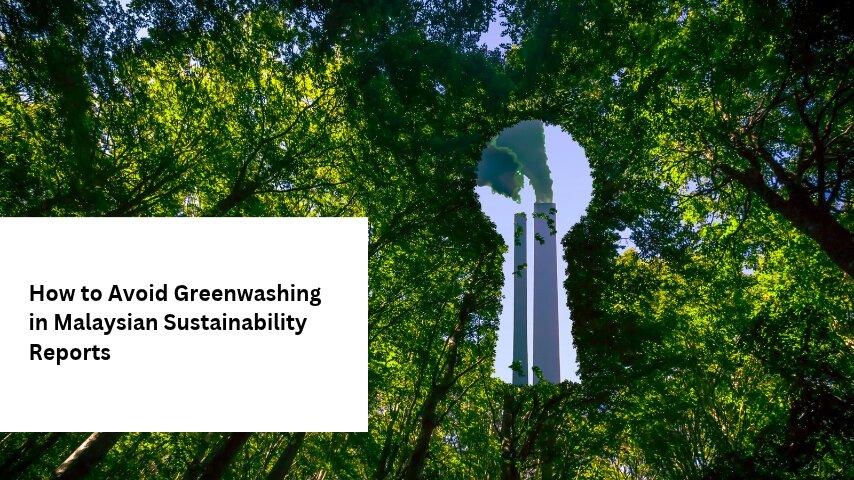
To avoid greenwashing in a Malaysian sustainability report, make only claims you can prove with documented data, state the scope and period of every figure, report weaknesses alongside achievements, and have the report reviewed by someone independent of the team that wrote it. Specific, evidenced and balanced statements protect a company far better than ambitious but vague ones.
Greenwashing, meaning misleading or unsubstantiated claims about environmental or social performance, is drawing more attention in Malaysia. Malaysia does not yet have a dedicated anti-greenwashing law, but several existing frameworks apply to misleading statements, including consumer protection rules, advertising standards and Bursa Malaysia's requirements for sustainability statements. At the same time, the National Sustainability Reporting Framework (NSRF) is moving listed companies towards ISSB-based disclosure, which raises expectations for data quality. This guide explains what greenwashing looks like in reports, which rules and expectations are relevant, a practical process for avoiding it, where an ESG consultant can help, and where views differ on how strict companies should be. Rules and enforcement are evolving, so readers should confirm current requirements with the relevant authorities.
What Is Greenwashing in a Sustainability Report?
Greenwashing in a sustainability report is the presentation of environmental or social performance in a way that is misleading, exaggerated or unsupported by evidence. It can arise from false statements, but also from selective emphasis, vague language or missing context.
What Are the Most Common Forms of Greenwashing?
Common forms include vague claims such as "eco-friendly" with no definition, selective disclosure that highlights positives and omits major negatives, unsupported net-zero or carbon-neutral claims, heavy reliance on carbon offsets without disclosing reductions, and pictures or branding that suggest more environmental benefit than exists. Regional watchdogs have noted that misuse of offsets is among the most frequent patterns in Southeast Asia.
Can Greenwashing Happen Without Intent?
Yes. Many cases arise from weak data, unclear definitions, rushed reporting or enthusiasm from marketing teams, not deliberate deception. Intent may affect how a regulator or court views a case, but good intentions do not fix an unsupported claim. Controls that catch errors are therefore essential.
Which Malaysian Rules and Expectations Apply to Greenwashing?
No single Malaysian law targets greenwashing specifically, but misleading claims can fall under consumer protection law, advertising standards, listing requirements and directors' duties. Expectations are also tightening through the NSRF and investor scrutiny.
How Do Consumer and Advertising Rules Apply?
The Consumer Protection Act 1999 prohibits misleading conduct and advertisements, and commentators argue it can cover environmental claims, though there is a lack of clear guidance on how. The Malaysian Code of Advertising Practice requires claims to be substantiated, and the Environmental Quality Act 1974 gives the minister power over environmental labelling. A civil society group has also taken legal action over a regulator's alleged failure to act on a "carbon neutral" claim, which shows the issue is being tested.
How Do Bursa Malaysia and the NSRF Matter?
Listed companies must publish sustainability statements under Bursa Malaysia's requirements, and false or misleading statements may expose a company and its directors to liability. The NSRF adopts the ISSB standards in phases, which will standardise climate disclosures and raise expectations for data quality. The Securities Commission has also consulted on a framework for sustainability assurance, which signals a move toward independent verification.
Do Fund and Investor Guidelines Matter?
Yes, for companies that deal with investors. Sustainable and responsible investment guidelines require funds to follow defined sustainability strategies, so investors will test the claims companies make. Unsupported claims can affect ratings, financing and relationships.
How Can a Company Avoid Greenwashing Step by Step?
A company can avoid greenwashing by building a claims register, tying each claim to evidence, defining scope and boundaries, using precise language, disclosing negatives and applying independent review. These steps work for both large and small reporters.
Step 1: How Do You Build a Claims Register?
List every sustainability claim in the report, website and marketing, and record the source, owner, evidence and date for each. A register makes it easy to see what lacks support and to remove or correct it before publication. Update it whenever new claims are made.
Step 2: How Do You Tie Each Claim to Evidence?
Link every number and statement to records such as utility bills, meter data, audit certificates or policy documents. If the evidence is not available, soften or remove the claim. Keep a data trail so that anyone reviewing the report can trace the figure to its source.
Step 3: How Do You Define Scope, Period and Method?
State what the figure covers: which entities and sites, which time period, and which calculation method and emission factors. A reduction of 20% means little without the baseline year and boundary. Clear scope prevents readers from assuming broader coverage than is real.
Step 4: How Do You Use Precise Language?
Replace vague adjectives with measurable statements. The table shows examples of how to tighten wording.
|
Risky wording |
Why it is risky |
Safer wording |
|
"We are carbon neutral" |
No scope, method or offset detail |
"We offset X tCO2e of our FY2025 Scope 1 and 2 emissions using [named credits]; our gross emissions were Y tCO2e" |
|
"Eco-friendly packaging" |
Undefined and unprovable |
"Packaging contains X% recycled material, certified by [body]" |
|
"Sustainable supply chain" |
Overstates coverage |
"We assessed X% of our top suppliers by spend against our code of conduct" |
|
"Zero waste" |
Absolute and rarely true |
"We diverted X% of waste from landfill in 2025" |
Step 5: How Do You Report Negatives and Trade-offs?
Include areas where performance worsened, targets were missed or incidents occurred, and explain corrective actions. Balanced reporting builds credibility and reduces the risk that readers or regulators see the report as selective. Omitting material negatives is a common source of greenwashing allegations.
How Should Companies Handle Targets, Net Zero and Carbon Offsets?
Companies should state targets with a baseline, scope, timeline and plan, and treat offsets as a separate, disclosed element rather than a substitute for reductions. Net-zero and carbon-neutral claims attract the most scrutiny, so they need the strongest support.
How Should Net-Zero and Other Targets Be Disclosed?
Disclose the baseline year, the scopes covered, the interim milestones, the main reduction measures and the funding or governance behind them. Avoid presenting a distant target as an achievement. If the target is aspirational, say so plainly.
How Should Carbon Credits Be Described?
Separate gross emissions from offsets, name the type and source of credits, and state whether they are verified under a recognised standard. Malaysia's Bursa Carbon Exchange offers voluntary credits, but supply is limited and credit quality varies, so buyers should review the project and verification. Offsets should not be used to obscure lack of operational progress.
How Can Governance and Assurance Reduce Greenwashing Risk?
Governance and assurance reduce risk by adding oversight, independent checks and clear accountability. Board involvement and external review create a second line of defence against errors and exaggeration.
What Role Should the Board and Management Play?
The board or a designated committee should review and approve material claims, and management should certify the data. Assign owners for each indicator and ensure marketing, investor relations and sustainability teams use the same approved statements. Inconsistent messages across channels are a frequent trigger for criticism.
What Role Can Assurance and Peer Review Play?
External assurance, where available, tests the reliability of selected data. Even where it is not required, an internal audit review or a peer review by someone outside the reporting team helps catch weak claims. Assurance requirements in Malaysia are still developing, so check the latest position.
When Does a Company Need an ESG Consultant to Avoid Greenwashing?
A company needs a strategic ESG consultant such as Wellkinetics when its claims are technical or high-stakes, such as net-zero targets, emissions inventories, offset strategies, supplier claims or alignment with NSRF and ISSB-based expectations. For simple reporting, a capable internal team with a good claims register may be enough.
What Can an ESG Consultant Do?
An ESG consultant can review claims against evidence, test data quality, advise on wording and disclosure, design controls and help prepare for assurance. A good ESG consultant will also recommend removing claims that cannot be supported, even if it makes the report less impressive.
How Can Companies Keep the Review Independent?
Use a reviewer who is not responsible for producing the claims, agree the scope in writing and give them access to the underlying records. If the same ESG consultant prepares the report and also provides assurance, independence may be questioned, so consider separating the roles.
Do Experts Agree on How Strict Malaysian Reporting Rules Should Be?
No. Stakeholders differ on whether Malaysia needs dedicated greenwashing rules, how strict they should be and how to protect smaller companies. Each view reflects real concerns.
What Do Advocates of Stronger Rules Argue?
Advocates, including some civil society groups and legal commentators, argue that existing laws lack clear guidance, that enforcement has been limited and that specific rules would protect consumers and honest companies. They point to guidance and enforcement elsewhere as models.
What Do Cautious Voices Argue?
Cautious voices argue that heavy rules could burden smaller firms, discourage voluntary disclosure or create uncertainty while reporting standards are still being phased in. They favour guidance, capacity-building and gradual strengthening of existing frameworks.
What Is the Practical Takeaway?
Whichever view prevails, companies lower risk by being precise, evidenced and balanced now. Good practice does not depend on the exact shape of future rules.
Frequently Asked Questions About Greenwashing in Malaysia
Is greenwashing illegal in Malaysia?
There is no dedicated greenwashing law, but misleading claims can breach consumer protection rules, advertising standards or listing requirements, depending on the context. Take legal advice for specific situations.
Can a small company be accused of greenwashing?
Yes. Any company making environmental or social claims can face criticism if they are unsupported, regardless of size. Keeping claims modest and evidenced is the best protection.
Are carbon offsets allowed in sustainability claims?
Generally yes, but they should be disclosed transparently, separated from gross emissions and backed by credible credits. Avoid claims that imply offsets equal real reductions.
How often should a claims register be updated?
Update it whenever a new claim is made and review it before each report or campaign. A quarterly check is a sensible routine.
Do I need an ESG consultant to avoid greenwashing?
Not always. Strong internal controls can go a long way, but an ESG consultant adds value for technical claims or when independent review is needed.
Conclusion
The bottom line is to claim less, prove more and explain clearly: use specific wording, keep an evidence trail, disclose negatives, review claims independently and involve an environmental, social and governance consultant for technical or high-stakes statements. Credibility is built through verifiable detail, not slogans.
The debate about regulation will continue, and both advocates of stricter rules and those urging caution raise fair points. For reporting companies, the practical path is the same: an honest report that can withstand questions from investors, customers and regulators. A company that keeps accurate records, aligns its messaging across channels and engages an ESG consultant where expertise adds clear value will be well placed as expectations rise.
This article is for general information only and is not legal, financial or regulatory advice. Rules, guidance and enforcement are evolving, so verify current requirements with the relevant authorities and seek legal advice where needed.

 English
 Arabic
 Spanish
 Portuguese
 Deutsch
 Turkish
 Dutch
 Italiano
 Russian
 Romaian
 Portuguese (Brazil)
 Greek