


Streamlined Production Technology for Disposable Syringes
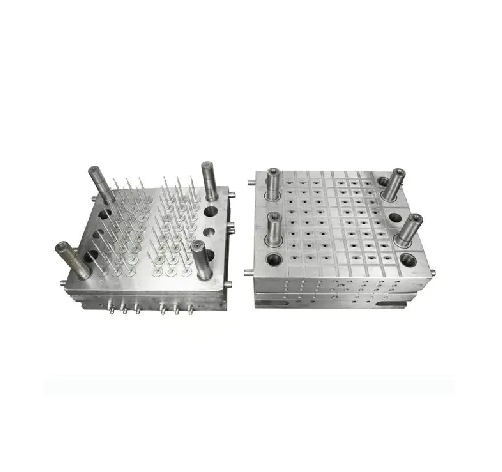
Syringe manufacturing involves several connected operations that require accurate component handling, coordinated assembly, and controlled filling procedures. When these processes are performed by separate machines without effective integration, manufacturers may face additional material transfers, inconsistent operating rhythms, and more complicated production management. An Automated Syringe Assembly and Filling Production Line combines relevant manufacturing stages within a coordinated system, helping manufacturers organize component feeding, assembly, filling, inspection, and product handling according to the requirements of the syringe design.
The product structure determines how the manufacturing process should be arranged. A typical syringe may contain a barrel, plunger, gasket, and protective components, although the configuration varies depending on the intended application. Each part has specific material and dimensional characteristics that influence feeding and assembly methods. Components need to be supplied in suitable orientations and positioned correctly before assembly begins. Equipment planning should therefore start with an understanding of the product design, component relationships, and required manufacturing sequence.
Component feeding is the first important stage in the automated workflow. Feeding mechanisms separate and orient individual parts before transferring them to designated stations. Different components may require different handling methods because of variations in shape, weight, flexibility, and surface characteristics. Proper feeding arrangements help maintain a consistent supply of components and reduce interruptions caused by incorrect orientation or unstable material movement. The feeding system should also be coordinated with the operating rhythm of downstream assembly stations.
Assembly operations combine the prepared components into the required syringe structure. Depending on the product, the process may involve barrel positioning, gasket installation, plunger insertion, and protective component fitting. Mechanical fixtures help secure parts during each operation, while controlled actuators and motion mechanisms perform the required movements. The sequence and design of these stations should reflect the actual product structure. Integrating assembly operations into a connected workflow can reduce unnecessary manual handling and improve coordination between manufacturing stages.
Filling introduces another set of process considerations. The filling method needs to be compatible with the product, the material being handled, and the manufacturer's manufacturing procedures. Equipment configuration may involve container positioning, filling mechanism coordination, and subsequent product transfer. The filling station should receive products in the correct condition and orientation to support a stable process. Downstream handling should also be planned carefully to avoid unnecessary movement after filling. The specific filling technology must be selected according to the intended application and applicable production requirements.
An Automated Syringe Assembly and Filling Production Line can incorporate inspection and monitoring functions throughout the manufacturing process. Assembly inspection may check component presence, positioning, and visible appearance. Filling-related inspection can focus on selected process conditions or product characteristics defined by the manufacturer. Sensors and visual inspection devices can be integrated at suitable stations to identify potential deviations. The inspection arrangement should be developed according to product requirements and the manufacturer's quality management procedures.
Coordination between assembly and filling stations is essential for maintaining production continuity. If the assembly section operates at a different rhythm from the filling section, products may accumulate between processes or equipment may remain idle. Transfer mechanisms and suitable buffer arrangements can help manage differences between station cycles. A balanced production layout should consider process sequence, station capacity, material supply, and finished-product handling. This helps manufacturers identify potential bottlenecks during equipment planning rather than after installation.
Material compatibility is another important factor. Syringe components may use different plastics, elastomers, or other materials with distinct handling characteristics. Fixtures and contact surfaces should be selected with consideration for these properties. Equipment design should also account for cleaning, maintenance, and the manufacturer's environmental requirements. For production processes involving sensitive materials or controlled manufacturing conditions, the equipment arrangement needs to be evaluated together with the factory's operating procedures.
Manufacturers may also need to produce different syringe models. Variations in barrel structure, component design, or filling requirements can influence tooling and process settings. Replaceable fixtures, adjustable positioning mechanisms, and configurable control programs can support product changes where appropriate. The equipment developer should identify which parts of the process are likely to vary and design practical changeover methods. This helps manufacturers manage product diversity without making the entire system unnecessarily complicated.
Testing is necessary to evaluate the coordination of the integrated production system. Product samples can be used to assess component feeding, assembly operations, filling procedures, transfer stability, and inspection functions. Trial production helps identify process conflicts and provides opportunities to refine equipment settings. Close communication between the manufacturer and equipment supplier is important because actual production conditions may reveal requirements that were not fully apparent during initial design discussions.
AMBE TRADE develops automation solutions for medical consumables manufacturing, with equipment planning based on product structure and customer process requirements. An Automated Syringe Assembly and Filling Production Line can integrate component preparation, assembly, filling, and inspection into a coordinated manufacturing workflow. Manufacturers interested in related medical production equipment can explore the company's solutions at https://www.ambemedi.com/product/.

 English
 Arabic
 French
 Spanish
 Portuguese
 Deutsch
 Turkish
 Dutch
 Italiano
 Romaian
 Portuguese (Brazil)
 Greek