


How to Choose the Right Outboard Motor for a Pontoon Boat
Pontoon boats are popular among boating enthusiasts because of their spacious layouts, comfortable seating, and versatility. They are suitable for family outings, fishing trips, relaxing cruises, and various recreational activities. However, getting the best experience from a pontoon boat depends heavily on selecting an appropriate outboard motor.
Unlike many traditional fishing boats, pontoon boats have a distinctive hull design that affects how they move through the water. Their size, weight, passenger capacity, and intended use all influence the engine requirements. Choosing an unsuitable motor can result in poor acceleration, inefficient fuel consumption, and reduced overall performance.
Understanding the important factors before purchasing an engine can help boat owners make a more informed decision.
Understanding Pontoon Boat Design
Pontoon boats typically use two or three large flotation tubes, commonly called pontoons, to support the deck and passengers. This construction provides stability and creates a large usable space.
Their design makes them particularly suitable for carrying several passengers, furniture, fishing equipment, and other recreational accessories. However, the additional weight means the engine must provide sufficient power to move the vessel comfortably.
Pontoon boats also experience different water resistance compared with conventional V-shaped hull boats. Their performance depends on factors such as pontoon diameter, hull configuration, boat length, and loading conditions.
For these reasons, engine selection should always consider the complete boat configuration rather than relying on horsepower alone.
Determine the Required Horsepower
Horsepower is one of the first specifications buyers examine when comparing outboard motors. It determines how much power an engine can deliver, but the ideal rating depends on the boat's design and intended application.
A smaller pontoon boat used for occasional cruising may require less power than a larger model regularly carrying multiple passengers.
Before choosing an engine, check the boat manufacturer's capacity plate or documentation. This information identifies the maximum recommended horsepower and other important operating limits.
Installing an engine that exceeds the manufacturer's recommendations can create serious safety and handling problems. Selecting an engine with insufficient power may also make it difficult to maintain comfortable speeds, particularly when the boat is fully loaded.
When exploring outboard motors for sale, compare horsepower ratings with the pontoon manufacturer's specifications.
Consider the Number of Passengers and Total Weight
Passenger capacity has a direct influence on pontoon boat performance. A boat carrying two people requires different power considerations from one carrying a full group of passengers and recreational equipment.
The total operating weight includes:
-
Passengers and their personal belongings.
-
Fuel and onboard supplies.
-
Fishing equipment and water sports accessories.
-
Furniture and additional installed equipment.
-
Safety equipment and other storage items.
A heavier load increases the effort required to move the boat through the water. This can affect acceleration, cruising speed, and fuel consumption.
Think about how the boat will normally be used rather than choosing an engine based only on occasional lightweight trips.
Two-Stroke vs. Four-Stroke Outboard Engines
Another important consideration is the engine's operating design. Two-stroke and four-stroke petrol outboards have different characteristics.
Four-Stroke Engines
Four-stroke outboards are widely used for recreational boating because of their relatively quiet operation, smooth performance, and fuel efficiency in many applications.
They use a separate engine lubrication system and typically require scheduled oil and filter changes. These engines are available in various power ratings, making them suitable for many pontoon boat configurations.
Two-Stroke Engines
Traditional two-stroke engines are generally known for their simpler mechanical design and strong power-to-weight characteristics. However, older conventional models may produce more exhaust emissions and noise than modern alternatives.
Direct-injection two-stroke technology has improved certain aspects of performance and efficiency, although availability varies by manufacturer and market.
For many pontoon owners, a modern four-stroke engine is an attractive option because of its operating characteristics and broad availability.
Choosing the Right Shaft Length
Shaft length is another specification that should not be overlooked. An outboard motor must be compatible with the transom height of the pontoon boat.
Common shaft configurations include short, long, and extra-long options, although exact measurements and naming conventions vary between manufacturers.
If the shaft is too short, the propeller may not remain properly submerged during operation. If it is too long, the installation may be unsuitable and could affect performance or handling.
Check the boat manufacturer's transom measurements and compare them with the engine specifications before purchasing.
A qualified installer can help confirm the correct configuration and mounting position.
Fuel Efficiency and Cruising Range
Pontoon boats are often used for relaxed cruising rather than continuous high-speed operation. As a result, fuel efficiency can be an important part of the ownership experience.
Actual fuel consumption depends on engine size, boat weight, speed, water conditions, propeller selection, and maintenance.
Running an engine at an appropriate cruising speed can help reduce unnecessary fuel use. Regular servicing, a clean propeller, and proper weight distribution can also support efficient operation.
Buyers should compare realistic fuel consumption information rather than relying entirely on maximum horsepower or advertised performance figures.
Propeller Selection for Pontoon Boats
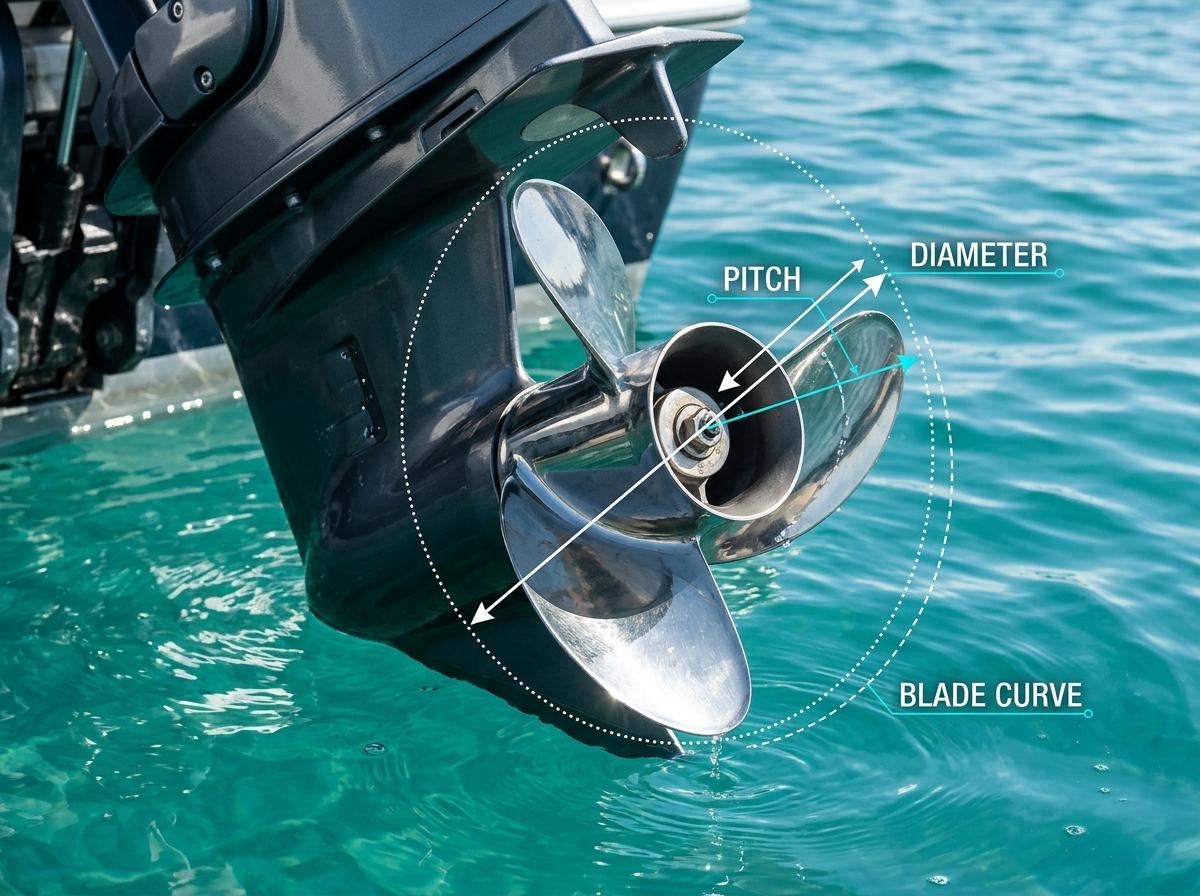
The propeller plays an important role in transferring engine power into movement. Selecting a suitable propeller can improve acceleration, handling, and overall efficiency.
Pontoon boats may require propeller configurations designed to provide sufficient thrust when carrying heavier loads.
Important factors include propeller diameter, pitch, blade design, and material. A propeller with excessive pitch may make it difficult for a heavily loaded boat to reach the recommended engine RPM range.
A lower-pitch option may improve acceleration in certain applications, but the final selection must follow the engine manufacturer's recommendations.
After installation, testing the boat under typical operating conditions can help determine whether the propeller is properly matched.
New or Used Outboard Motors: Which Should You Choose?
Budget is another important factor when purchasing an engine.
A new motor generally offers the advantage of a manufacturer's warranty, current technology, and a known service history. It can be a suitable choice for owners planning to keep their pontoon boat for many years.
However, a carefully inspected second-hand engine may provide a more affordable alternative.
When comparing new outboard engines, review warranty coverage, fuel requirements, servicing costs, and available replacement parts.
If you are considering a used outboard, inspect its condition carefully. Check for corrosion, leaks, unusual noises, damaged components, and evidence of poor maintenance. Ask for service records and arrange a professional inspection when possible.
The lowest purchase price does not always represent the best long-term value.
Essential Features for Comfortable Pontoon Boating
Beyond engine power, several features can improve everyday usability.
Electric starting makes operating the engine more convenient, while power trim and tilt can help adjust the motor's position for different operating conditions.
Remote steering and control systems are common on many pontoon boats because the operator typically sits at a central console. These systems should be compatible with the selected outboard model.
Other useful considerations include engine monitoring systems, corrosion protection, and accessible servicing points.
Prioritize features that match your boating habits rather than paying extra for equipment you are unlikely to use.
Final Thoughts
Choosing the right outboard motor for a pontoon boat requires careful consideration of horsepower, passenger capacity, shaft length, fuel efficiency, and propeller compatibility. The boat's design and typical operating conditions should guide every purchasing decision.
By checking manufacturer specifications and comparing suitable engine options, boat owners can find a reliable setup that supports comfortable cruising and dependable performance. Taking time to evaluate both new and used options can also help ensure that the investment provides lasting value.

 Arabic
 French
 Spanish
 Portuguese
 Deutsch
 Turkish
 Dutch
 Italiano
 Russian
 Romaian
 Portuguese (Brazil)
 Greek