


Kitchen Backsplash Tile in Peabody, MA: How to Choose and What Installation Involves
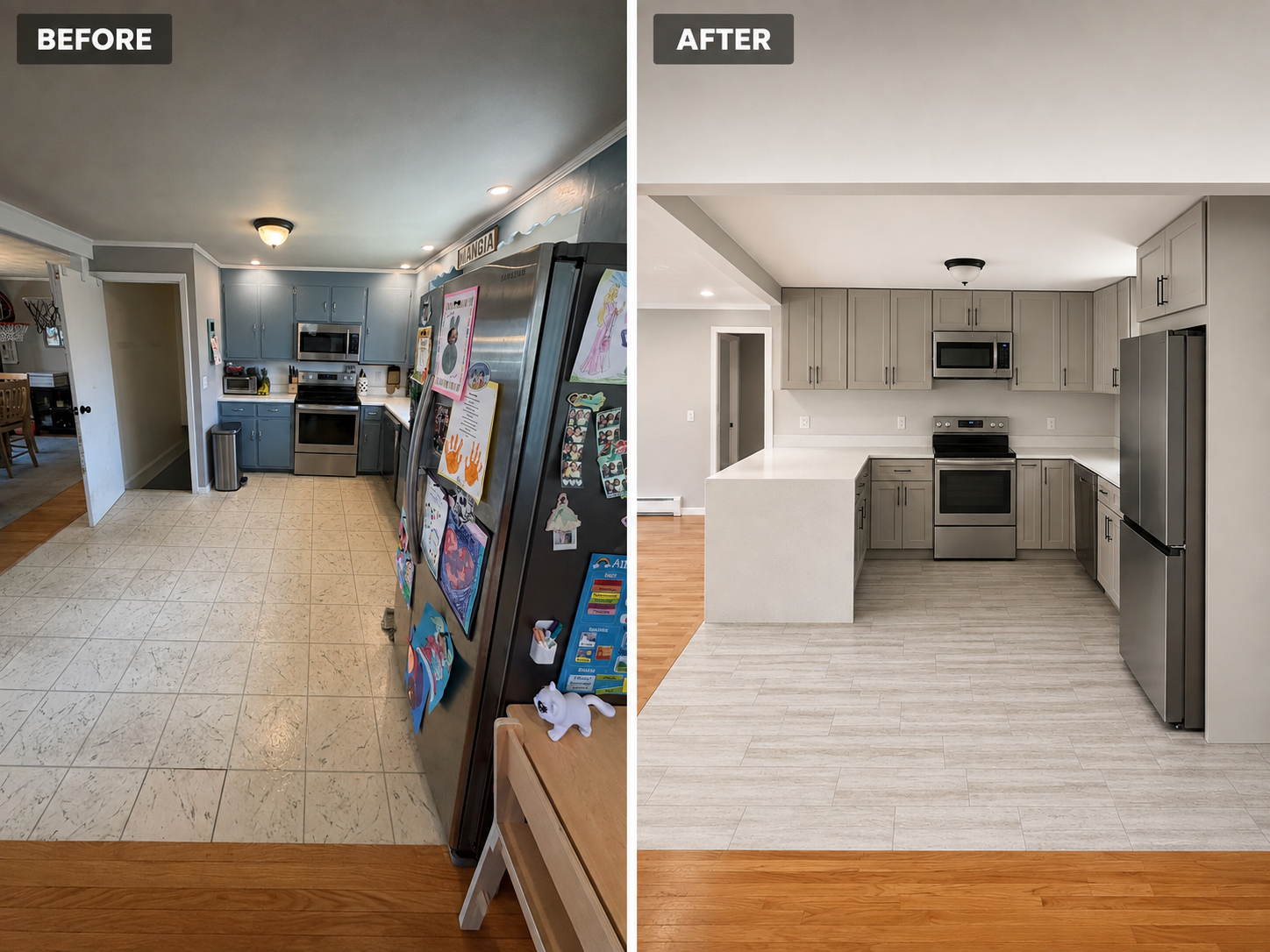
For most kitchens, a ceramic or porcelain tile backsplash is the safest choice. It wipes clean, resists stains, and costs less than natural stone. Glass tile gives a brighter, more modern look, and natural stone gives a one-of-a-kind pattern, but both ask for more care or more skill to install. The right pick depends on how much cooking splatter your walls take, how much cleaning you will accept, and what your countertops and cabinets already look like.
If you are comparing tile installation in Peabody, MA, judge the installer as closely as the tile. A backsplash looks simple, but straight lines, tight grout joints, and clean cuts around outlets are what separate a good job from a frustrating one. Elevate Kitchen & Home installs tile with its own crew from its Peabody showroom. This guide covers the main materials, how layout and grout change the look, and what to ask before you book.
Ceramic and Porcelain: The Practical Default
Ceramic and porcelain tiles come in a huge range of sizes, colors, and finishes. They are the most common backsplash material because they balance cost, durability, and looks. Here is what homeowners usually weigh:
- Upkeep: The surface wipes clean with a damp cloth, which suits the wall behind a stove or sink.
- Style range: Choices run from classic white subway tile to large format tile that mimics stone or concrete.
- Cost: Tile is generally a lower cost option than natural stone or handmade specialty tile, though prices vary widely by product.
- Grout: Most of the upkeep is in the grout lines, not the tile itself.
Glass Tile: Bright and Reflective
Glass tile reflects light, which helps in a kitchen with little natural light. It does not absorb stains, and splatter wipes off easily. It also shows flaws more easily than other materials. Uneven adhesive or a poorly prepared wall can be visible through the glass, so the wall behind it matters. Ask your installer how the wall will be prepared and which adhesive suits the tile you chose.
Natural Stone: One of a Kind, With Extra Care
Marble, travertine, and slate bring natural variation, and no two pieces match exactly. Many stone tiles need sealing, and some can stain or etch from acidic spills such as lemon juice or tomato sauce. If you love the look, plan for sealing and ask for care instructions that apply to the exact stone you pick. View the real tiles, not just a photo, because the color range inside one product can be wide.
Layout and Grout Change the Look
Two kitchens with the same tile can look completely different because of how the tile is laid out. Think through these choices before you order:
- Pattern: Running bond, stacked, herringbone, and vertical stack each give a different feel. More complex patterns take more cutting and more labor.
- Height: A standard backsplash runs from the countertop to the bottom of the upper cabinets. Taking tile to the ceiling behind the stove or on a feature wall is a bolder choice.
- Grout color: Matching grout blends into the tile. Contrasting grout highlights the pattern, but it also shows dirt more.
- Edges and corners: Ask how the tile will finish at open edges, inside corners, and around windows and outlets.
A Quick Way to Decide
Answer these questions in order, and your shortlist usually shrinks to one or two options before you visit a showroom:
- Do you cook often and want the easiest cleanup? Start with ceramic or porcelain.
- Do you want a bright, reflective look? Look at glass, and ask about wall preparation.
- Do you want natural variation and accept sealing? Consider stone.
- Do your countertops already have strong veining or a busy pattern? Choose a calmer backsplash.
- Have you seen the actual tile next to the actual countertop sample? Always compare them together.
What Backsplash Installation Involves
A clean result comes from preparation. The wall is checked and prepared, the layout is planned so cuts fall in the least visible spots, and the tile is set and grouted with care. A typical project with Elevate follows this order:
- Consultation. You meet a designer in your home or at the Peabody showroom, at no cost and with no obligation.
- 3D design and quote. Within 24 hours you receive a 3D design and an itemized quote.
- Approval and tile selection. You approve the design and pricing and choose your tile in person.
- Installation. The crew prepares the wall, sets the tile, and grouts it.
- Final walkthrough. You review the finished work with the team.
What Affects the Price
Any cost range you read online is a general industry average, and it will not match your kitchen. These factors usually move the number most:
- The tile you choose, since price per square foot varies widely
- The square footage and the number of outlets, windows, and corners
- The pattern, because complex layouts take longer to cut and set
- The condition of the wall, and any repairs it needs first
- Whether the backsplash is part of a larger kitchen remodel
Elevate prices projects with an itemized quote, so materials, labor, and timeline are listed separately. A 10% deposit reserves your project, and financing is available through Hearth, with a rate check that does not affect your credit score.
Plan the Backsplash With the Rest of the Kitchen
A backsplash looks best when it is chosen with the countertops and cabinets, not after them. Elevate designs and installs these pieces together, under one contract with one project manager, so the tile, the counter edge, and the cabinet height are planned at the same time. The same approach applies to bathroom wall tile and shower surrounds.
The Peabody showroom welcomes walk-ins, so you can compare tile in person before you book. If you want to see photos, read customer reviews, or get directions first, you can find Elevate Kitchen & Home on Google Maps. Elevate serves Peabody and the North Shore, including Salem, Danvers, and Beverly.
Frequently Asked Questions
What is the best backsplash material for a kitchen?
For most kitchens, ceramic or porcelain tile. It is durable, easy to clean, and available in many styles. Glass and natural stone suit homeowners who want a specific look and accept the extra care.
Does a tile backsplash need to be sealed?
Ceramic and porcelain generally do not need sealing, though the grout may. Many natural stones do. Ask your installer what applies to the exact tile you choose.
How high should a backsplash go?
The standard is from the countertop to the bottom of the upper cabinets. Some homeowners tile up to the ceiling behind the stove for a stronger look.
Can a backsplash be installed without a full kitchen remodel?
Yes. A backsplash can be a stand alone project, though choosing it together with countertops helps the colors and edges work as one design.
Can I see tile in person before I decide?
Yes. The Peabody showroom welcomes walk-ins, and you can also meet a designer in your home or at the showroom through a free consultation.

 English
 Arabic
 French
 Spanish
 Portuguese
 Deutsch
 Turkish
 Dutch
 Italiano
 Russian
 Portuguese (Brazil)
 Greek