


What Should Buyers Check When Choosing High Temperature Stainless Steel Ball Valves?
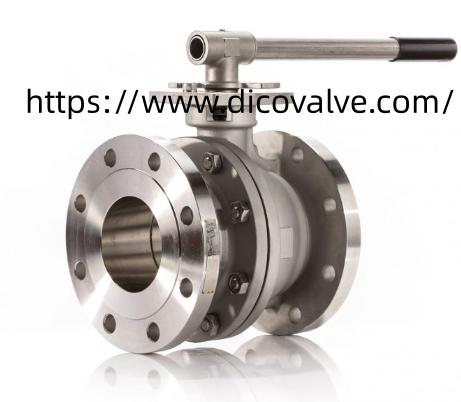
High Temperature Stainless Steel Ball Valves require careful evaluation before being selected for industrial processing systems. Buyers should consider more than a stated operating limit. Working pressure, fluid characteristics, heating cycles, sealing materials, and installation conditions can all influence equipment suitability. For industrial manufacturers such as dicovalve, understanding these factors helps establish clear technical communication with international customers and provides a basis for discussing appropriate product configurations. Before requesting a quotation, purchasing teams should prepare detailed information about their intended operating environment.
What Operating Data Should Buyers Prepare?
Operating conditions are important when selecting equipment for demanding industrial applications. Buyers should distinguish between normal operating levels, maximum exposure limits, and temporary fluctuations.
Some production facilities operate continuously under relatively stable conditions, while others experience frequent heating and cooling during different processing stages. These operating patterns may influence component expansion, sealing behavior, and mechanical performance.
Before contacting a manufacturer, buyers should prepare:
Normal operating range
Maximum expected exposure
Startup and shutdown conditions
Frequency of operating changes
Expected service duration
Providing these details allows the manufacturer to evaluate the application more accurately and discuss suitable construction options.
How Does Material Selection Affect Product Performance?
Material selection should correspond to the operating range and the properties of the working medium. Different industrial fluids may create different requirements for corrosion resistance, mechanical strength, and chemical compatibility.
Grades such as 304 and 316 are commonly considered in industrial equipment manufacturing. However, their suitability depends on the actual medium, concentration, operating conditions, and surrounding environment.
Buyers should also examine the materials used in internal components rather than focusing exclusively on the external body. The stem, seat, packing, and gasket materials can have different performance characteristics under demanding conditions.
Requesting a complete material specification helps purchasing teams compare product configurations and identify potential compatibility issues before confirming an order.
Why Should Buyers Pay Attention to Sealing Structures?
Sealing arrangements are important when equipment operates under changing thermal conditions. Repeated expansion and contraction may influence the physical properties of sealing materials and affect their contact with adjacent components.
Buyers should ask manufacturers about available seat materials, packing structures, gasket options, and sealing surface treatments.
For applications involving elevated thermal exposure, different sealing approaches may be considered according to the required leakage control, pressure conditions, and process medium.
It is also useful to discuss maintenance expectations. Some industrial installations are difficult to access, so the availability of replacement components and maintenance procedures should be considered during product selection.
A clear understanding of the sealing assembly helps buyers evaluate whether the proposed configuration matches their operating requirements.
Which Pressure Parameters Should Be Checked?
Pressure and thermal conditions should be evaluated together because allowable pressure conditions can change with operating limits.
Buyers should identify the normal working pressure, design pressure, and possible pressure fluctuations. They should also confirm whether the equipment will operate continuously or experience frequent opening and closing cycles.
Manufacturers can use these details to review applicable pressure ratings and discuss suitable construction arrangements.
Purchasing teams should request relevant technical documents, including pressure-related information and applicable testing requirements. This information helps engineering departments compare the proposed product with pipeline design specifications.
Selecting equipment based only on a nominal pressure value may overlook important operating conditions.
What Internal Design Details Should Buyers Understand?
Internal construction can influence operating torque, flow characteristics, sealing arrangements, and maintenance requirements.
Buyers should ask about the internal component design, stem structure, seat arrangement, and available body configurations. It is also useful to understand whether the product supports a full-port or reduced-port design.
For applications involving frequent operation, the operating mechanism deserves additional attention. The required torque and available installation space may influence whether manual operation or an automated arrangement is appropriate.
Requesting dimensional drawings and assembly information can help engineering teams understand the equipment before approving the purchasing specification.
How Can Buyers Evaluate Manufacturing and Inspection Capabilities?
Manufacturing arrangements are another important consideration when comparing industrial equipment suppliers.
Buyers should ask how raw materials are inspected, how machining dimensions are controlled, and what procedures are followed during assembly and testing.
Relevant inspection items may include:
Material verification
Dimensional inspection
Surface condition checks
Pressure testing
Seat leakage testing
Final assembly inspection
For customized orders, approved technical drawings should be confirmed before production begins. Both parties should agree on material grades, dimensions, pressure requirements, and inspection documentation.
At dicovalve, communicating these requirements during the inquiry stage helps clarify the requested product configuration and manufacturing expectations.
What Installation Details Should Be Confirmed Before Ordering?
Installation conditions can influence equipment dimensions, operating arrangements, and maintenance accessibility.
Buyers should provide pipeline measurements, connection standards, installation orientation, and available operating space. If an actuator is required, mounting dimensions and control arrangements should also be discussed.
For equipment installed in demanding processing facilities, the surrounding environment should receive attention as well. Nearby equipment, insulation arrangements, and maintenance access may affect installation planning.
Providing engineering drawings and photographs can help manufacturers understand the installation requirements and review possible configuration adjustments.
How Should Buyers Prepare a Complete Purchasing Inquiry?
A detailed inquiry makes technical communication more efficient and helps manufacturers evaluate the actual project requirements.
Before requesting a quotation, buyers can organize the following information:
ItemRequired Information
ApplicationIndustrial process and pipeline purpose
MediumFluid or gas characteristics
Operating rangeNormal and maximum conditions
PressureWorking and design pressure
MaterialsBody and internal component requirements
DimensionsNominal size and connection standards
OperationManual or automated control
QuantityEstimated purchasing volume
DocumentsDrawings and inspection requirements
These details give manufacturers a clearer understanding of the project and provide a useful starting point for discussing available configurations.For industrial customers planning new installations or replacing existing equipment, technical communication should begin before production arrangements are finalized. dicovalve welcomes inquiries about material selection, operating conditions, pressure specifications, and customized product requirements. Buyers can visit https://www.dicovalve.com/ to review product information and submit project drawings, operating parameters, and estimated quantities for further discussion.

 Arabic
 French
 Spanish
 Portuguese
 Deutsch
 Turkish
 Dutch
 Italiano
 Russian
 Romaian
 Portuguese (Brazil)
 Greek