


What Should Buyers Check Before Ordering an SS Cup?
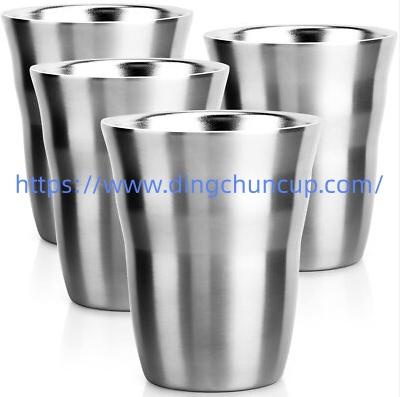
SS Cup purchasing requires more preparation than simply selecting a design from a product catalogue. For importers, wholesalers, retailers, and private-label businesses, the ordering process should begin with a clear understanding of the target market, expected application, and required product specifications. Material grade, dimensions, construction, surface treatment, branding, and packaging can all influence the final purchasing decision. By preparing these details in advance, buyers can communicate more efficiently with manufacturers and establish a clearer basis for quotations and production.
Understand Your Target Customers Before Selecting a Design
A product should be developed around the needs of its intended users. Before discussing specifications, buyers should identify the customer group, sales channel, and expected application.
For example, products intended for office environments may require a simple appearance and convenient handling. Outdoor retailers may prefer durable structures and practical shapes, while corporate gift distributors may place greater attention on customized colors and logo presentation.
Buyers should also consider the price range of their target market. This can help determine the appropriate material configuration, finishing method, and packaging arrangement. Providing a few reference images or sketches gives the manufacturer a clearer idea of the desired appearance.
A well-prepared product brief can include the intended market, preferred style, approximate capacity, expected order quantity, and customization requirements. These details provide a useful starting point for technical discussions.
Check the Material Grade and Component Information
Material specifications should be confirmed before the sample stage. Different stainless steel grades may be used according to product requirements, intended applications, and budget considerations.
Buyers should ask the manufacturer to identify the material used in each relevant component. The inner body, outer shell, lid, handle, and sealing parts may involve different materials. If a particular grade, such as 304 or 316 stainless steel, is required, it should be clearly stated in the purchase specification.
It is also useful to request available material documentation and clarify any testing requirements for the destination market. Buyers should avoid relying only on product photographs or general descriptions when evaluating material information.
Recording these details in writing makes supplier quotations easier to compare and provides a reference for future orders.
Compare Dimensions and Structural Options
Capacity is only one part of product selection. Overall height, opening diameter, base width, weight, and body proportions can affect storage, packaging, transportation, and daily handling.
Ask for a technical drawing or detailed specification sheet before confirming the design. If the product must fit an existing gift box, retail display, or storage space, provide the relevant measurements to the manufacturer.
Construction also deserves attention. Single-wall and double-wall structures have different characteristics and may suit different applications. Buyers should explain whether insulation performance is required and discuss the relevant testing method with the supplier.
If the design includes a lid, handle, or removable accessory, confirm the dimensions and connection details of each component. This helps ensure that the approved sample matches the intended configuration.
Evaluate Surface Treatment and Custom Branding
Exterior finishing plays an important role in product presentation. Common options include polished, brushed, matte, and colored surfaces. Buyers should consider how each finish fits their brand identity and the preferences of their target customers.
For customized orders, prepare the original logo artwork and specify its position, size, color, and application method. Depending on the product design, available options may include laser engraving, screen printing, or other decoration techniques.
Request a visual proof or customized sample before approving the artwork. Review the logo alignment, clarity, color consistency, and overall appearance under normal lighting conditions.
Buyers should also discuss acceptable variations in color and finishing. Written approval of these details gives the production team a consistent reference throughout the manufacturing process.
Request Samples and Record Necessary Changes
A photograph cannot fully show the weight, texture, balance, or actual construction of a finished item. A physical sample allows buyers to evaluate these features before confirming a larger order.
During the review, check the rim, base, body dimensions, surface quality, and overall handling. If the design includes additional components, examine their fit, operation, and cleaning convenience.
Prepare a list of adjustments after testing the sample. Changes may involve dimensions, material details, color, logo placement, or packaging. Once the revised version meets the agreed requirements, confirm the approval in writing.
Keeping an approved sample is also useful for later inspections. It provides a physical reference when checking whether mass-produced goods match the agreed design.
Confirm Pricing, Quantity, and Packaging Details
A quotation should cover the complete order configuration rather than only the basic product price. Buyers should ask about minimum order quantities, quantity requirements for different colors, customization charges, sample costs, and estimated production schedules.
Packaging should be discussed at the same time. Confirm whether the order requires individual protective bags, retail boxes, gift packaging, printed inserts, barcodes, or export cartons. If different designs are included, clarify how each version will be packed and labeled.
Shipping arrangements and delivery expectations should also be recorded. Buyers can ask the supplier to explain the production schedule, inspection timing, and procedures for handling specification changes.
A detailed quotation makes it easier to compare suppliers on the same purchasing basis and reduces uncertainty when preparing the purchase order.
Establish Quality Inspection Requirements
Quality expectations should be agreed upon before mass production begins. Buyers can prepare an inspection checklist covering material identification, dimensions, surface appearance, logo placement, component fit, and packaging condition.
For projects with specific performance requirements, discuss the relevant test methods and acceptance criteria with the manufacturer. Any required reports or documents should be linked to the actual product configuration and intended market.At dingchuncup, buyers can discuss their product specifications, customization preferences, and order arrangements before production planning. Clear communication helps both parties review the project requirements and identify details that need confirmation.When preparing your next drinkware sourcing project, organize your design references, material requirements, sample feedback, quantity, and packaging instructions in advance. You can visit https://www.dingchuncup.com/ to review the company website and contact dingchuncup about product options and potential cooperation.

 English
 Arabic
 Spanish
 Portuguese
 Deutsch
 Turkish
 Dutch
 Italiano
 Russian
 Romaian
 Portuguese (Brazil)
 Greek