


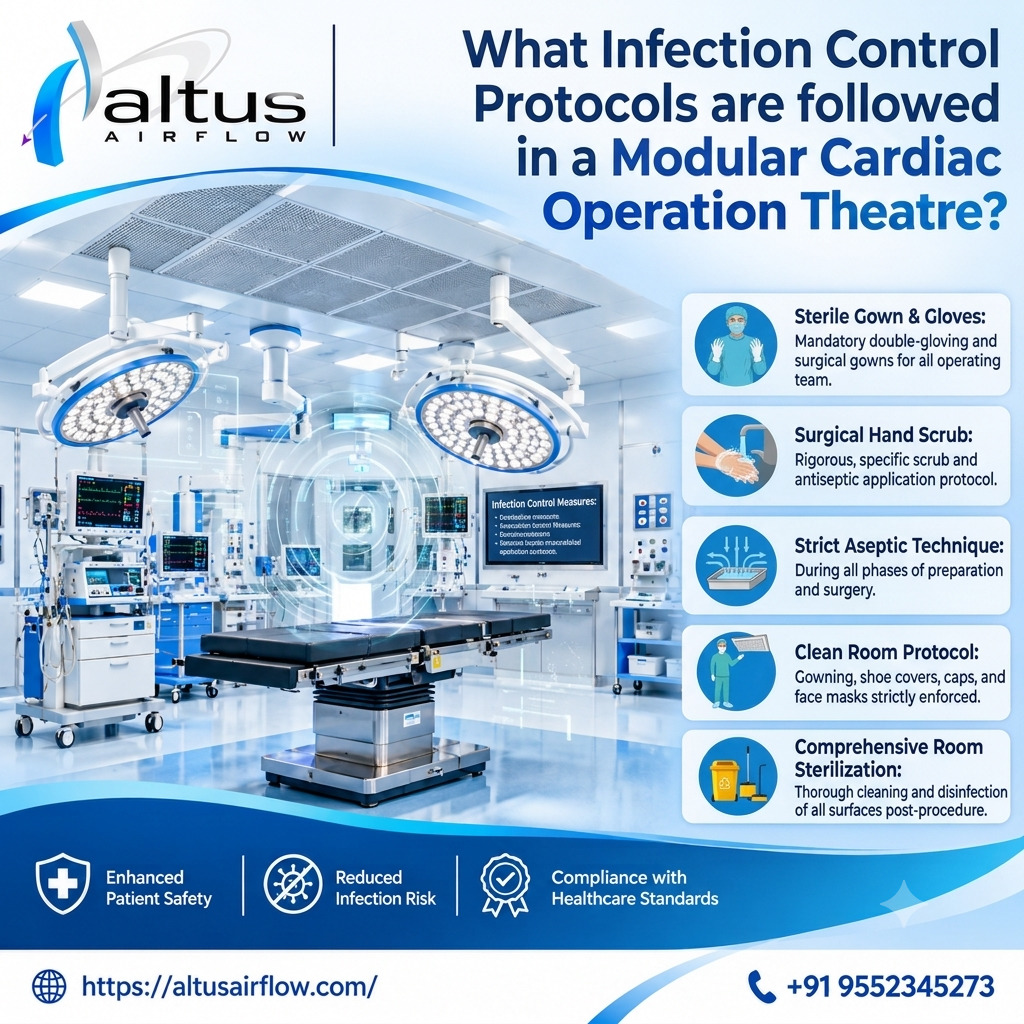
What infection control protocols are followed in a Modular Cardiac Operation Theatre?
Introduction
Altus Airflow specializes in developing advanced modular healthcare infrastructure designed to support hygienic, efficient, and controlled surgical environments. A Modular Cardiac Operation Theatre requires carefully planned infection control protocols to minimize contamination risks during complex cardiac procedures. From advanced ventilation systems and sterile surfaces to proper equipment sterilization, every element contributes to maintaining a safe operating environment.
Cardiac surgeries involve critical procedures where even minor contamination can create serious complications. Therefore, hospitals must implement systematic cleaning, sterilization, air filtration, and personnel hygiene practices. Following appropriate infection prevention measures helps maintain surgical standards, protect patients, and support effective clinical operations.
1. Advanced Air Filtration and Ventilation Management
Air quality is one of the most important factors in preventing contamination inside a cardiac operating theatre. Airborne microorganisms, dust particles, and other contaminants can potentially enter the surgical environment and compromise the sterile field.
Proper ventilation systems help maintain controlled airflow and reduce airborne contamination. Important ventilation protocols include:
-
HEPA filtration: High-efficiency particulate air filtration helps remove airborne particles from the supplied air.
-
Positive air pressure: Maintaining positive pressure relative to adjacent corridors helps prevent unfiltered air from entering the operating room.
-
Controlled air changes: Ventilation must maintain the air-change requirements specified by applicable healthcare facility standards.
-
Temperature and humidity monitoring: Controlled environmental conditions help maintain staff comfort and reduce conditions that may encourage microbial growth.
-
Airflow monitoring: Regular inspection ensures that ventilation systems operate according to their design specifications.
Hospitals should also maintain ventilation maintenance records and replace filters according to manufacturer recommendations and facility protocols.
2. Strict Sterilization of Surgical Instruments
Cardiac procedures require specialized instruments that come into direct contact with sterile tissues and the cardiovascular system. These instruments must undergo appropriate cleaning and sterilization before reuse.
Hospitals should establish a standardized instrument reprocessing procedure that includes:
-
Initial removal of blood, tissue, and other organic materials.
-
Thorough cleaning using approved detergents and validated processes.
-
Inspection of instruments for damage, corrosion, or remaining contamination.
-
Sterilization using validated methods appropriate for the instrument.
-
Proper packaging and storage to maintain sterility.
-
Documentation of sterilization cycles and quality checks.
Critical surgical instruments must be sterile before every procedure. Sterilization indicators and biological monitoring should be used according to the healthcare facility's approved sterilization policy.
These practices reduce the possibility of transferring microorganisms between patients and help maintain a controlled surgical environment.
3. Regular Cleaning and Disinfection of Surfaces
Operating theatre surfaces can become contaminated through contact with healthcare personnel, equipment, surgical materials, and accidental spills.
A structured cleaning schedule is therefore necessary. Hospitals should use approved healthcare-grade disinfectants that are compatible with the installed surfaces and equipment.
Cleaning protocols generally include three important stages:
Before surgery:
-
Clean and disinfect operating tables, surgical lights, equipment surfaces, and frequently touched areas.
-
Check that the previous terminal cleaning was completed and documented.
-
Ensure that the room is ready before introducing sterile instruments.
Between surgical procedures:
-
Remove used surgical drapes, linen, and disposable materials.
-
Clean and disinfect the operating table and equipment used during the procedure.
-
Disinfect contaminated and high-touch surfaces.
-
Clean visible blood and body fluid spills using approved procedures.
After the final procedure:
-
Perform comprehensive terminal cleaning.
-
Disinfect fixed equipment, furniture, operating tables, and other environmental surfaces.
-
Clean floors, including areas beneath movable equipment.
-
Inspect the theatre and document the completion of cleaning activities.
Dedicated cleaning materials should be used for the operating room to prevent cross-contamination.
4. Surgical Hand Hygiene and Staff Personal Protection
Healthcare professionals play a major role in preventing surgical site infections. Even when the operating environment is properly maintained, inadequate hand hygiene or incorrect protective clothing can introduce microorganisms into the sterile field.
Hospitals should establish strict staff hygiene requirements.
Important precautions include:
-
Performing surgical hand antisepsis before entering the sterile surgical workflow.
-
Wearing clean surgical scrubs and appropriate protective clothing.
-
Using sterile surgical gowns and gloves during procedures.
-
Wearing appropriate masks, caps, and protective eyewear.
-
Replacing damaged or contaminated gloves immediately.
-
Following proper hand hygiene procedures after contact with contaminated materials.
Staff members should also avoid unnecessary movement and contact with non-sterile surfaces during surgery.
Regular training sessions help surgical teams understand infection prevention responsibilities and maintain consistent hygiene practices.
5. Maintaining a Strict Sterile Surgical Field
Maintaining a sterile field is essential during cardiac procedures because surgical teams work with exposed tissues and delicate cardiovascular structures.
Any accidental contact between sterile and non-sterile materials can compromise the surgical environment.
The following precautions help protect the sterile field:
Sterile instrument arrangement: Instruments should be organized on properly prepared sterile trays and covered until required.
Sterile draping: Appropriate sterile drapes should be used to isolate the surgical site and maintain a protected working area.
Equipment handling: Only properly disinfected or sterilized equipment should be introduced into the sterile environment, depending on its intended use.
Sterile field monitoring: Surgical staff should continuously observe the sterile field and identify any potential contamination.
Immediate corrective action: If contamination occurs, the affected materials should be replaced or reprocessed according to established clinical protocols.
These procedures help reduce unnecessary exposure to microorganisms during complex operations.
6. Controlled Movement and Restricted Theatre Access
Frequent movement inside an operating theatre can disturb airflow patterns and increase the possibility of contamination.
Limiting unnecessary entry and exit is therefore an important infection control measure.
Hospitals should implement the following protocols:
-
Allow only authorized and essential personnel inside the operating theatre.
-
Keep operating room doors closed except when necessary for patient, staff, or equipment movement.
-
Establish designated entry and exit procedures.
-
Avoid unnecessary conversations and movement around the sterile field.
-
Organize surgical instruments and supplies before beginning procedures.
-
Maintain appropriate records of personnel access when required by hospital policy.
Staff members should also follow designated clean and restricted areas within the surgical department.
Proper movement management supports ventilation efficiency and helps maintain the required environmental conditions.
7. Proper Medical Waste and Sharps Management
Cardiac surgeries generate different types of waste, including blood-contaminated materials, disposable surgical products, used dressings, and sharps.
Incorrect waste handling can expose healthcare workers and patients to infectious materials.
Hospitals should follow established biomedical waste management regulations and institutional procedures.
Essential practices include:
-
Segregating biomedical waste at the point of generation.
-
Using designated, appropriately labelled waste containers.
-
Disposing of needles and other sharps in puncture-resistant containers.
-
Avoiding manual handling or recapping of used needles.
-
Handling blood-contaminated materials using appropriate protective equipment.
-
Ensuring timely collection and safe transportation of biomedical waste.
Waste containers should not be overfilled, and staff members responsible for waste handling should receive appropriate training.
8. Preventing Contamination During Equipment Handling
Cardiac operating theatres contain several specialized medical devices, including patient monitoring systems, anesthesia equipment, surgical lights, imaging equipment, and medical gas delivery systems.
These devices require appropriate cleaning and disinfection because their surfaces may come into contact with healthcare workers or contaminated materials.
Hospitals should establish equipment-specific cleaning procedures.
Important considerations include:
-
Cleaning reusable equipment after every procedure according to manufacturer instructions.
-
Disinfecting frequently touched controls, handles, and display surfaces.
-
Using compatible disinfectants to avoid damaging sensitive electronic components.
-
Maintaining separate storage arrangements for clean and contaminated equipment.
-
Checking equipment condition before introducing it into the operating theatre.
-
Keeping maintenance and disinfection records.
Equipment that enters sterile body sites or contacts sterile tissues must undergo the appropriate validated reprocessing procedure.
Proper equipment management reduces cross-contamination risks while supporting uninterrupted surgical operations.
9. Environmental Monitoring and Infection Control Audits
Infection prevention is not a one-time activity. Hospitals must regularly evaluate whether established protocols are being followed effectively.
Environmental monitoring and internal audits help identify potential weaknesses before they affect patient safety.
Important monitoring activities include:
Ventilation inspections: Check airflow, pressure relationships, filtration performance, and other specified environmental parameters.
Cleaning audits: Review cleaning schedules, disinfectant use, and completion records.
Sterilization monitoring: Examine sterilization cycle documentation, indicators, and equipment performance.
Staff compliance assessments: Evaluate adherence to hand hygiene, surgical attire, and sterile field procedures.
Equipment inspections: Confirm that medical devices undergo appropriate cleaning, disinfection, and maintenance.
Incident reporting: Record contamination events, equipment failures, and infection control deviations for investigation and corrective action.
Hospitals should use audit findings to improve staff training, revise procedures, and strengthen infection prevention systems.
10. Importance of Modular Infrastructure in Infection Prevention
The design and construction of an operating theatre can influence how effectively hospitals maintain cleanliness and control contamination.
A well-planned modular environment incorporates materials, surfaces, and engineering systems that support infection prevention activities.
Important infrastructure features include:
-
Seamless wall panels: Smooth, non-porous surfaces help simplify routine cleaning and disinfection.
-
Specialized flooring: Durable, easy-to-clean flooring helps maintain hygienic conditions.
-
Sealed joints: Properly finished joints and interfaces reduce areas where dust and contaminants may accumulate.
-
Integrated ceiling systems: Carefully planned ceiling arrangements support the installation of surgical lights, medical equipment, and ventilation components.
-
Organized medical utilities: Properly positioned service outlets help reduce unnecessary equipment movement and improve workflow.
-
Accessible maintenance arrangements: Service access should allow authorized maintenance without unnecessarily disturbing controlled clinical areas.
The design should also consider future equipment requirements, hospital workflows, applicable building standards, and infection control recommendations.
Importantly, modular construction alone does not guarantee infection prevention. Its effectiveness depends on appropriate engineering, validated systems, routine maintenance, and consistent clinical practices.
Conclusion
Infection prevention requires coordination between healthcare professionals, hospital administrators, facility engineers, and maintenance teams. Effective ventilation, instrument sterilization, environmental cleaning, hand hygiene, sterile field management, and biomedical waste disposal are essential components of a safe cardiac surgical environment.
A properly designed Modular Cardiac Operation Theatre supports these protocols through hygienic surfaces, controlled ventilation, organized medical utilities, and efficient clinical workflows.
Altus Airflow focuses on developing modular healthcare infrastructure that supports controlled and hygienic surgical environments. By combining appropriate engineering solutions with established infection prevention practices, Altus Airflow helps hospitals create operating spaces designed to meet the demands of modern cardiac surgery.
Frequently Asked Questions (FAQs)
1. What infection control protocols are followed in a Modular Cardiac Operation Theatre?
A Modular Cardiac Operation Theatre follows protocols such as HEPA filtration, positive-pressure ventilation, instrument sterilization, surface disinfection, surgical hand hygiene, and sterile field management.
2. Why is ventilation important in a cardiac operating theatre?
Proper ventilation helps control airborne particles, maintain environmental conditions, and reduce the risk of airborne contamination.
3. How frequently should operating theatre surfaces be disinfected?
Surfaces should be cleaned before the first procedure, between surgical procedures, and after the final procedure through terminal cleaning.
4. Why is instrument sterilization necessary during cardiac surgery?
Sterilization eliminates viable microorganisms from critical surgical instruments and helps prevent infections during invasive procedures.
5. How can hospitals prevent cross-contamination inside operating theatres?
Hospitals can reduce cross-contamination through proper hand hygiene, equipment disinfection, sterile storage, controlled staff movement, and appropriate waste segregation.
Read Our Previous Blog --------------->Do Turnkey Modular IVF Lab Solutions include stainless steel laboratory furniture?

 English
 Arabic
 Spanish
 Portuguese
 Deutsch
 Turkish
 Dutch
 Italiano
 Russian
 Romaian
 Portuguese (Brazil)
 Greek