


Loft Insulation Birmingham: Cut Heat Loss and Keep Your Home Warmer for Longer
Warm air rises, and in a poorly insulated house much of it escapes straight through the roof. Topping up or replacing the material in your loft is one of the simplest ways to keep that heat indoors. Professional loft insulation Birmingham services bring your roof space up to the recommended 270mm depth, helping you stay warmer while using less energy.
For a home with no insulation at all, the yearly savings can run into hundreds of pounds. This guide explains how much insulation you need, what it can save, which materials are available and what happens during installation.
Why Loft Insulation Matters
Insulation works by trapping still air, which slows the movement of heat from warm rooms into the cold roof space. Without it, your heating system has to work much harder to keep the house comfortable.
Lower Heating Bills
Because less heat escapes, your boiler runs for shorter periods. The biggest savings go to homes starting with little or no insulation, although a top-up still makes a difference.
More Comfortable Rooms
A well-insulated loft keeps upstairs rooms warmer in winter. It can also slow the heat that builds up under the roof in summer, helping bedrooms stay more comfortable on hot nights.
A Smaller Carbon Footprint
Using less energy for heating means lower carbon emissions from your home. For many households, it is one of the most cost-effective energy improvements available.
How Much Insulation Do You Need?
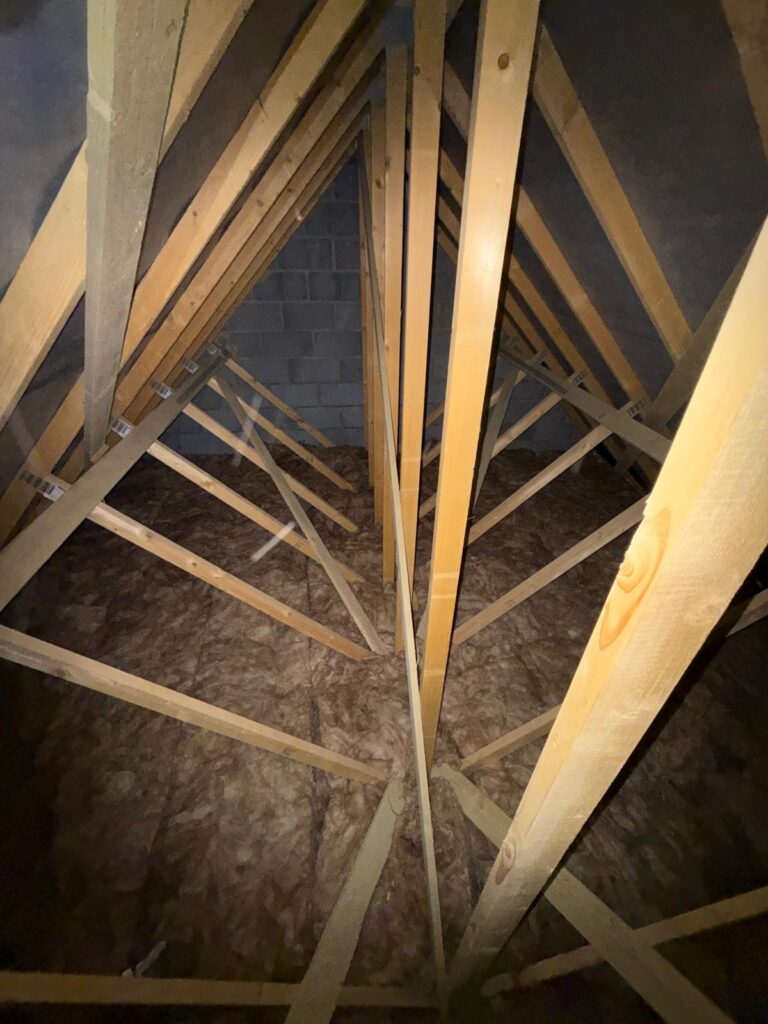
The recommended depth for mineral wool loft insulation in the UK is 270mm. Many older homes still have far less, often a thin layer laid decades ago that has since settled or been disturbed.
How to Check Your Current Depth
With care, take a tape measure into the loft and check the depth in several places. Measure from the top of the ceiling plasterboard to the top of the insulation. If you can clearly see the tops of the joists, the insulation is almost certainly too thin.
Top-Up or Replacement?
If the existing material is dry and in reasonable condition, a top-up laid across the joists is usually enough. However, insulation that is damp, compressed, dirty or damaged by pests may need replacing completely.
How Much Could You Save?
Savings depend on your house type and how much insulation you already have. The Energy Saving Trust estimates the following yearly savings for gas-heated homes, based on fuel prices as of July 2026.
| House type | From no insulation to 270mm | Top-up from 120mm to 270mm |
|---|---|---|
| Detached house | £360 a year | £35 a year |
| Detached bungalow | £350 a year | £35 a year |
| Semi-detached house | £190 a year | £17 a year |
| Mid-terrace house | £140 a year | £13 a year |
As the table shows, the most dramatic gains come from insulating a bare loft. Even so, a top-up also improves comfort, and it is especially worthwhile when combined with other loft work. Before booking loft insulation Birmingham work, it helps to know your starting depth so you can judge the likely benefit.
Common Types of Loft Insulation
Several materials are available, and the right choice depends on your loft and how you plan to use it. Each material needs a different thickness to reach the same performance, so the 270mm figure applies specifically to mineral wool.
Mineral Wool Rolls
Glass or rock wool rolls are the most common choice for lofts. They are laid between the joists first, then a second layer is rolled across them to cover the timber and reduce heat loss.
Rigid Insulation Boards
Rigid boards give high performance in a thinner layer. They are useful where space is limited, and some are pre-bonded to flooring boards for lofts used as storage.
Natural Materials
Sheep's wool and other natural products are available for homeowners who prefer them. They usually cost more, so it is worth comparing prices and performance before you decide.
Insulation and Loft Storage
Many homeowners want both a warm house and a usable loft. The problem is that boards laid straight onto the joists squash the insulation underneath, which sharply reduces how well it works.
The solution is to raise the floor above the insulation using purpose-made supports or a timber sub-frame. This keeps the full depth in place while still giving you a stable surface for storage. If you plan to board the loft, it makes sense to lay any extra insulation first, while the joists are still exposed.
Ventilation and Damp
A properly insulated loft is colder than an uninsulated one, because less heat reaches it from below. That is a good sign, but it means ventilation becomes more important.
Insulation should never be pushed into the eaves, as this can block the airflow that keeps the roof timbers dry. Similarly, water tanks and pipes in the loft should be lagged, because they will be exposed to colder temperatures once the floor is insulated. A professional installer will check these points as part of the job.
What Happens During Installation
For most homes, the work is straightforward and causes little disruption. A typical installation follows these stages:
- Free survey: The installer checks the current depth, condition and any obstacles.
- Fixed quote: You receive a price for a top-up or full replacement.
- Preparation: The loft is cleared, and areas around the hatch are protected.
- Installation: Insulation is laid evenly, with care taken around cables, lights and the eaves.
- Clean-up: All waste is removed, leaving the loft tidy.
Experienced loft insulation Birmingham installers can also fit insulation around existing raised loft boards, so you do not always have to remove your storage floor.
Professional Installation vs DIY
Mineral wool rolls are widely sold, and some homeowners lay them themselves. However, working in a loft means handling irritating fibres, moving across narrow joists and working around electrical cables. Mistakes such as blocking the eaves or covering recessed downlights can cause problems later.
A professional loft insulation Birmingham service reduces those risks. Reputable firms are also fully insured and will leave the loft clean once the work is complete.
Frequently Asked Questions
Do I need planning permission for loft insulation?
No. Insulating a loft does not normally need planning permission, although the work should still follow good practice and current guidance.
Can I store things on top of insulation?
Not directly, because the weight compresses it. Install a raised floor first, then store items on the boards above.
How long does loft insulation last?
Mineral wool can last for decades if it stays dry and undisturbed. Check it occasionally for damp, compression or pest damage.
Will insulation make my loft cold?
Yes, the roof space becomes colder because heat stays in the rooms below. That is why tanks and pipes in the loft should be protected.
Can I get free loft insulation?
Some households may qualify through energy supplier or government schemes, depending on their circumstances. Check the current schemes before paying for the work.
Final Thoughts
Bringing your loft insulation up to 270mm is one of the most practical ways to keep heat in and reduce energy use. Check your current depth, consider how you want to use the loft, and make sure the work protects ventilation as well as warmth.
If you are ready to make your home warmer, FIXIT Renovation offers loft insulation Birmingham homeowners can book with a free survey and a fixed, no-obligation quote.

 English
 Arabic
 French
 Spanish
 Portuguese
 Deutsch
 Turkish
 Italiano
 Russian
 Romaian
 Portuguese (Brazil)
 Greek