


Custom Burger Boxes: A Practical Guide for Restaurants, Food Trucks and Cafes
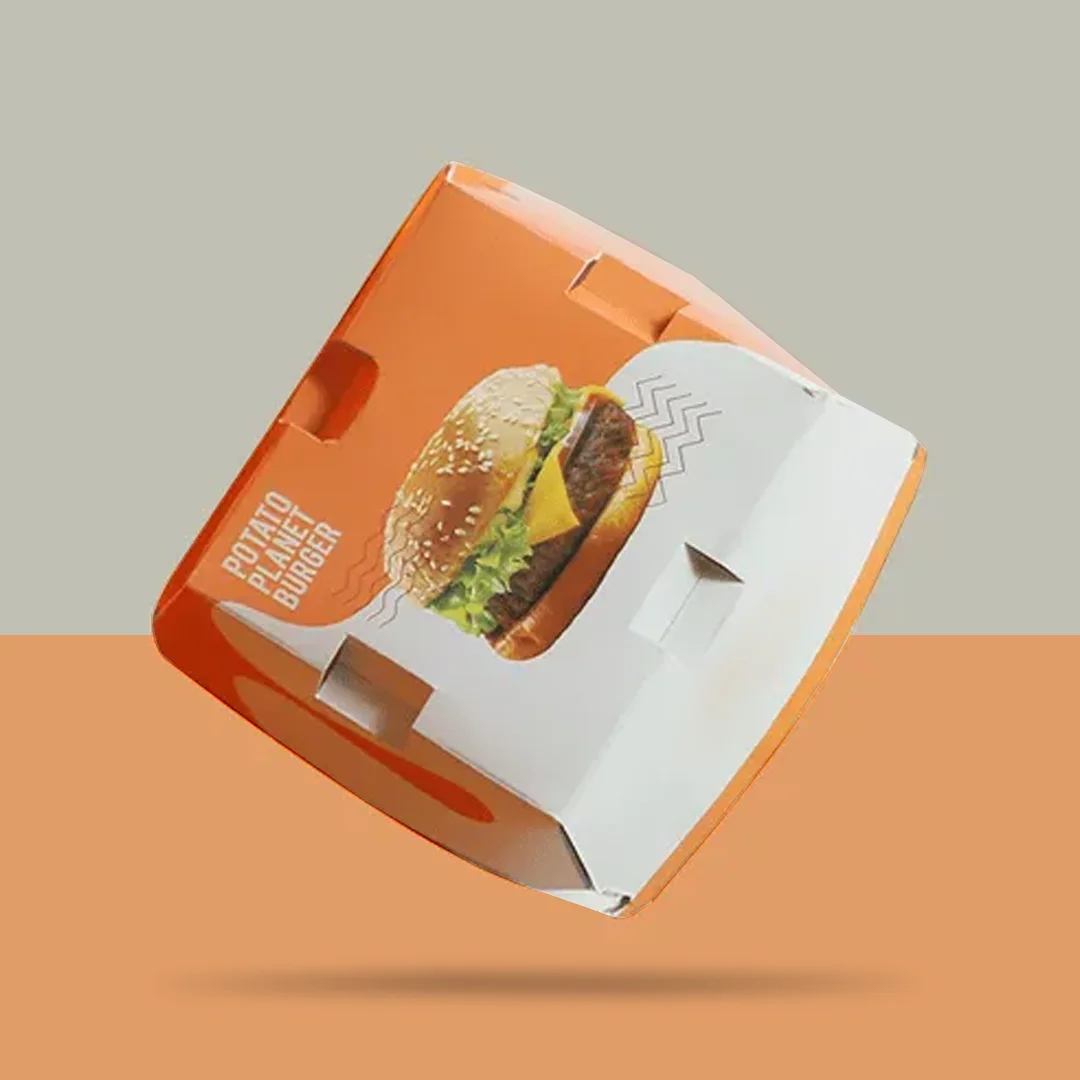
Think about the last burger you had delivered. The first thing you saw wasn’t the burger. It was the box. If it arrived dented and damp, you’d already formed an opinion before the first bite. If it arrived crisp, properly sealed and with a logo you recognised, the burger got a head start. That’s the quiet job custom burger boxes do, and plenty of owners only realise it after a few bad reviews about a soggy bun.
So let’s talk about what actually makes a good one. Custom printed burger boxes are food-grade boxes made to fit your burgers, in your colours, with your logo on them. That sounds simple, and in a way it is. But the details underneath, like size, board, ventilation and print, decide whether the box protects your food or just sits there looking nice. Here’s how I’d think about each one, in order.
Why the box matters more than you’d think
A burger is a tricky thing to pack. It’s hot, it’s wet in the middle, it’s stacked, and it’s expected to arrive looking like the photo on the menu. The kitchen does most of the work, but the box can undo all of it in fifteen minutes. There’s a marketing side too. A takeaway box goes on a kitchen bench, gets photographed, sits on a desk at lunch. Every one of those moments builds brand recognition for free. Good burger packaging costs a few cents more per unit and quietly pays for itself in repeat orders. It’s a small cost for a job that touches every single order.
Get the size right first
Start here, because it’s where most people go wrong. Measure your actual burger, not the one in your head. A standard bun is roughly 10 to 13 centimetres across, but a double patty with all the toppings can be 8 to 10 centimetres tall once built. Add about a centimetre of breathing room all round. Too tight and the lid squashes the bun. Too loose and the burger slides on every corner.
If you sell more than one size, don’t squeeze them into a single box. A big box with a lonely slider rattling about looks sad. A mini burger box and a standard one cost about the same to produce, and customers can tell the difference. And if a combo has to carry fries too, you’ll want a divider or a separate fries pocket, which changes the structure completely. Ask about custom sizes early, because it’s cheaper to get this right now than to rework a die later.
Materials and grease
Most burger boxes are made from kraft paper board or corrugated board. Kraft has an earthy look and prints well, which suits cafes and food trucks. Thin E-flute corrugated is stiffer and holds heat better on longer delivery runs. White paperboard gives you the brightest print if your branding is colourful. None of these is automatically better. It depends on your menu, your delivery distance and how premium you want to feel.
Then there’s grease, which nobody mentions until it’s a problem. Burgers leak. A plain cardboard base goes dark and soft within minutes. So ask about grease-resistant coatings or a greaseproof paper liner, and get written confirmation that the board and inks are suitable for food contact. That’s a question you don’t want to be answering after you’ve printed 5,000 boxes.
Let the steam out
Here’s the detail that separates decent packaging from the kind that causes complaints. A hot burger gives off steam. Seal it in a closed box for twenty minutes and the bun turns to mush. Small vent holes or a slightly loose lid let the steam out without losing all the heat. It’s a balancing act. Too many holes and the burger goes cold, too few and the bottom bun goes soft.
Delivery makes it worse. Plenty of orders sit in a bag or on a bike for fifteen to thirty minutes. So test a sample properly: pack a hot burger, close the box, wait twenty minutes, then open it. If the bun is still decent, great. If it’s damp, change the vents before you order the full run. Good delivery packaging is tested, not guessed.
Box styles worth knowing
The classic is the one-piece hinged design with an attached lid. Clamshell burger boxes are the most common style in takeaway shops because staff can assemble them in seconds, they close with a tab or tuck, and they’re stackable on a counter or in a delivery bag. The lid stays attached, so it can’t get lost, and the burger is protected on every side. For most restaurants this is the safest place to start.
Beyond that, you’ve got options. Burger sleeves are a cheaper choice for dine-in or quick service, wrapping the burger instead of boxing it. A small tray with a sleeve works for premium burgers and sets. And if you sell sliders, a compact box holding two or three side by side looks great on a menu board. Pick the style that matches how your food really leaves the building, not the one that looks best in a catalogue.
Branding without overdoing it
Print is the fun bit, but restraint wins. A bold logo on the lid, a simple pattern and a short line of text is often plenty. Full coverage artwork looks great but hides grease marks less well and costs more. Offset printing gives sharp, consistent colour across a big run, and Pantone colour matching keeps your brand red the same shade on every box. Put the logo on the lid and keep it clear of the fold lines. Side panels suit a website or a QR code linking to a loyalty offer, and a short message inside the lid makes opening it feel personal. If you run a limited-time special, a simple sticker over the lid can change the message without reprinting the whole box.
What counts as the best
People ask about the best burger packaging boxes as if there’s a single winner. There isn’t. The best box for a food truck feeding a footy crowd isn’t the best box for a gourmet burger bar selling through delivery apps. What the good ones share is a handful of boring qualities: a snug fit, a strong base, decent ventilation, a lid that closes without a fight and a look that matches the food.
I’d add one more: consistency. If boxes arrive in slightly different sizes from batch to batch, your staff will hate them and your food will suffer. That’s why approving a mockup first matters. A flat 2D proof checks your artwork, a 3D render shows the shape, and a physical sample lets you test a real burger in a real box. Good suppliers offer these for free. Open and close the lid a few times too, since cheap board tends to crack at the hinge.
Eco-friendly, but honest about it
Customers are paying attention now. Boxes made from recyclable paperboard with a water-based coating are easy to explain and easy to feel good about. But be careful with claims. Plastic-lined board is harder to recycle, and food-soiled cardboard has its limits in kerbside recycling. Instead of printing something vague, ask your supplier exactly what the board and coating are made of, and say only what’s true. One practical bonus: boxes that arrive flat-packed take up far less storage space, which matters when your kitchen is already full.
Ordering without regrets
Before asking for a quote, gather the basics: your burger dimensions, how many sizes you sell, how they’re delivered and roughly how many you use each month. Be honest about the number. Over-ordering ties up cash and space, and under-ordering means running out on a Friday night. Plenty of owners start with one size, test it for a month, then expand the range. It also helps to know your busiest hour, because that’s when assembly speed really counts.
Price depends on size, board, print and quantity. If you plan to keep selling burgers, and you do, burger boxes wholesale ordering is where the numbers start to make sense. Unit prices fall as quantity rises, and repeat orders are quicker because the setup is already done. Ask for quotes at two or three quantities so you can see where the price breaks sit, and check that freight is included before you compare totals. Bulk orders also make it easier to keep your look consistent.
Where to start
A good burger box is invisible when it works and very noticeable when it doesn’t. Measure your burger, choose a material that handles grease, give the steam somewhere to go, keep the print simple and test a sample before you commit. Packaging Bee AU makes custom packaging for Australian businesses, with free mockups, free shipping across Australia and orders starting from 100 boxes. Send over your burger sizes and we’ll help you find a box that fits.

 English
 French
 Spanish
 Portuguese
 Deutsch
 Turkish
 Dutch
 Italiano
 Russian
 Romaian
 Portuguese (Brazil)
 Greek