


Mandatory BIS Certification for Solar Batteries Under MNRE QCO 2025
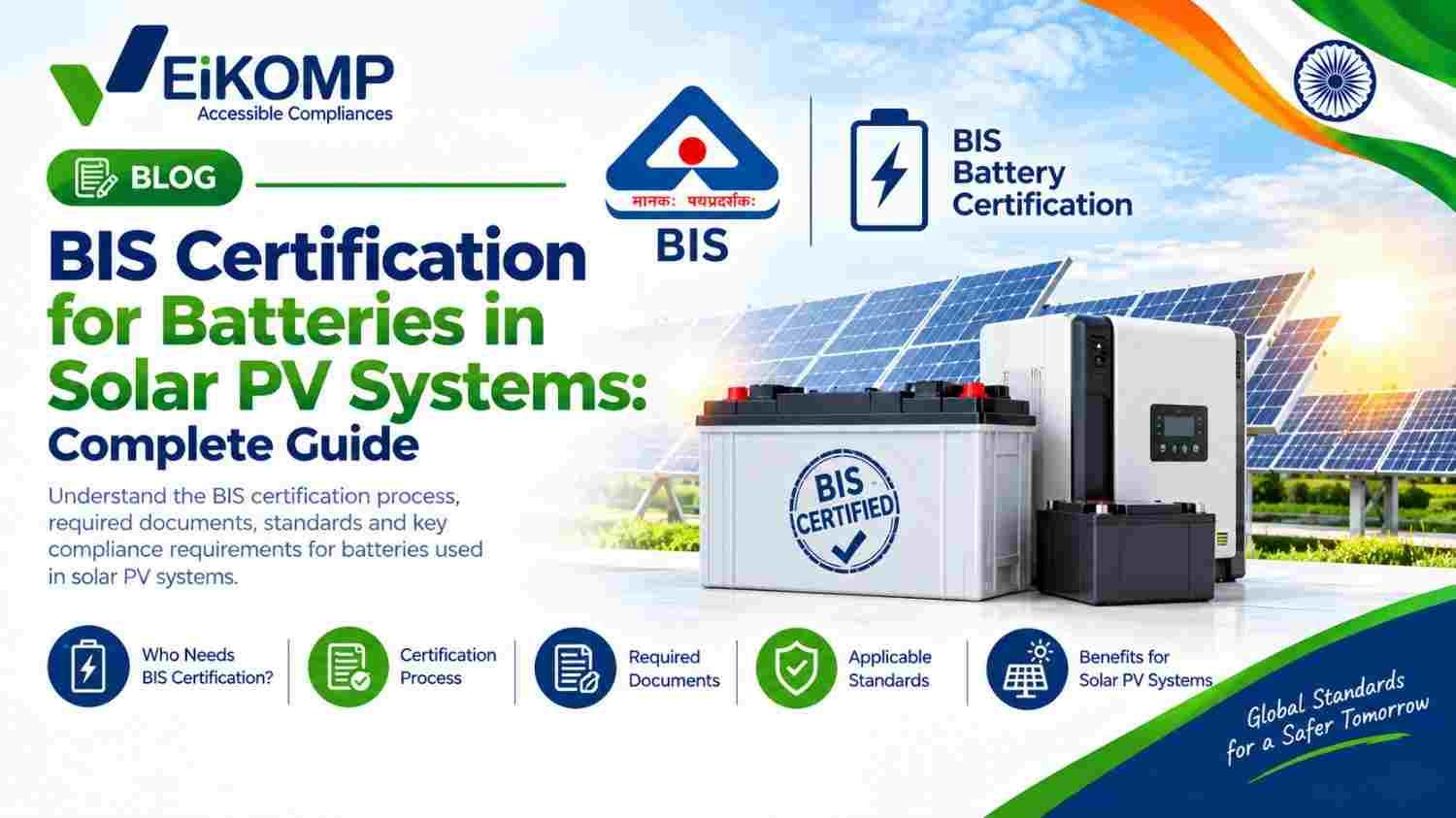
Solar energy is becoming an important part of India's renewable energy sector. With the growing demand for solar installations, batteries play a crucial role in storing electricity and ensuring a continuous power supply. To maintain product quality, reliability, and safety, the Indian government has made BIS Certification for Batteries in Solar PV Systems mandatory under the applicable regulatory framework.
The Bureau of Indian Standards (BIS) regulates solar battery quality through specific Indian Standards. Manufacturers and importers must meet the applicable requirements before manufacturing, importing, or selling regulated solar batteries in India.
What Is BIS Certification for Solar Batteries?
BIS Certification is a product conformity assessment process that ensures products meet the relevant Indian Standards. For batteries used in solar photovoltaic applications, the applicable standard is IS 16270:2023 – Secondary Cells and Batteries for Solar Photovoltaic Application: General Requirements and Methods of Test.
This standard covers important performance and safety requirements for rechargeable batteries used in solar applications. It includes lead-acid, lithium-based, nickel-based, and other applicable secondary battery technologies.
BIS certification helps manufacturers demonstrate product compliance while building customer confidence and supporting regulatory requirements.
Why Is BIS Certification Mandatory for Solar Batteries?
The Ministry of New and Renewable Energy (MNRE) introduced the Solar Systems, Devices and Components Goods Order, 2025, to strengthen quality requirements for solar products.
Under this framework, regulated storage batteries must comply with the applicable Indian Standard and obtain the required BIS registration.
The certification process helps ensure:
-
Better battery performance and reliability.
-
Compliance with applicable safety requirements.
-
Consistent product quality.
-
Reduced risks associated with battery failure.
-
Greater confidence among customers and distributors.
-
Compliance with Indian regulatory requirements.
Manufacturers and importers should verify the latest applicable requirements before placing products in the Indian market.
IS 16270:2023 – Indian Standard for Solar Batteries
IS 16270:2023 specifies the technical requirements and testing methods for secondary cells and batteries used in solar photovoltaic applications.
The revised standard expands the scope beyond traditional lead-acid and nickel-based batteries to include lithium-based and other rechargeable battery technologies.
Important testing parameters include:
-
Rated capacity and capacity performance.
-
Charge and discharge characteristics.
-
Cycle life and durability.
-
Internal resistance.
-
Overcharge and discharge behaviour.
-
Electrical safety and battery construction.
Amendment No. 1 to IS 16270:2023 also introduced specific technical clarifications and testing requirements. Manufacturers must ensure their products comply with the latest applicable version and amendments.
BIS CRS Certification Process for Solar Batteries
Manufacturers need to follow the applicable BIS Compulsory Registration Scheme (CRS) requirements to obtain registration for regulated solar batteries.
The general process includes:
-
Identify the Applicable Standard: Determine whether IS 16270:2023 and any additional applicable standards cover your battery product.
-
Product Testing: Submit battery samples to a BIS-recognised testing laboratory for the required performance and safety tests.
-
Prepare Documents: Arrange factory details, technical specifications, product information, test reports, and other required documents.
-
Online Application: Submit the application through the BIS registration portal with the necessary information.
-
BIS Verification: BIS reviews the application, technical documents, and laboratory test reports.
-
Registration Approval: After successful verification, BIS grants registration with a unique registration number.
-
Product Marking: The manufacturer must follow applicable BIS Standard Mark and registration-number marking requirements.
Documents Required for BIS Registration
Proper documentation helps manufacturers complete the registration process smoothly. Commonly required documents include:
-
Company registration certificate.
-
Manufacturing unit details.
-
Factory address and contact information.
-
Product technical specifications.
-
Battery model and brand details.
-
Manufacturing process information.
-
Test reports from recognised laboratories.
-
Authorised signatory documents.
-
Trademark or brand authorisation documents, where applicable.
Additional documents may be required depending on the product category and application.
How Eikomp Helps with BIS Certification
Obtaining BIS Registration for Batteries in Solar PV Systems requires technical knowledge, proper documentation, and compliance with applicable standards. Eikomp provides professional assistance to manufacturers and importers throughout the certification process.
Our support includes identifying applicable standards, coordinating product testing, preparing documentation, assisting with BIS CRS applications, and guiding businesses through registration requirements.
Whether you manufacture lithium-ion batteries, lead-acid batteries, or other rechargeable batteries for solar applications, Eikomp can help you understand the relevant compliance requirements.
Conclusion
BIS Certification for Batteries in Solar PV Systems is an important regulatory requirement for manufacturers and importers operating in India. Compliance with IS 16270:2023 and its applicable amendments helps ensure battery quality, performance, and safety.
Businesses should understand the applicable standards, complete laboratory testing, and obtain the required BIS registration before entering the Indian market. With expert assistance from Eikomp, manufacturers can manage their certification requirements and move towards regulatory compliance with greater confidence.

 English
 Arabic
 French
 Spanish
 Portuguese
 Deutsch
 Dutch
 Italiano
 Russian
 Romaian
 Portuguese (Brazil)
 Greek