


Why Panel Buzzer with Flasher Devices Are Important in Industrial Machinery and Automation
Introduction
Industrial machinery and automation systems are designed to perform repetitive operations with accuracy and consistency. From manufacturing lines to material handling equipment, modern facilities depend on electrical control systems to coordinate different activities.
However, automated operation does not remove the need for human supervision. Operators and maintenance teams still need to know when equipment requires attention.
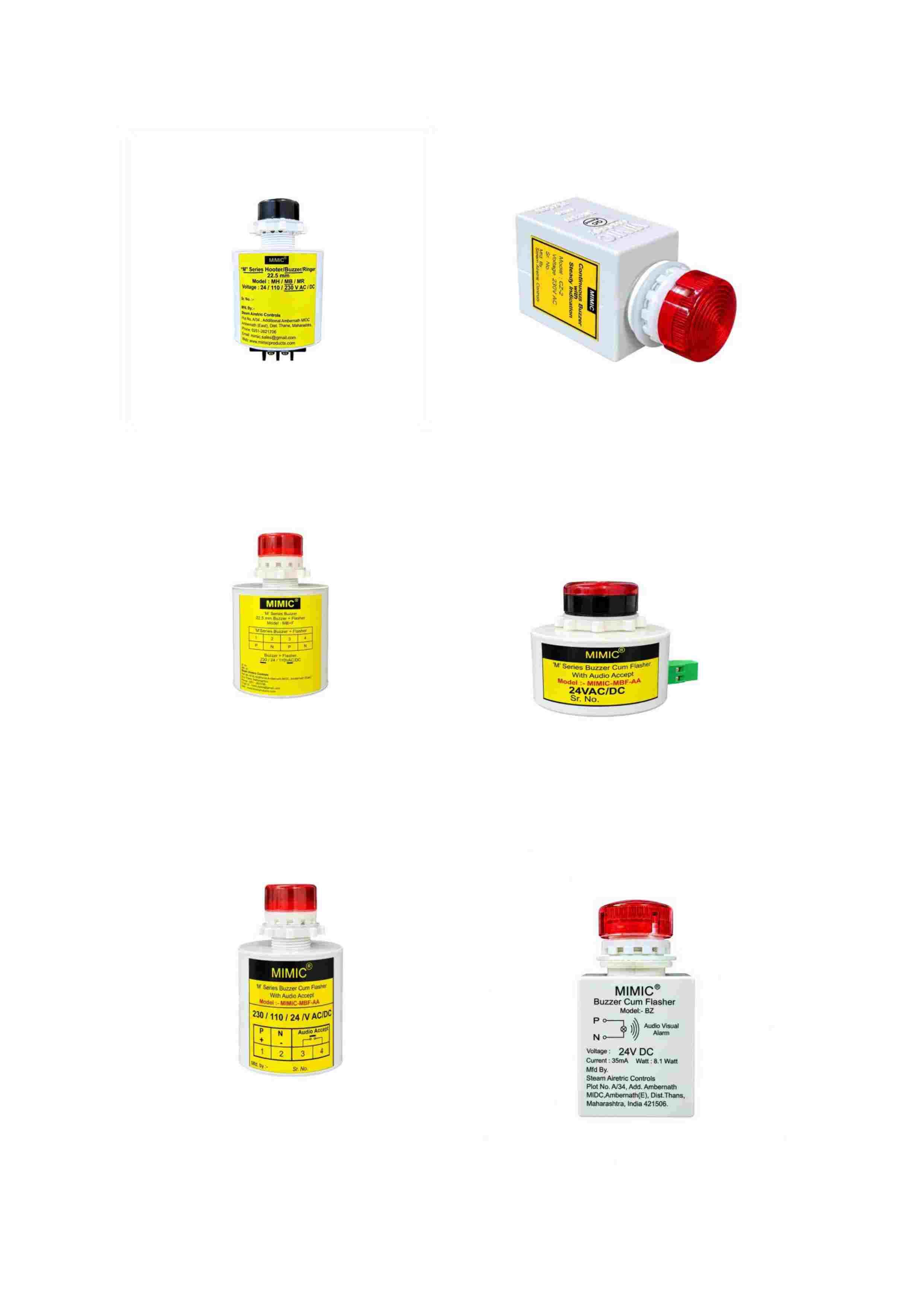
A Panel Buzzer with Flasher provides a useful method of communicating selected machine and system warnings. By combining audible and visual signals, it helps make important notifications more noticeable in industrial workplaces.
The Growing Need for Warning Communication in Automation
Automation systems use sensors, controllers, relays, and other electrical components to monitor and manage machine operations.
These systems can identify predefined conditions and activate alarm outputs when necessary.
For example, a production machine may be programmed to generate an alarm when a selected operating parameter moves outside its permitted range. A connected warning device can then notify nearby personnel.
Without an effective notification arrangement, an alarm condition may go unnoticed, particularly when operators are supervising multiple machines.
This is why local audible and visual signalling continues to be useful in industrial automation.
How a Panel Buzzer with Flasher Supports Machine Monitoring
A Panel Buzzer with Flasher works as a warning component within a compatible electrical control arrangement.
When the connected monitoring system activates the alarm circuit, the unit provides two notifications:
-
The buzzer generates an audible warning.
-
The flasher produces a visual signal.
These functions help operators recognize an active alarm.
The exact operating behaviour depends on the product design and the connected control circuit. Some installations may also include additional controls for alarm acknowledgement or resetting.
Applications in Industrial Machinery
1. Manufacturing Production Lines
Production lines often contain multiple machines working together. When one machine develops an abnormal condition, operators may need to inspect the equipment before restarting the process.
A combined warning device can provide a local alert when the associated monitoring circuit activates.
2. Conveyor Systems
Conveyor systems are used to move materials across manufacturing and industrial facilities. Their operation may be supervised through sensors, control panels, and protective arrangements.
A suitable warning unit can notify nearby personnel when a configured alarm condition occurs.
3. Pump and Motor Control Systems
Pumps and motors are important parts of many industrial operations. Their control panels may include monitoring arrangements for selected operating conditions.
An audible and visual alarm can help communicate when the monitoring circuit requires operator attention.
4. Packaging Machinery
Packaging machines involve several coordinated activities, including material movement, filling, sealing, and product handling.
When a machine control system detects a selected fault or process interruption, a connected warning unit can provide a local indication.
5. Material Handling Equipment
Industrial material handling systems may include lifting, transferring, and movement operations.
Suitable warning circuits can use audible and visual signalling equipment to communicate selected operating conditions to personnel.
Benefits of Combined Warning Equipment in Automation
Better Operator Awareness
The sound and flashing light provide two ways of communicating a warning. This can be particularly helpful when operators are not continuously watching the control panel.
Support for Local Alarm Indication
A combined warning unit provides a physical notification near the associated equipment or control panel.
Convenient Installation
Using one combined unit can reduce the need for separate mounting positions for the buzzer and flashing light.
Improved Warning Recognition
The two signalling functions complement one another and can make an activated alarm more noticeable.
Application Flexibility
Depending on its specifications, the device can be considered for different machinery and industrial automation arrangements.
How to Integrate a Warning Device into an Automation Panel
Integration should begin with understanding the controller's output configuration and the electrical requirements of the warning unit.
The following points are important:
Step 1: Identify the alarm condition. Determine which machine or process condition should activate the warning.
Step 2: Review the controller output. Check the available output type and electrical ratings.
Step 3: Verify device compatibility. Confirm that the warning unit matches the intended supply and activation arrangement.
Step 4: Plan the mounting position. Install the unit where its sound and flashing light can be noticed by the intended operators.
Step 5: Test the arrangement. Qualified personnel should verify correct operation according to the electrical design and manufacturer's instructions.
Proper integration helps ensure that the warning device performs its intended signalling function.
Factors That Influence Product Selection
Before purchasing a combined warning device, consider its operating voltage, sound output, visual performance, mounting arrangement, environmental suitability, and electrical specifications.
It is also important to consider whether the warning device will operate in a clean control room or a more demanding industrial environment.
Reviewing these details can help avoid selecting equipment that is unsuitable for the intended installation.
Mimic Products for Industrial Signalling Requirements
Mimic Products offers electrical signalling products for industrial applications. Its buzzer cum flasher range can be explored by users looking for combined audible and visual warning equipment for control panels and machinery-related installations.
Industrial buyers and automation professionals can review the available product configurations to identify suitable options for their electrical systems.
Conclusion
Automation systems require effective communication between equipment and operators. A Panel Buzzer with Flasher supports this requirement by providing sound and flashing light when a compatible alarm circuit is activated.
From manufacturing lines and conveyor systems to pump control panels and packaging machinery, combined warning devices can serve as useful local signalling components.
Selecting the correct product and integrating it according to the electrical design helps support better operator awareness and organized machine monitoring.

 English
 French
 Spanish
 Portuguese
 Deutsch
 Turkish
 Dutch
 Italiano
 Russian
 Romaian
 Portuguese (Brazil)
 Greek