


Why Discuss Product Specifications with cookware-supplier?
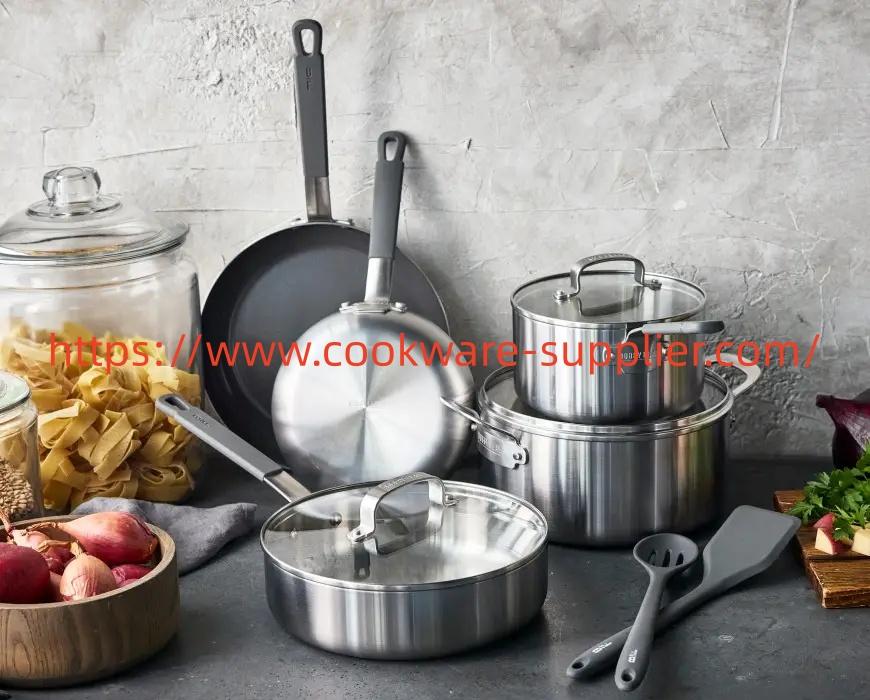
Iron Pots And Pans are a product category that importers, wholesalers, retailers, and private-label businesses may consider when expanding their kitchenware collections. Choosing suitable products requires more than comparing photographs or quotations. Buyers should examine the body structure, surface finish, product weight, handle construction, cleaning requirements, and packaging arrangements. A detailed purchasing checklist can help businesses evaluate samples and determine whether product specifications match their intended market.
Identify the Right Product Styles
Start by considering the cooking habits of your target customers. Different product shapes serve different purposes. Shallow frying designs, deep casserole models, grill surfaces, and covered cooking vessels each have distinct applications.
A compact model may suit smaller households, while a larger capacity can accommodate family meals. Retailers should consider which sizes and designs are relevant to their customer groups before developing a collection.
Ask the manufacturer for product drawings, dimensions, and capacity information. These details make it easier to compare models and prepare accurate descriptions for catalogs or online stores.
Examine Surface Treatment Options
Surface treatment affects appearance, maintenance, and product positioning. Two common options are bare seasoned surfaces and enamel finishes.
A seasoned surface generally uses an oil-based treatment that is heated onto the cooking area. Buyers should ask whether the product arrives pre-seasoned, how the finish is applied, and which care instructions are supplied.
Enamel finishes provide different colors and surface appearances. They can help retailers create coordinated collections for various kitchen styles. During sample inspection, look for uneven coverage, visible chips, bubbles, pinholes, or irregular edges.
Ask the manufacturer about the finishing process plus available inspection records. Buyers should also confirm applicable food-contact documentation for the specific model and destination market.
Compare Weight, Dimensions, and Capacity
Weight is a practical factor in product selection. It affects handling, shipping costs, carton planning, and the customer experience.
Request the actual weight of each model rather than relying on photographs. Check the body diameter, wall height, base dimensions, and usable capacity. These details help retailers prepare accurate product information while comparing different configurations.
If the planned collection includes several sizes, create a specification sheet for each item. Recording measurements plus weight can support sample approval, production checks, and future repeat orders.
Inspect Handles and Lid Construction
Handles, knobs, and lids deserve individual attention during sample evaluation. Check the handle material, grip shape, attachment points, and positioning. The design should provide practical handling under the intended conditions.
For models with two side handles, examine whether both components are securely attached and consistently positioned. For products with a long handle, assess balance and grip comfort.
Lids should fit their corresponding bodies properly. Inspect the rim, lid shape, knob attachment, and overall finish. If several designs are available, request clear component specifications to avoid confusion when ordering replacement parts or matching accessories.
Review Cleaning and Storage Requirements
Maintenance information is important because customers need practical instructions after purchase.
Bare seasoned surfaces generally require prompt drying after washing. A light application of cooking oil may help maintain the protective layer. Extended exposure to moisture can contribute to rust, while aggressive cleaning may affect the surface treatment.
Enamel-coated products have different care requirements. Buyers should ask about suitable cleaning tools, temperature limitations, and handling precautions. Sudden temperature changes or strong impacts may damage certain finishes.
Manufacturers should provide care instructions that can be included in product packaging or online listings. Clear guidance helps customers maintain their purchases during regular use.
Ask About Quality Inspection
Before confirming a bulk order, buyers should understand how products are inspected during manufacturing. Relevant checks may cover body dimensions, surface appearance, coating condition, handle attachment, lid fitting, and final packaging.
Request information about inspection frequency plus acceptable quality standards. An approved sample can serve as a reference for checking the finished order.
Importers should also confirm which documents are required in their destination market. Depending on the product and local regulations, this may include material information, food-contact test reports, labeling details, or other supporting records.
Make sure the documents relate to the actual product configuration being purchased rather than a different model.
Plan Packaging and Shipping Arrangements
Packaging is particularly relevant for products with considerable weight. Buyers should discuss protective inserts, individual boxes, export cartons, carton dimensions, and stacking arrangements.
For private-label orders, confirm logo placement, product descriptions, barcode information, and packaging language before approving the artwork. If several models are included in one shipment, request a packing list that identifies the quantity plus specifications of each item.
It is also useful to agree on how shipping damage or packaging issues will be recorded and reported.
Clarify Customization and Wholesale Terms
Before production begins, discuss minimum order quantities, sample costs, available colors, product sizes, logo options, production schedules, and payment arrangements.
Customization requirements should be recorded in writing. If a buyer requests changes to the body shape, surface finish, handle design, or packaging, the manufacturer should confirm whether additional development time or tooling costs are involved.For businesses comparing kitchenware sourcing options, cookware-supplier provides a starting point for reviewing available products and discussing wholesale requirements. Visit https://www.cookware-supplier.com/product/ to view the product range and contact the company about specifications, customization possibilities, samples, and order arrangements. Providing clear requirements before production can help both parties coordinate product selection, inspection expectations, and delivery planning.

 Arabic
 French
 Spanish
 Portuguese
 Deutsch
 Turkish
 Dutch
 Italiano
 Russian
 Romaian
 Portuguese (Brazil)
 Greek