


What Should a Mini Dumper Supplier Explain Before Ordering?
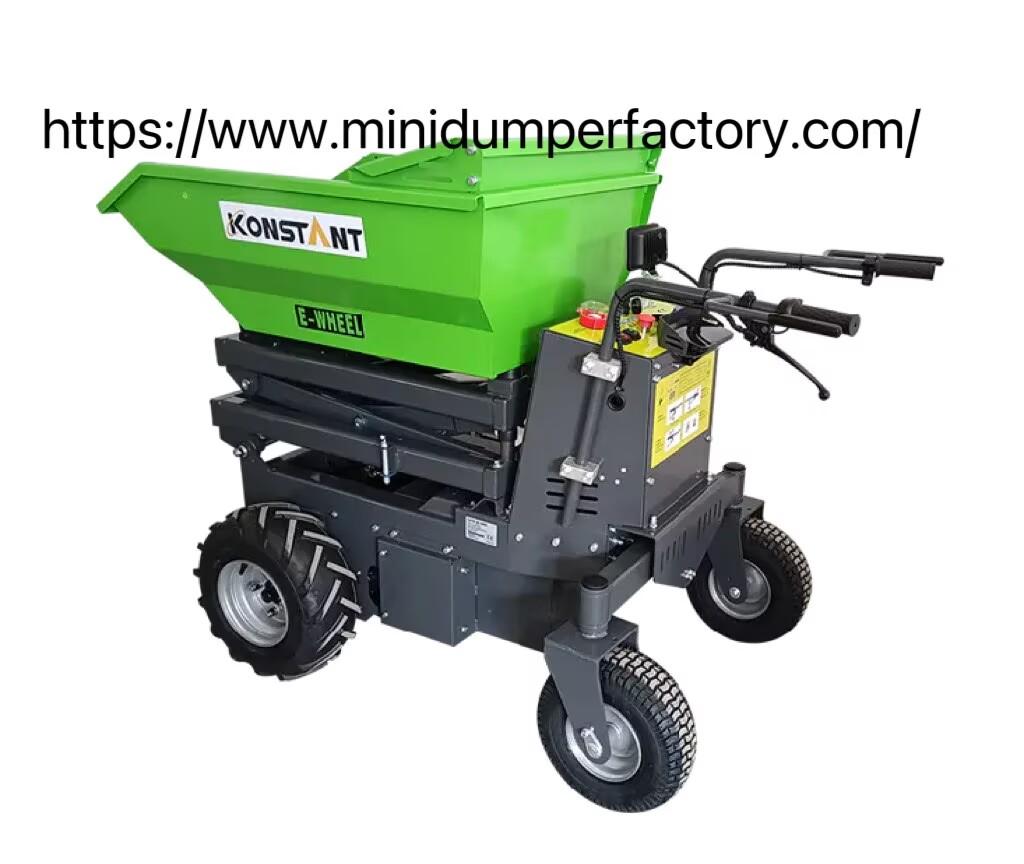
Mini Dumper Supplier selection involves more than requesting a product catalog and comparing quotations. For overseas importers, equipment distributors, construction contractors, and rental businesses, asking the right questions before ordering can help clarify product requirements and purchasing responsibilities. Buyers should discuss technical specifications, production arrangements, customization, inspection, packaging, and after-sales support. A detailed conversation gives both parties a shared understanding of the equipment and the commercial conditions involved in the transaction.
Which Model Matches Your Business Requirements?
Before requesting a quotation, explain how the equipment will be used. A construction contractor may need to transport gravel, sand, bricks, or building materials, while a landscaping company may handle soil, plants, and garden waste. Agricultural operators may have different requirements involving farm roads and field access.
Ask the manufacturer which models correspond with your intended applications. You should provide information about the working surface, access width, travel distance, expected workload, and unloading location.
It is also useful to request a product catalog containing model numbers, photographs, dimensions, and technical specifications. This makes it easier to compare available configurations and identify models worth evaluating further.
What Technical Specifications Should Be Confirmed?
A product name alone does not provide enough information for a purchasing decision. Buyers should request a detailed specification sheet covering the machine structure and operating parameters.
Important questions include:
What is the rated payload?
What are the overall dimensions and operating weight?
Which engine or motor configurations are available?
What type of drive system is used?
What are the hopper dimensions and unloading arrangements?
Which ground conditions are suitable for operation?
What are the recommended maintenance intervals?
Payload and hopper volume should be considered separately. The volume indicates available loading space, while the permitted payload refers to the specified carrying weight. Material density can affect how much a container can safely carry.
Make sure the agreed technical information is recorded in the quotation or order confirmation.
Which Customization Options Are Available?
Importers and distributors may need equipment that corresponds with their local market requirements. Customization requests can involve body color, logo placement, nameplates, packaging artwork, operating manuals, or selected accessories.
Ask which modifications are available and whether they influence the unit price, minimum order quantity, or production schedule. If you have a private-label requirement, prepare the logo files, color references, and packaging instructions before production begins.
You should also ask whether customized configurations require technical review. Changes to dimensions or components may affect other parts of the machine, so written confirmation is important.
An approved drawing, specification sheet, or sample can provide a reference for both parties during production.
How Does the Factory Manage Production and Inspection?
Understanding the production process helps buyers establish realistic expectations for an order. Ask about component sourcing, assembly arrangements, production scheduling, and the inspection procedures used for completed equipment.
Depending on the model, inspection items may include:
Engine starting and operating condition
Hydraulic system response
Tipping function
Track or tire installation
Control operation
Visible welding and assembly condition
Accessories and included components
Product identification and labeling
For larger orders, buyers can prepare an inspection checklist and agree on the acceptance requirements before manufacturing. Photographs, videos, or inspection records may also be requested when an overseas visit is not practical.
At minidumperfactory, buyers can discuss product configurations and inspection requirements in advance so that the requested specifications are clearly communicated during order preparation.
What Should Buyers Know About Spare Parts and Warranty?
Equipment procurement should include arrangements for maintenance after delivery. Ask which components require periodic replacement, whether spare parts diagrams are available, and how replacement items can be ordered.
It is also important to clarify warranty conditions. Buyers should review the coverage period, applicable conditions, claim procedure, and responsibilities for replacement components or service expenses.
For distributors, access to technical documentation can help when supporting customers after a sale. Operating manuals, maintenance instructions, component identification information, and service guidance are useful materials to request before shipment.
If your business plans to purchase multiple units, discuss whether commonly required replacement parts can be included in the order.
Which Commercial and Shipping Details Need Confirmation?
A quotation should clearly describe the selected model, quantity, unit price, optional accessories, customization charges, payment arrangements, and estimated production schedule.
International buyers should also ask about packaging dimensions, gross weight, loading arrangements, shipping methods, and export documentation. The responsibilities of each party should be clarified according to the agreed delivery terms.
Before making payment, review the order documents carefully. Check that the product configuration, quantities, packaging requirements, and delivery arrangements match the purchasing agreement.
If your destination market has specific import or documentation requirements, communicate them before production rather than waiting until the shipment is ready.
How Can Buyers Prepare a More Effective Inquiry?
A clear inquiry can save time during communication with a manufacturer. Instead of sending only a product photograph or asking for a general price, prepare a short purchasing brief containing the following information:
Intended application and material type
Expected carrying weight
Working environment and access conditions
Preferred machine configuration
Required quantity
Customization and packaging requests
Destination country and delivery expectations
Spare parts and technical support requirements
These details help the manufacturer understand the project and respond with more relevant product information.For overseas importers, wholesalers, and equipment distributors, choosing a manufacturing partner involves evaluating both the equipment and the purchasing arrangements. minidumperfactory provides product information for buyers reviewing compact material transport equipment for construction, agriculture, landscaping, and related applications. To review available models, compare configurations, and prepare a direct purchasing inquiry, visit https://www.minidumperfactory.com/product/ and share your project requirements with the company.

 English
 Arabic
 French
 Spanish
 Portuguese
 Turkish
 Dutch
 Italiano
 Russian
 Romaian
 Portuguese (Brazil)
 Greek