


Manufacturing Precision in Industrial Sealing Systems
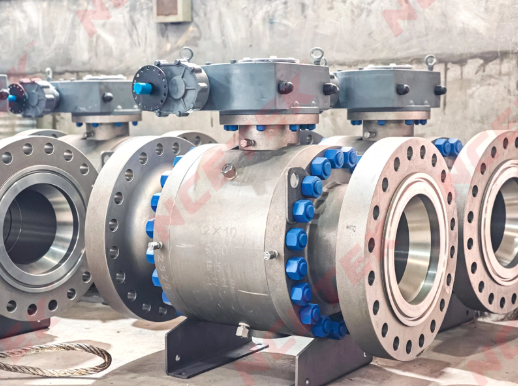
Industrial pipeline systems sometimes operate under conditions that place considerable demands on valve sealing components. High temperatures, abrasive particles, frequent operating cycles, and certain aggressive media can make conventional soft seating materials unsuitable for particular applications. A Metal Seat Ball Valve Factory must therefore understand the relationship between material properties, contact geometry, surface finishing, and operating conditions when producing valves for demanding services.
A metal-seated ball valve uses metallic contact surfaces between the ball and the seat assembly to control fluid passage. Unlike conventional soft-seated arrangements, which rely on polymeric or other nonmetallic sealing materials, metal-seated designs use engineered metal interfaces. This construction can be considered for applications where temperature, wear, or process conditions exceed the practical limitations of certain soft seat materials.
The ball is the main closure component. It contains a passage that aligns with the pipeline when the valve is open and rotates away from the flow direction when the valve is closed. The seating components establish contact with the ball surface and contribute to shutoff performance. Depending on the design, seats may be supported by springs or other loading arrangements intended to maintain appropriate contact during operation.
The exact seat structure varies between products. Some designs use floating seats, while others incorporate different mechanical arrangements depending on the valve construction and pressure conditions. Engineers must understand how the seat assembly responds to fluid pressure, temperature changes, and ball movement. A design suitable for one pressure class or application should not automatically be assumed appropriate for another.
Material selection is particularly important because the sealing surfaces experience repeated mechanical contact. The body may be produced from carbon steel, stainless steel, or alloy steel according to pressure, temperature, and corrosion requirements. The ball and seat materials may require additional attention to hardness, wear resistance, corrosion behavior, and dimensional stability.
Surface engineering can improve the performance of metallic sealing interfaces. Depending on the design, suitable surface hardening or coating processes may be applied to selected contact areas. The objective is to establish an appropriate combination of surface hardness, wear resistance, and contact characteristics. Commonly considered processes may include specialized hardfacing or other surface treatment methods, but the specific process must be compatible with the base material and service conditions.
Machining accuracy directly influences sealing behavior. The ball's spherical geometry, surface finish, and dimensional consistency affect how it contacts the seats. Similarly, seat flatness, concentricity, and alignment must meet the design requirements. If the contact surfaces are improperly finished or assembled, localized stress may occur, potentially increasing operating torque or affecting leakage performance.
The manufacturing process generally includes material preparation, casting or forging where applicable, rough machining, finishing operations, component inspection, and final assembly. Heat treatment or surface treatment may be incorporated according to the material specification and product design. Manufacturing records and inspection procedures help maintain consistency between individual components and production batches.
Metal seating does not automatically mean that a valve provides zero leakage. Leakage performance depends on the contact geometry, manufacturing accuracy, surface treatment, pressure conditions, and applicable acceptance criteria. Some metal-seated products are designed for controlled leakage levels rather than the same shutoff performance expected from particular soft-seated configurations. Buyers should therefore specify the required leakage class and relevant testing standard before placing an order.
Operating torque is another important consideration. Metal-to-metal contact can produce different friction characteristics from soft seating materials. Pressure loading, seat preload, surface finish, lubrication arrangements where permitted, and operating frequency may all influence the required torque. Actuator selection should be based on the manufacturer's actual torque data under the specified service conditions rather than general assumptions.
The transported medium must also be considered. Abrasive particles can accelerate wear at the contact surfaces, while corrosive fluids may affect the chemical stability of the selected materials. High-temperature service can influence thermal expansion and component clearances. Engineers should evaluate these factors together to determine whether a metal-seated arrangement is appropriate for the process.
Typical applications may include selected oil and gas operations, petrochemical processing, power generation, high-temperature industrial pipelines, and systems handling fluids containing solid particles. However, the suitability of a particular design depends on the actual operating environment. Highly corrosive fluids, severe erosion, or special process requirements may require additional material and structural considerations.
Inspection procedures should cover both component quality and completed valve performance. Material verification confirms that specified materials have been used. Dimensional inspection evaluates the ball, seats, body interfaces, and other critical features. Surface condition checks help identify machining or treatment defects. Depending on the applicable standard and customer requirements, shell testing, seat leakage testing, and operational testing may also be required.
Maintenance planning should take account of the metallic seating structure. Inspection intervals depend on operating conditions, fluid characteristics, cycle frequency, and observed wear. Where maintenance is permitted by the design, replaceable seat components may help simplify servicing. Buyers should request sectional drawings, maintenance instructions, and recommended spare parts to support long-term equipment management.
Zhejiang Naishi Valve Co., Ltd., under the NCETEK and Naishi Valve brands, supplies industrial valve products for different pipeline applications. Selecting a Metal Seat Ball Valve Factory involves evaluating material control, surface treatment capability, machining accuracy, and testing arrangements. These factors help buyers determine whether the proposed product matches their process conditions and operational expectations. Additional product information is available at https://www.ncevalve.com/product/.

 English
 Arabic
 French
 Portuguese
 Deutsch
 Turkish
 Dutch
 Italiano
 Russian
 Romaian
 Portuguese (Brazil)
 Greek