


Industrial Pumping Equipment for Long Term Operation
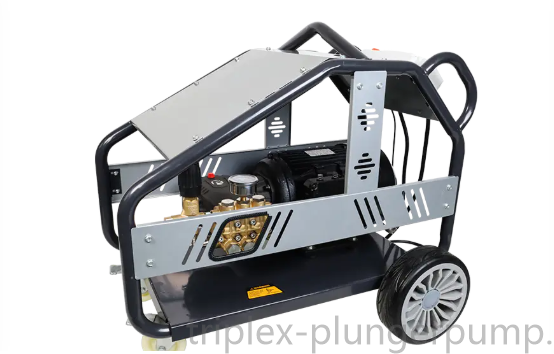
Reciprocating pumping equipment is used in industrial environments where liquid must be moved through a controlled mechanical process. A Piston Pump operates through the movement of a piston inside a cylinder, creating alternating suction and discharge strokes that move liquid through the pumping chamber. This operating principle makes the equipment relevant to applications requiring controlled liquid delivery, pressure generation, and integration with industrial machinery. For equipment manufacturers, distributors, and purchasing professionals, understanding the structure and operating characteristics is essential when evaluating a suitable pumping solution.
The basic operating cycle begins when a drive mechanism moves the piston away from the pumping chamber. This movement increases the available chamber volume and reduces internal pressure, allowing the inlet valve to open. Liquid then enters through the suction passage. When the piston moves in the opposite direction, the chamber volume decreases, the inlet valve closes, and the liquid is pushed through the discharge valve. Repeated cycles create a continuous pumping process, although the actual discharge may contain pulsations depending on the design and operating speed.
The mechanical drive system is responsible for transferring energy into piston movement. Depending on the equipment configuration, this may involve a crankshaft, connecting rod, eccentric mechanism, or another mechanical arrangement. Bearings and supporting components maintain the alignment of moving parts and help control friction during operation. Proper lubrication is important because insufficient lubrication can increase wear, generate excess heat, and shorten the service life of mechanical components.
The cylinder and piston assembly directly influences pumping performance. The dimensions, surface condition, sealing arrangement, and material properties must be appropriate for the intended operating environment. Seals prevent unwanted liquid leakage and help maintain the pressure difference required for the pumping cycle. If sealing components become worn or damaged, the equipment may experience reduced efficiency, unstable delivery, or external leakage. Regular inspection helps identify these issues before they develop into more serious operational problems.
Material selection should reflect the characteristics of the pumped liquid. Corrosion resistance, abrasion resistance, temperature compatibility, and mechanical strength are important factors. Stainless steel may be considered in applications where resistance to certain corrosive environments is required, while other metals or engineered materials may be suitable for different conditions. No material should be assumed compatible with every chemical or liquid. Buyers should provide accurate information about the medium, including its concentration, temperature, viscosity, and possible contaminants.
Different industrial applications place different demands on pumping equipment. Manufacturing facilities may use reciprocating systems for liquid transfer, process circulation, or equipment servicing. Cleaning equipment can use suitable pumping configurations to supply water to washing systems and specialized accessories. In automotive maintenance, pumping systems may be incorporated into vehicle washing and workshop cleaning equipment. Other industrial applications can include controlled fluid delivery in machinery maintenance and production processes.
Pressure and flow requirements should be assessed together. The required pressure depends on the resistance within the connected piping, valves, nozzles, and process equipment. Flow requirements depend on the quantity of liquid needed by the application and the available operating time. A system designed around excessive pressure without sufficient flow may not meet the intended process requirements. Similarly, a high flow demand can place additional mechanical and power requirements on the drive system. Selecting the equipment therefore requires an understanding of the entire hydraulic circuit.
Inlet conditions are another important consideration. The suction line should be appropriately sized, free from unnecessary restrictions, and designed to prevent air from entering the system. Poor inlet conditions may result in irregular operation, cavitation, noise, and increased wear. Suitable filtration can help prevent particles from damaging internal surfaces or interfering with valve operation. The filtration arrangement must be selected carefully so that it protects the equipment without restricting the liquid supply.
Discharge arrangements also require careful planning. Pipes, hoses, valves, and connectors must be compatible with the intended pressure and liquid. Where pulsating discharge affects connected machinery, an appropriately selected dampening device may improve flow stability. Pressure regulation and protective relief devices should be incorporated where required by the system design. These components help prevent operating conditions from exceeding the limits established for the equipment.
Routine maintenance should follow the manufacturer's recommendations and reflect the actual working environment. Inspection activities may include checking piston seals, cylinder surfaces, valve assemblies, bearings, lubrication condition, and external connections. Operators should monitor changes in vibration, temperature, leakage, and discharge behavior. Any unusual condition should be investigated before normal operation continues. Maintenance must only begin after the drive has been isolated, the system has been depressurized, and appropriate safety procedures have been followed.
Procurement teams should also evaluate installation space, drive compatibility, operating frequency, liquid properties, spare parts availability, and service accessibility. These factors can influence the total cost of ownership as much as the initial equipment price. A well-planned installation makes inspection and component replacement easier while helping reduce unnecessary downtime. Technical documentation and clear communication with the equipment supplier are valuable during specification and commissioning.
A Piston Pump can support industrial operations when its mechanical design, sealing system, materials, and drive arrangement are matched to the application. Proper installation and preventive maintenance help maintain dependable operation throughout its service life. Businesses evaluating pumping equipment for industrial liquid handling, cleaning, and maintenance can explore the available product range at https://www.triplex-plungerpump.com/product/pumps/ and discuss the requirements of their intended system.

 English
 Arabic
 French
 Spanish
 Portuguese
 Deutsch
 Dutch
 Italiano
 Russian
 Romaian
 Portuguese (Brazil)
 Greek