


Understanding Modern Axial Cooling Technology
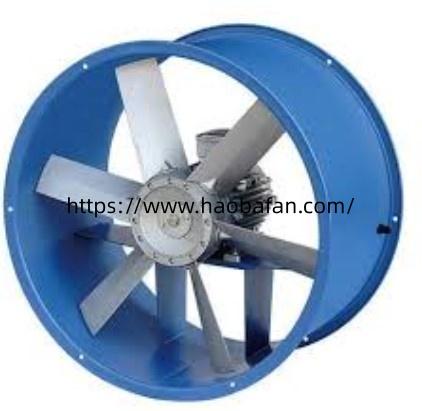
Efficient air movement is an important requirement in industrial machinery, electrical equipment, and commercial ventilation systems. In applications where space and direct airflow are important considerations, an External Rotor Axial Fan combines an integrated motor structure with an axial airflow arrangement. This configuration allows air to move primarily parallel to the rotating shaft while keeping the motor and impeller assembly relatively compact.
The motor is based on an external rotor arrangement, in which the rotor surrounds the stationary winding assembly. When electrical power is supplied, the stator creates a rotating magnetic field that drives the rotor. The impeller is commonly integrated with or mounted onto the rotating structure, allowing the motor to drive the fan directly. This arrangement can reduce the need for separate transmission components and provide a practical solution for equipment with limited installation space.
The axial airflow principle is based on the movement of air through rotating blades. As the impeller turns, the blade surfaces transfer energy to the surrounding air and create a pressure difference that produces airflow. The direction of movement is generally parallel to the shaft. This makes axial designs particularly relevant to applications that require air to pass through equipment openings, ventilation panels, heat exchangers, or relatively direct airflow passages.
Blade geometry strongly influences operating characteristics. Blade angle, curvature, diameter, and material affect airflow distribution, pressure development, and mechanical loading. A suitable blade design must balance air movement requirements with noise, energy consumption, and structural stability. The impeller also needs to maintain appropriate mechanical balance because uneven mass distribution can contribute to vibration during operation.
The external rotor motor has several structural considerations. Its rotor, stator, bearings, insulation, and supporting components must work together to provide stable rotation. Bearing selection is especially important because bearings support the rotating assembly and influence smooth operation. Electrical insulation and motor protection should be appropriate for the expected temperature, humidity, and installation conditions. The specific construction varies according to product design and intended application.
Material selection affects both performance and durability. Steel components may be used where mechanical strength and structural rigidity are required. Aluminum can help reduce component weight and may offer useful corrosion characteristics in suitable environments. Engineered plastics may also be considered for selected impeller designs. The final choice depends on rotational forces, operating temperature, chemical exposure, and the conditions in which the equipment will be installed.
Industrial machinery often requires continuous or intermittent cooling to maintain suitable operating conditions. Electrical cabinets, control panels, power equipment, and manufacturing machines may generate heat during normal operation. Axial ventilation equipment can help move warm air away from sensitive components and support the circulation of cooler surrounding air. Proper ventilation design is important because insufficient heat removal can affect the stability and service life of electrical and mechanical equipment.
Heat exchangers and refrigeration equipment also use axial fans to move air across heat transfer surfaces. In these systems, the fan helps maintain airflow through condensers, evaporators, and cooling assemblies. The actual cooling result depends on the complete system, including heat exchanger design, ambient conditions, refrigerant circuit, and airflow distribution. Fan selection must therefore be coordinated with the requirements of the equipment in which it operates.
Commercial ventilation is another major application area. Offices, retail facilities, workshops, and service buildings may use axial equipment for air circulation, exhaust ventilation, or cooling support. Its suitability depends on the resistance of the airflow path. Open installations and short air passages may have different requirements from systems involving long ducts, filters, or multiple restrictions.
When selecting equipment, buyers should first establish the intended function. Supply ventilation, exhaust ventilation, machinery cooling, and heat exchanger applications may require different airflow arrangements. The required airflow should be assessed together with system resistance, available installation space, and operating conditions. Electrical compatibility, control requirements, and expected duty cycle should also be reviewed before procurement.
Installation quality has a significant influence on the operating condition of the fan. Adequate inlet and outlet clearance allows air to enter and leave the equipment without unnecessary obstruction. The mounting structure should provide sufficient support, while protective guards may be needed to prevent accidental contact with rotating blades. Correct electrical connections and suitable environmental protection are equally important.
Noise and vibration should be considered during system planning. Turbulent airflow, unbalanced impellers, loose fasteners, and unsuitable mounting arrangements can all contribute to unwanted sound. Regular inspection helps identify changes in operating conditions before they develop into more serious problems. Maintenance should include checking the impeller, motor assembly, bearings, mounting hardware, and electrical connections according to the equipment's service requirements.
Industrial buyers should also consider the availability of product information and technical communication when evaluating suppliers. Clear discussions about application conditions, installation dimensions, airflow direction, and electrical requirements help identify suitable equipment. A properly selected External Rotor Axial Fan can support compact cooling and ventilation arrangements across different industrial and commercial environments. Taizhou Haoba Electromechanical Co Ltd. offers ventilation equipment for various air movement applications, with further product information available at https://www.haobafan.com/product/mixed-flow-fan/.

 English
 Arabic
 French
 Spanish
 Portuguese
 Deutsch
 Turkish
 Italiano
 Russian
 Romaian
 Portuguese (Brazil)
 Greek