


What Should Buyers Check Before Ordering from kingschains?
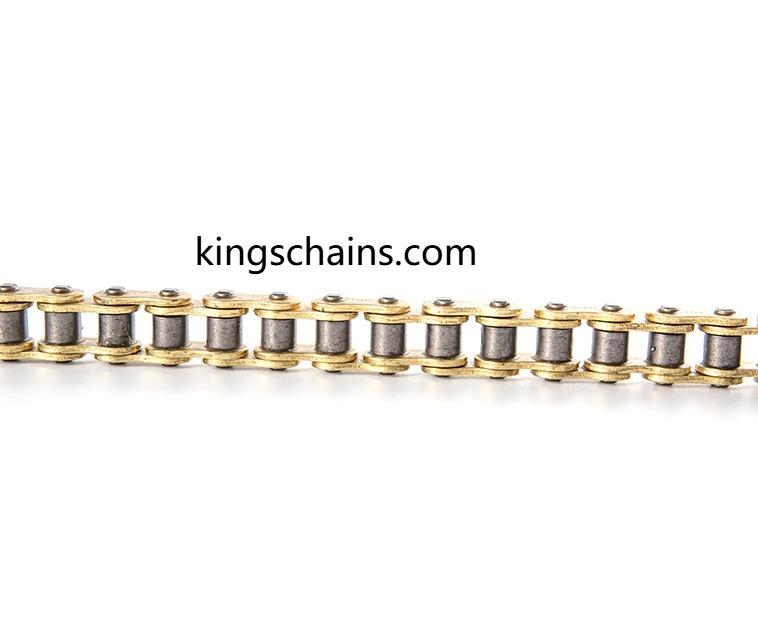
Motorcycle Transmission Chain orders require careful preparation, especially for wholesalers, distributors, repair networks, and aftermarket parts suppliers handling different vehicle applications. Before confirming a purchase, buyers should collect accurate vehicle information, review product specifications, and discuss manufacturing details with the supplier. A clear purchasing process helps reduce specification misunderstandings and makes communication between both parties more efficient.
Confirm the Intended Vehicle Application
The purchasing process should begin with the vehicle rather than the quotation. Similar vehicle models may use different component specifications depending on their engine size, production year, market version, or original configuration. Buyers should provide the vehicle make, model, year, and available engine information when requesting a quotation.
If the order covers several vehicle types, list each application separately. This makes it easier for the supplier to review the requirements and identify differences between product versions. Existing component references, catalogue numbers, and clear photographs can also help with identification.
For distributors managing a large catalogue, keeping application records is useful for future purchasing. It allows staff to compare new enquiries with previous orders instead of relying on incomplete descriptions or memory.
Review Dimensions and Link Quantity
Dimensions should be confirmed before discussing large order quantities. Buyers need to check the pitch, inner width, roller dimensions, and total link count according to the intended application. A size marking can provide useful identification information, but it should not replace a complete specification review.
The number of links also deserves attention. A product with the correct basic dimensions may still require a different length depending on the vehicle configuration and sprocket arrangement. If the existing component has been modified, buyers should communicate those changes rather than assume the original factory specification still applies.
When the original marking is difficult to read, photographs and measured samples may help the supplier understand the request. Buyers should identify any uncertain measurements clearly and ask for written confirmation before production.
Understand the Non-Sealed Construction
A non-sealed design does not use rubber sealing rings between the internal components. This construction may suit certain small-displacement vehicles, cost-conscious replacement markets, and applications where regular inspection and lubrication are part of routine maintenance.
Buyers should consider how the product will be used rather than selecting it based on purchase price alone. Riding conditions, operating frequency, maintenance habits, and local customer expectations can all influence product selection.
It is also useful to ask about the construction details, including plates, pins, rollers, and bushings. These components work together during operation, so buyers should understand the available material options and manufacturing specifications before confirming an order.
Ask About Materials and Manufacturing Processes
Material selection affects how components respond to repeated movement, contact, and operating loads. Buyers can ask the manufacturer which steel materials are available for the required product range and whether different specifications can be discussed for particular market needs.
Manufacturing communication should cover more than a general statement about production capability. Ask how dimensional consistency is checked, how components are assembled, and what inspection steps are included during production. If a specific material grade, hardness requirement, or surface treatment is necessary, include it in the purchase specification.
For larger orders, buyers may also request relevant inspection records or sample information before approving the production arrangement. These details help both parties establish a clear reference for the order and reduce uncertainty during later discussions.
Check Connecting Links and Packaging Details
Connecting components should be identified as part of the order instead of treated as an afterthought. Buyers should confirm the required connection type and whether the relevant joining components are included. Compatibility should be checked against the specific product model, since components from different versions should not automatically be considered interchangeable.
Packaging also matters for wholesale distribution. Discuss individual packaging, bulk cartons, product labels, quantity per package, and any barcode or private-label requirements before production begins. If the goods will be distributed across several markets, confirm whether packaging information needs to follow different language or labelling arrangements.
Clear packaging instructions help warehouse staff identify products, manage inventory, and prepare goods for resale. They also make it easier to check received quantities against the purchase documents.
Compare Quotations Beyond Unit Price
A quotation should explain what the buyer will actually receive. Compare product specifications, included components, order quantity, packaging, sample arrangements, production schedule, and shipping terms. Two quotations with similar prices may describe different product configurations, so reviewing the details line by line is important.
Buyers should also confirm the minimum order quantity and whether different specifications can be combined within one purchase. For repeat orders, discuss how product references and approved specifications will be recorded. Keeping these details consistent can simplify future purchasing and inventory planning.
At kingschains, international buyers can communicate their application details, requested specifications, and order quantities before discussing suitable supply arrangements. This creates a clearer basis for quotation and production coordination.
Prepare a Clear Purchase Specification
Before sending the final order, organize the information into a written checklist. Include the vehicle application, size code, dimensions, link quantity, construction requirements, connecting components, material expectations, packaging instructions, destination market, and requested delivery schedule.
Attach available drawings, photographs, or samples where necessary. Ask the supplier to confirm any details that remain uncertain, and keep the approved specification with the purchase record. This document can also support quality discussions when the next batch is ordered.For wholesalers and distributors planning regular inventory purchases, a well-prepared specification makes supplier communication more organized. Buyers interested in non-sealed product options can review the range and contact kingschains through https://www.kingschains.com/ to discuss product details, order requirements, and potential cooperation.

 English
 Arabic
 French
 Spanish
 Portuguese
 Deutsch
 Turkish
 Italiano
 Russian
 Romaian
 Portuguese (Brazil)
 Greek