


How Internal Gears Work Together in Motor Systems
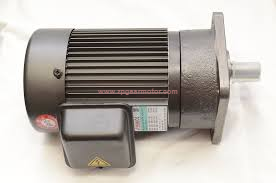
On a factory floor, you can often recognize a well-matched motor system by watching the machinery rather than reading its specification label. A conveyor moves steadily, an automated mechanism stops at its intended position, and the familiar low hum of rotating components continues in the background. Behind these movements is a Precision Gear Motor, where the motor and reduction mechanism work together to control mechanical output. But what actually happens inside this compact assembly to produce such controlled movement?
The basic operating principle starts with electrical energy being converted into rotational movement. When an alternating current reaches the motor windings, it creates a magnetic field that interacts with the rotor. This interaction produces rotation around the motor shaft. The rotational speed generated by the motor may not directly match the requirements of the connected machinery, which is where the gearbox becomes important. Instead of relying entirely on the motor's original speed, the transmission adjusts the relationship between rotational speed and output torque.
Inside the gearbox, several gears engage with one another to transfer mechanical energy. The driving gear receives rotation from the motor shaft and passes movement to another gear through contact between their teeth. Depending on the gear arrangement, the output shaft rotates at a different speed from the input shaft. This reduction process generally increases available output torque while lowering rotational speed, making the assembly suitable for equipment that requires controlled mechanical movement rather than unrestricted rotation.
Gear ratios are central to this process. They describe the relationship between the rotational speeds of the input and output sides of the transmission. A higher reduction ratio generally produces slower output rotation and greater torque multiplication, although actual output performance also depends on mechanical losses and the motor's operating characteristics. Selecting an appropriate ratio is therefore important when integrating a motor into machinery. The transmission needs to match the movement requirements of the driven equipment rather than simply providing the highest possible reduction.
Gear arrangements also influence how power travels through the assembly. Spur gears use straight teeth and are commonly found in relatively straightforward transmission designs. Helical gears have angled teeth that engage progressively, which can contribute to smoother contact during operation. Other gearbox configurations use different arrangements according to the required transmission characteristics and available installation space. Each design creates a particular relationship between the input shaft, internal gear stages, and output shaft.
Mechanical alignment is another important part of accurate transmission. Gear teeth need to engage correctly so that forces are distributed across their contact surfaces as intended. Excessive clearance, incorrect positioning, or inconsistent manufacturing tolerances can influence movement and create unwanted vibration. When I stand beside an operating machine, an irregular rattling sound from the drive section is often enough to make me pay closer attention to its transmission condition. Proper alignment helps the gears maintain predictable contact throughout repeated operating cycles.
The motor's electrical characteristics also determine how the complete assembly responds to operating conditions. Voltage, frequency, winding configuration, and the motor's design influence its rotational behavior. In applications requiring additional control, external motor controllers or compatible speed regulation systems may be used, depending on the equipment configuration. These arrangements allow the motor to operate within the requirements of the wider machine. It is important to distinguish between the motor's electrical control functions and the gearbox's mechanical speed reduction role.
Heat management and mechanical friction are closely connected to transmission efficiency. As gears rotate and their teeth make contact, some mechanical energy is converted into heat. Lubrication helps form a protective film between contacting surfaces, reducing friction and limiting unnecessary wear. Bearings support rotating shafts and help maintain their intended positions, while seals help retain lubricant and prevent unwanted contaminants from entering the gearbox. These supporting components contribute to stable operation and help preserve the accuracy of the transmission over time.
Output control becomes particularly relevant when a motor is connected to equipment that performs repeated movements. Packaging machinery, automated production lines, conveyors, and other mechanical systems may require consistent rotation at a specific output speed. The gearbox helps adapt the motor's rotation to these requirements, while the complete drive arrangement determines how movement is delivered to the machine. Correct matching between motor characteristics, transmission ratio, and application requirements helps avoid unnecessary operating strain.
Another detail worth understanding is the relationship between starting behavior and the connected load. When machinery begins moving, the motor must provide sufficient torque to overcome resistance and initiate rotation. A suitable reduction arrangement can help provide the mechanical advantage required by the application. However, the motor and gearbox must be selected as a compatible combination. Excessive loading, unsuitable operating conditions, or incorrect transmission selection can affect temperature, noise, and long-term mechanical performance.
For equipment manufacturers, understanding these internal functions makes supplier evaluation more meaningful. A dependable Precision Gear Motor should combine suitable motor characteristics with an accurately designed transmission, consistent gear engagement, and supporting components that maintain stable operation. Zhanpeng provides gear motor solutions for different industrial machinery requirements, helping buyers examine options according to their intended applications. To compare available configurations and product information, visit https://www.zpgearmotor.com/product/ and identify a suitable drive solution for your equipment.

 English
 Arabic
 French
 Spanish
 Portuguese
 Deutsch
 Turkish
 Italiano
 Russian
 Romaian
 Portuguese (Brazil)
 Greek