


Why Medical Billing Teams Should Track Payer Response Times
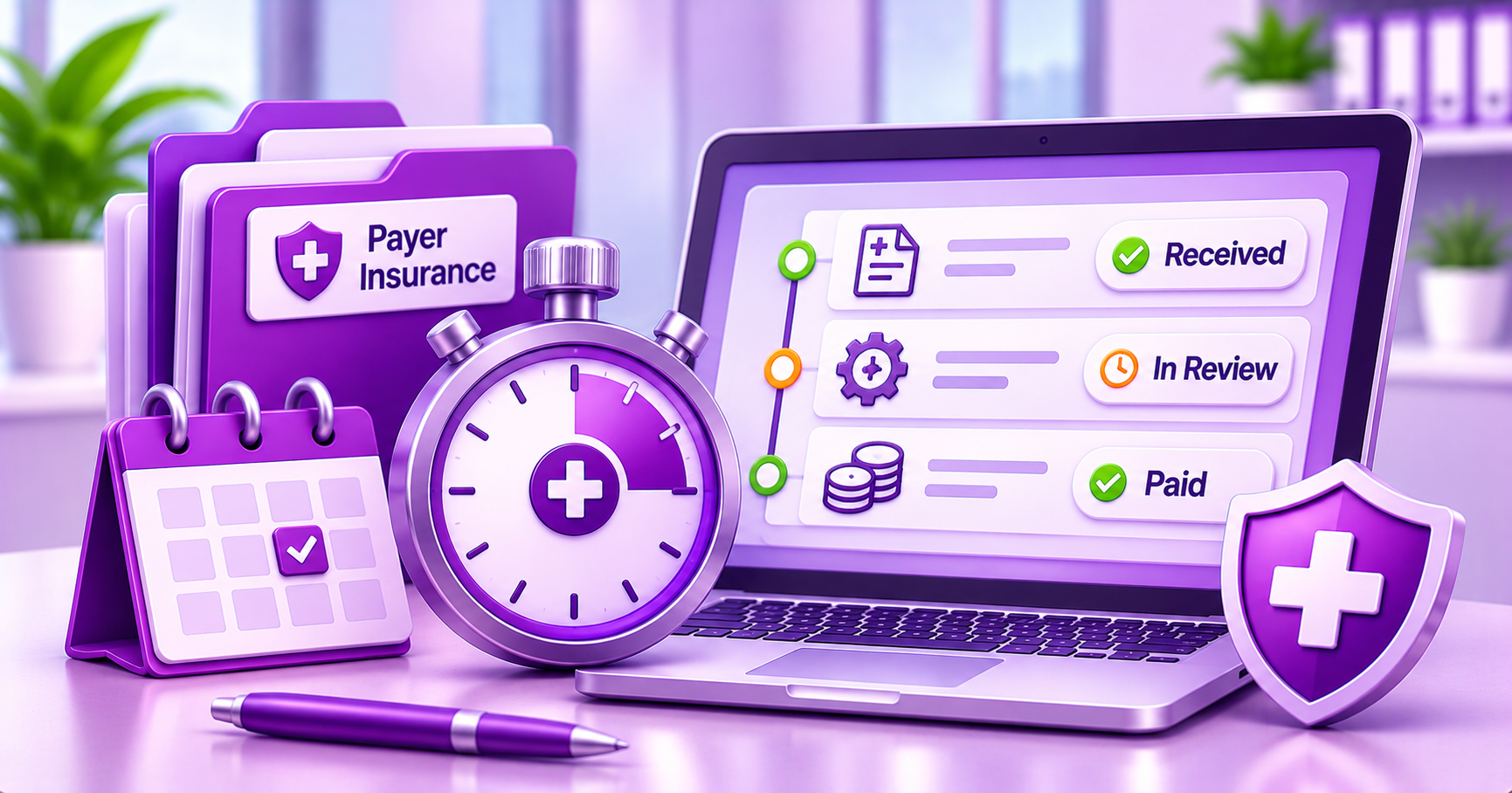
Payer response times affect when a billing team can resolve claim questions, obtain decisions, and prioritize outstanding balances. A single average cannot describe every interaction: initial claim processing, documentation review, provider inquiries, and appeals may follow different timelines. Measuring them separately helps practice managers see which delays come from the insurer and which come from internal handoffs. It also gives staff a reasonable basis for scheduling follow-up rather than calling too often or allowing accounts to sit untouched. The goal is a useful workflow measure, not a claim that every payer must respond within one universal deadline.
Define Which Payer Response Times Matter
Choose a start and end event for each measure. For an ordinary claim, the clock might run from payer acceptance to adjudication. For a documentation request, it might run from the payer's confirmed receipt of records to the next decision. For an inquiry, it may run from a case opening to a substantive answer. Mixing these events produces misleading comparisons.
Use business or calendar days consistently and document the method. A “response” should mean something useful; an automated acknowledgment may not answer the question. Create separate fields for first contact, meaningful response, final decision, and follow-up commitment. Staff can then tell whether the delay is from an unassigned question, additional review, or the next scheduled action.
For example, measure a records review from the documented date the payer received all requested records, not the date the practice first received the request. Those clocks answer different questions. Track the practice's preparation interval separately. Otherwise a delay in retrieving internal notes may be incorrectly presented as an insurer delay.
Collect Reliable Dates From Claim and Inquiry Records
Record dates from transaction acknowledgments, payer portals, correspondence, and documented contacts. Where systems import dates automatically, test a few records against the source. A portal status update may represent a new note, not a new adjudication event. Missing dates should be marked unknown instead of estimated.
Standardize a small contact log with claim number, issue type, inquiry date, expected response window, outcome, and reference number. If a call produces no answer, record that plainly. For practices that coordinate with revenue cycle management experts, consistent notes make it possible to compare internal and external follow-up activities without obscuring responsibility.
A practice that coordinates medical billing services with its internal staff should document who owns source-data corrections and payer follow-up.
A report with a small number of unusually old appeals should show their actual ages rather than hide them behind a single mean. A median, maximum age, and aging distribution offer useful context. The dashboard should also state how many cases were included, because five reviews cannot support the same conclusions as hundreds.
Compare Payer Response Times Fairly
Segregate results by payer, claim type, service complexity, and request category. A straightforward electronic claim and an appeal with substantial clinical records should not be placed in the same performance group. Use medians or aging bands alongside averages so a handful of unusually long cases do not dominate every result. Keep a record of claim volumes to avoid interpreting a small sample as a stable pattern.
Check applicable payer contracts and public program guidance before assuming a delay violates a requirement. The measured clock and the contractual or regulatory clock may not start at the same point. Report observed turnaround and required turnaround separately. This protects accuracy while giving managers enough detail to act.
When a payer provides a callback date, set a reminder for that date and preserve the representative's reference. A call made before the promised window ends may consume time without adding information. If the promise is missed, the reference gives the team a factual starting point for a more focused escalation.
Turn Timing Data Into Better Work Queues
A follow-up date should reflect the payer's stated review period, any required documents, and the account's deadline risks. When a payer is reviewing records, repeated daily calls may have little value. When a promised decision date passes, the case should rise in the queue with prior references attached. Build automatic reminders when the billing system allows it.
Create an exception view for cases with no status update, missed call-back dates, or processing beyond the documented window. Check whether the team itself took too long to answer a request before attributing the entire delay to the payer. Clear ownership reduces the risk that both payer and practice believe the other side is acting.
Some issues require practice action before the insurer can respond. Put those cases into a separate status, such as waiting for signed records, and stop counting the entire interval as active payer review. Record both the overall elapsed days and the segment spent with each party. This prevents a dashboard from blaming the wrong part of the workflow.
Use the Results for Targeted Process Improvements
A trend of slow replies to one issue may warrant a better escalation pathway. A rise in response time after an enrollment change could signal a provider data problem. A practice could also learn that its inquiries are vague, incomplete, or sent to the wrong department. Review a sample of cases before designing a broad fix.
Discuss response-time dashboards with staff as diagnostic information, not a reason to increase call counts indiscriminately. The useful question is whether the data helped resolve accounts with fewer wasted steps. Revisit definitions when a payer changes its portal workflow or when the practice starts tracking another inquiry type.
Use findings in conversations with payer representatives carefully. Say which claim categories and submission periods appear delayed, and offer traceable examples. Avoid stating that a payer is broadly noncompliant unless the applicable contractual or program rule has been verified. The evidence is most useful when it invites a specific operational answer.
Conclusion
Tracking payer response times helps billing teams set realistic follow-up schedules, recognize missed commitments, and investigate rising accounts receivable. It works only when start dates, end dates, and issue categories are defined consistently. Leaders should use the results to improve escalation, documentation, and internal handoffs, not to assume a universal response deadline. A precise view of payer response times gives the practice stronger operational evidence and helps staff spend time where it can change an account's status.
Frequently Asked Questions (FAQs)
What is a payer response time in medical billing?
It is the measured interval between a defined request or claim event and a defined payer response. The events must be named to make comparisons meaningful.
Is there one standard payer response deadline?
No. Timelines depend on the program, contract, claim type, and request. Check the rules that apply to each case.
What data should teams capture?
Capture claim references, event dates, issue types, meaningful responses, and promised follow-up dates. Avoid substituting guesses for missing timestamps.
How do timing reports help accounts receivable?
They help managers distinguish routine review periods from overdue cases. Teams can schedule interventions when an expected response has passed.

 English
 Arabic
 French
 Spanish
 Portuguese
 Deutsch
 Turkish
 Dutch
 Italiano
 Romaian
 Portuguese (Brazil)
 Greek