


ISO Certification in Dubai: A Complete Guide for UAE Businesses
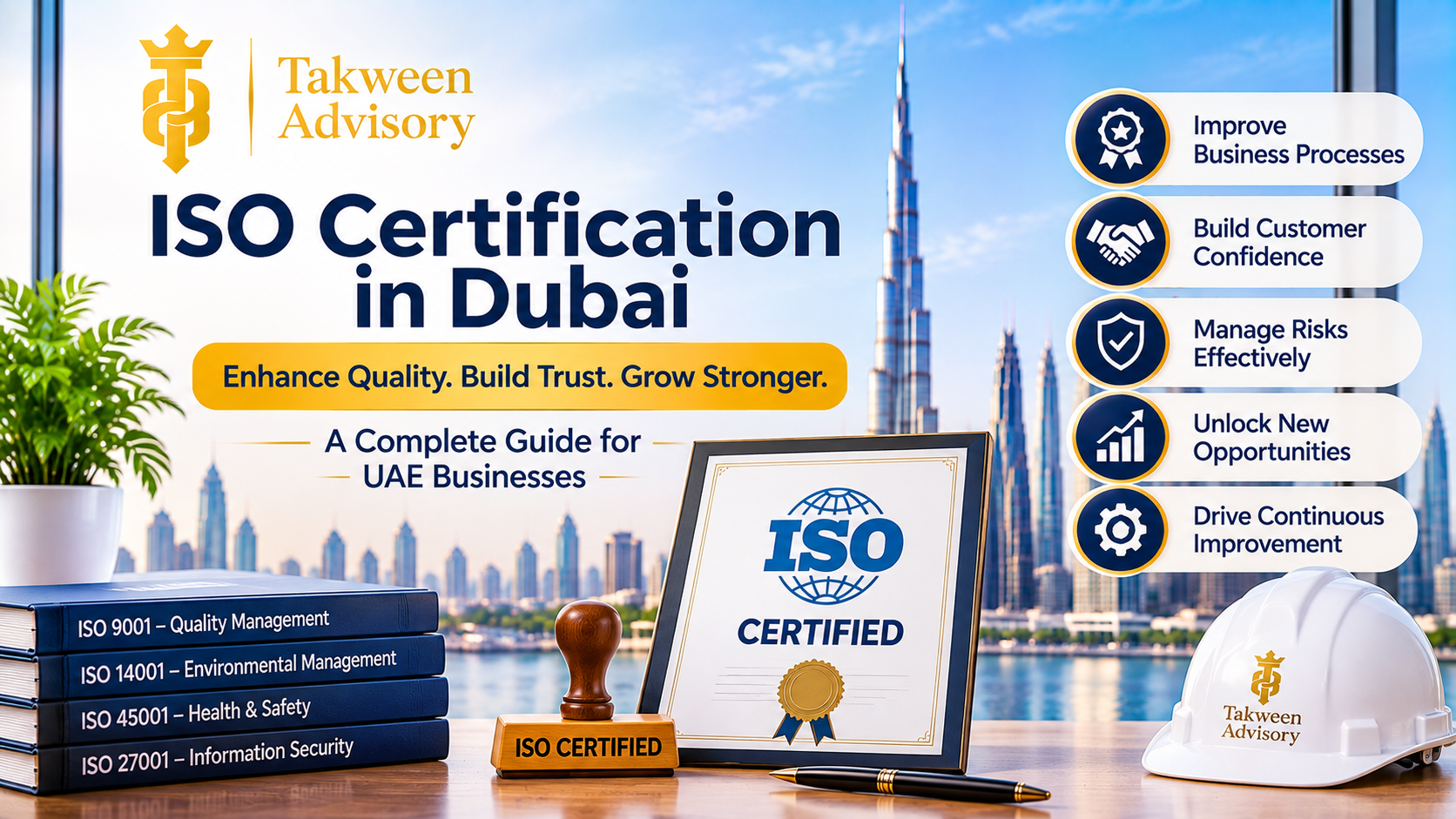
Businesses in Dubai operate in a competitive environment where quality, reliability, safety, and customer satisfaction are essential for sustainable growth. Organisations that want to improve their internal processes and strengthen their market reputation often consider internationally recognised management standards. One important way to demonstrate a commitment to structured business practices is through ISO Certification.
ISO standards provide frameworks that help organisations improve the way they manage quality, environmental responsibilities, information security, workplace safety, and other operational areas. For startups, SMEs, and established companies in the UAE, adopting relevant standards can support business development and strengthen customer confidence. Takween Advisory helps businesses understand certification requirements and organise the administrative considerations involved in their compliance journey.
What Is ISO Certification?
ISO Certification is independent confirmation that an organisation's management system meets the requirements of a specific International Organization for Standardization (ISO) standard.
The certification process generally involves reviewing documented procedures, evaluating operational practices, and conducting an independent audit through a qualified certification body.
ISO itself develops and publishes international standards but does not issue certificates. Certification is provided by independent certification bodies, and businesses should check that the selected body has appropriate accreditation for the relevant standard and scope.
Certification is voluntary in many situations, although customers, industry contracts, or regulatory requirements may make particular certifications commercially or operationally important.
Why Is ISO Certification Important for Businesses in Dubai?
Dubai attracts businesses from different sectors, including construction, manufacturing, healthcare, logistics, technology, professional services, and food industries. Organisations in these sectors may need to demonstrate consistent procedures and reliable management practices.
ISO Certification can offer several advantages.
1. Improved Business Processes
Implementing an ISO management system encourages businesses to define responsibilities, document procedures, monitor performance, and identify areas for improvement. This can help reduce operational inconsistencies and improve efficiency.
2. Greater Customer Confidence
Customers and business partners often prefer working with organisations that follow recognised management practices. Relevant certification can provide independent evidence that a company's management system has been assessed against an established standard.
3. Better Risk Management
ISO management systems encourage organisations to identify potential risks, establish controls, and review their effectiveness. This supports more organised decision-making and business continuity planning.
4. Stronger Business Opportunities
Some clients, procurement teams, and tender processes require suppliers to demonstrate specific certifications. Holding a relevant certificate may help businesses meet these qualification requirements and compete for suitable opportunities.
5. Continuous Improvement
ISO standards promote regular performance evaluation, internal audits, corrective actions, and management reviews. These activities encourage organisations to improve their systems over time.
Common Types of ISO Certification for UAE Businesses
The appropriate certification depends on the organisation's industry, business activities, customer expectations, and operational objectives.
ISO 9001 – Quality Management: ISO 9001 helps organisations establish systems for delivering consistent products and services, improving customer satisfaction, and managing quality processes. The current edition is ISO 9001:2026.
ISO 14001 – Environmental Management: This standard provides a framework for managing environmental responsibilities, identifying environmental impacts, and improving environmental performance.
ISO 45001 – Occupational Health and Safety: ISO 45001 helps organisations establish workplace health and safety management systems, identify hazards, and reduce occupational risks.
ISO 27001 – Information Security Management: This standard supports organisations in protecting information assets through structured security controls and risk management.
ISO 22000 – Food Safety Management: Businesses involved in food production, processing, storage, catering, and distribution may use ISO 22000 to manage food safety risks throughout their operations.
Selecting the correct standard is important because each one addresses a different management objective.
ISO Certification Process: Step-by-Step
Although the exact requirements vary by standard and certification body, the general certification journey follows several stages.
Step 1: Identify the Relevant ISO Standard
Begin by reviewing your business activities and objectives. Determine whether your organisation needs a quality, environmental, safety, information security, or food safety management system.
Step 2: Conduct a Gap Analysis
Evaluate existing business procedures against the selected standard. A gap analysis helps identify missing policies, incomplete records, operational weaknesses, and areas requiring improvement.
Step 3: Develop the Management System
Prepare the required policies, procedures, responsibilities, risk assessments, and operational controls. Employees should understand their roles and receive relevant training.
Step 4: Implement the Required Procedures
Put the documented management system into practice. Maintain records that demonstrate how processes are followed and how performance is monitored.
Step 5: Conduct an Internal Audit
Review the management system to identify nonconformities and opportunities for improvement. Address identified issues before the external certification audit.
Step 6: Complete the Certification Audit
An independent certification body evaluates the organisation's management system against the applicable ISO standard. The audit may involve document reviews, employee interviews, and examination of operational processes.
Step 7: Address Audit Findings and Receive Certification
If the audit identifies nonconformities, the organisation must address them within the certification body's requirements. Once the applicable requirements are satisfied, the certification body can make its certification decision and issue the certificate.
ISO Certification Requirements for Companies in Dubai
Businesses should prepare relevant organisational and operational information before beginning the certification process. Depending on the selected standard, this may include:
-
Valid company and licensing information.
-
Organisational structure and assigned responsibilities.
-
Management policies and documented procedures.
-
Risk assessments and operational records.
-
Employee training and competence records.
-
Internal audit reports.
-
Performance monitoring and management review records.
-
Corrective action documentation.
The required evidence varies according to the certification scope, business activities, and applicable ISO standard.
What Is the Cost of ISO Certification in Dubai?
The cost of ISO Certification depends on several factors, including the selected standard, company size, number of employees, operational locations, process complexity, and certification audit requirements.
Additional expenses may include consultancy support, employee training, documentation preparation, internal audits, and ongoing certification maintenance.
Businesses should request a detailed quotation and confirm what is included before selecting a certification provider. It is also important to distinguish between consultancy services and the independent certification audit.
How Takween Advisory Supports ISO Certification Requirements
Preparing for certification can involve several administrative and operational tasks. Takween Advisory helps businesses understand ISO-related requirements, organise relevant documentation, and identify the steps involved in preparing for certification.
By reviewing business objectives and understanding the organisation's activities, companies can develop a clearer approach to selecting suitable standards and preparing their management systems.
Whether you operate a startup, manufacturing company, consultancy, or established UAE business, professional guidance can help you approach the certification process in an organised manner.
Conclusion
ISO Certification can help businesses in Dubai improve management practices, strengthen operational controls, demonstrate commitment to quality, and build confidence among customers and business partners. Choosing the right standard and implementing its requirements effectively are essential parts of the process.
From identifying certification objectives to preparing documentation and completing independent audits, each stage requires proper planning. With guidance from Takween Advisory, businesses can better understand their ISO certification requirements and work towards building reliable management systems that support long-term growth.

 English
 Arabic
 French
 Portuguese
 Deutsch
 Turkish
 Dutch
 Italiano
 Russian
 Romaian
 Portuguese (Brazil)
 Greek