


Understanding Fruiting Bodies and Mycelium in Mushroom Matrix Capsules
Mushrooms contain different biological structures, each playing a distinct role in the organism's growth and development.
Two important structures commonly discussed in mushroom supplements are fruiting bodies and mycelium.
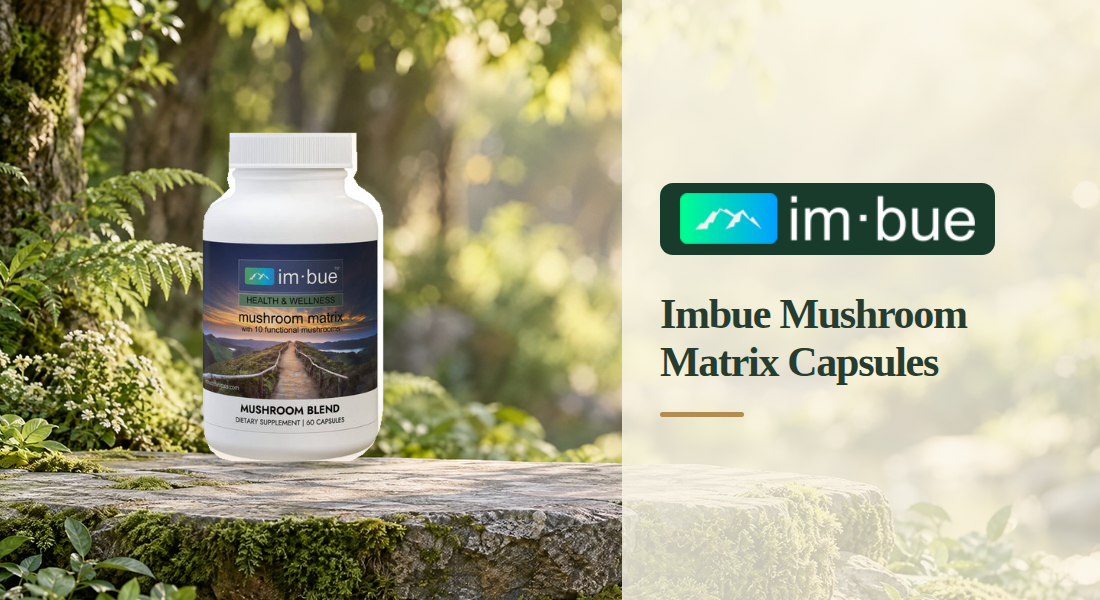
Mushroom Matrix Capsules provide an interesting example of how these different mushroom materials can be included in one multi-ingredient formulation.
Understanding What Fruiting Bodies Are
The fruiting body is the visible reproductive structure of a mushroom. It is the part most people recognize when they see a mushroom growing in nature or purchased as food. Its main biological role is producing and releasing spores that allow the fungus to reproduce.
Fruiting bodies contain naturally occurring compounds, including polysaccharides, dietary fibers, and other substances. Their composition can vary depending on the mushroom species, growing environment, maturity, and processing methods.
Many supplement manufacturers use fruiting body powders or extracts when developing mushroom-based products. The ingredient list may identify the species and indicate whether the material comes from the fruiting body. This information helps customers understand which part of the mushroom is included.
What Is Mycelium in Mushroom Formulations?
Mycelium is the network of fine, thread-like structures that forms the main vegetative body of a fungus. It grows through a suitable food source or growing medium, absorbing nutrients and supporting the organism's development.
Unlike a fruiting body, mycelium is generally not the familiar mushroom-shaped structure. It develops throughout the growing environment and plays an essential role in the mushroom life cycle.
Mycelium can contain naturally occurring fungal compounds, although its composition may differ from that of the fruiting body. The species, cultivation method, growth medium, and harvesting process can influence the final material.
In supplement labels, mycelium and fruiting body should not be treated as interchangeable terms. They describe different fungal structures, and understanding this distinction makes ingredient research more useful.
How Both Mushroom Materials Appear in One Formula
Some mushroom supplements combine fruiting body extracts with mycelium-based ingredients. This approach allows manufacturers to include different forms of mushroom material in a single formulation.
The product information from Imbue Botanicals identifies Cordyceps Sinensis Powder sourced from mycelium. It also lists several mushroom extracts identified as fruiting body ingredients, including Reishi, Shiitake, Lion's Mane, Maitake, Turkey Tail, Chaga, Royal Sun Agaricus, White Button Mushroom, and Black Fungus.
This combination illustrates how a Mushroom Blend Supplement can bring different mushroom species and fungal structures together. However, the presence of multiple ingredients does not mean that every mushroom contributes the same amount or has an identical composition.
Customers should review the complete ingredient list to understand which materials are used rather than assuming that every ingredient comes from the same mushroom structure.
Exploring the Different Mushroom Varieties
A multi-species formulation can include mushrooms with different botanical identities and naturally occurring compounds. Each variety has its own characteristics, which makes ingredient identification important.
Lion's Mane is a distinctive mushroom recognized by its white, cascading appearance. Reishi has a firm, fan-shaped fruiting body and a long history of use in traditional preparations. Shiitake is also widely known as an edible mushroom.
Cordyceps Sinensis is a different type of fungus, and the product lists its powder as mycelium-derived. Maitake, Turkey Tail, and Chaga provide additional variety within the formulation. Royal Sun Agaricus, White Button Mushroom, and Black Fungus further expand the ingredient selection.
These ingredients are part of what makes 10 Mushroom Blend Capsules different from a product containing only one mushroom species. Their inclusion describes the variety of materials in the formula, not a guarantee of specific health outcomes.
Understanding Extracts and Mushroom Powders
Mushroom supplements can contain either powders or extracts. A mushroom powder is generally produced by drying and processing mushroom material into a usable form. An extract undergoes additional processing to obtain selected compounds from the source material.
The distinction matters because the final composition may differ depending on how the ingredient is prepared. Extraction methods, source material, concentration, and quality controls can all influence the resulting ingredient.
A Functional Mushroom Capsules formula may combine different extracts and powders. Reading the product label helps customers understand whether individual ingredients are identified by their species, source structure, or preparation method.
The ingredient list for the Imbue Botanicals formula identifies several mushroom extracts alongside Cordyceps mycelium powder. This provides a clearer picture of the different materials used in the product.
Why Ingredient Transparency Matters
Ingredient transparency is important when evaluating any dietary supplement. A detailed label should help customers identify the mushroom species, the part used, and other ingredients included in the capsule.
For example, a label that identifies fruiting body or mycelium provides more information than one that simply lists a mushroom name. Customers can also look for details about extraction methods, ingredient quantities, and available laboratory testing.
A Mushroom Complex Capsules product may contain several species, but the number of ingredients alone does not establish its quality. Reliable documentation, clear labeling, and appropriate manufacturing practices are also important considerations.
The product information from Imbue Botanicals states that its capsules are third-party laboratory tested and manufactured in the USA using globally sourced ingredients. Customers can review the available product documentation to learn more about its quality information.
Understanding the Vegan Capsule Format
The capsule material is another detail worth examining. Some traditional capsules use gelatin, while vegan alternatives use non-animal-derived materials.
The product lists cellulose as its vegetable capsule material. It also identifies microcrystalline cellulose and magnesium stearate among its inactive ingredients.
Vegan Mushroom Capsules can be suitable for people who prefer supplements made without animal-derived capsule materials. However, customers should always review the complete ingredient list because vegan suitability depends on the entire formulation and manufacturing process.
What to Consider Before Choosing a Mushroom Supplement
Before purchasing a mushroom supplement, customers can examine several practical details. These include the mushroom species, the use of fruiting bodies or mycelium, the form of each ingredient, capsule materials, serving instructions, and available testing documentation.
It is also useful to distinguish between a product's ingredient description and evidence of its effects. Research into functional mushrooms is ongoing, and findings from laboratory studies do not necessarily establish the same outcomes in people.
Anyone considering a dietary supplement should follow its label instructions and consult a qualified healthcare professional if they take medication, have an existing medical condition, or have concerns about possible interactions.
Final Thoughts
Fruiting bodies and mycelium are two different structures within the mushroom life cycle, and both can appear in modern supplement formulations. Understanding their roles helps customers read ingredient labels more carefully and recognize differences between mushroom powders and extracts. Imbue Botanicals provides a multi-mushroom formulation that identifies Cordyceps mycelium powder alongside several fruiting body extracts. Reviewing these ingredient details, capsule materials, and available testing information can help customers make informed decisions based on the product's actual composition.
Frequently Asked Questions
1. What Is the Difference Between Fruiting Bodies and Mycelium?
Fruiting bodies are the visible reproductive structures of mushrooms, while mycelium is the network of thread-like fungal structures responsible for growth and nutrient absorption.
2. Does Every Mushroom Ingredient Come From a Fruiting Body?
No. Some mushroom ingredients are sourced from fruiting bodies, while others may use mycelium. The ingredient label can identify which structure is used.
3. Why Are Fruiting Bodies Used in Mushroom Supplements?
Fruiting bodies contain naturally occurring mushroom compounds and can be processed into powders or extracts for dietary supplement formulations.
4. What Is Cordyceps Mycelium Powder?
Cordyceps mycelium powder is made from the vegetative fungal structure of Cordyceps. Its composition can depend on the species and cultivation and processing methods.
5. What Should Customers Check on a Mushroom Supplement Label?
Customers should review mushroom species, ingredient sources, serving information, capsule materials, manufacturing details, and available third-party laboratory testing.

 English
 Arabic
 French
 Spanish
 Portuguese
 Deutsch
 Turkish
 Dutch
 Italiano
 Romaian
 Portuguese (Brazil)
 Greek