


Which Product Details Should Buyers Confirm With relayfactory?
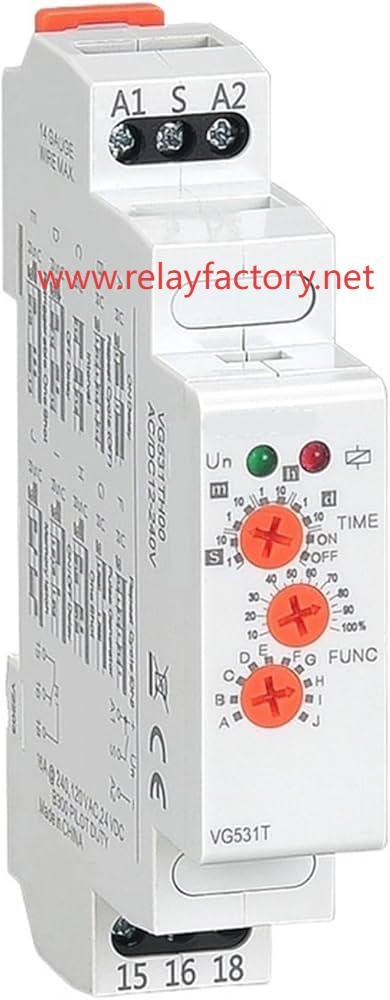
Multifunction Time Relay selection requires buyers to look beyond basic electrical specifications and consider how different operating functions work within their equipment. For industrial equipment manufacturers, electrical distributors, and OEM purchasing teams, selecting a suitable device involves evaluating control sequences, input configurations, output arrangements, installation conditions, and product flexibility. Understanding these details before ordering helps buyers communicate their requirements and identify a configuration that corresponds with their application.
Compare Available Operating Modes
One important consideration is the range of operating modes supported by the product. Different industrial systems may require different switching sequences, so buyers should identify the functions needed for their applications.
Common options may include on-delay, off-delay, interval operation, cyclic operation, pulse generation, and other control functions, depending on the model.
For example, an on-delay function can introduce a waiting period before an output becomes active. Cyclic operation can coordinate repeated activation and deactivation according to configured intervals.
Buyers should avoid selecting a product simply because its specification lists several functions. Instead, they should check whether the available modes correspond with their actual equipment requirements. Reviewing functional descriptions and wiring diagrams can help clarify how each setting operates.
Check Input and Output Configurations
Input and output arrangements influence how a device communicates with other electrical components. Buyers should examine the number of control inputs, available output contacts, and connection methods before confirming a model.
Some applications require a simple control signal, while others may involve separate start, reset, or inhibit inputs. These additional connections can support more specific operating sequences.
Output contacts also require attention. Buyers should confirm the contact arrangement, rated voltage, switching current, and intended load type.
For systems involving contactors, motors, pumps, or solenoid valves, the electrical characteristics of connected equipment should be considered during product selection.
Providing a circuit diagram or a description of the control sequence gives the manufacturer useful information for reviewing compatibility.
Evaluate Adjustment Methods and Setting Flexibility
The way operators configure a device can influence installation and daily operation. Buyers should check whether settings are adjusted through rotary switches, potentiometers, digital interfaces, or other available methods.
They should also identify the required adjustment range and setting resolution. Different applications may need short intervals, extended delays, or separate settings for repeated operating stages.
For equipment used in production lines, convenient adjustment can help technicians configure the control sequence during installation and maintenance.
It is advisable to ask for product instructions and technical diagrams before purchasing. These materials allow engineering teams to review the configuration process and determine whether it corresponds with their working procedures.
Consider Compatibility With Existing Equipment
Electrical and physical compatibility should be evaluated before selecting a model. Buyers need to check supply voltage, AC or DC requirements, contact specifications, terminal positions, and mounting arrangements.
Physical dimensions are particularly relevant when a component needs to fit into an existing electrical cabinet. Available installation space, wiring access, and mounting structure should all be included in the evaluation.
Environmental conditions may also affect product selection. Temperature, humidity, vibration, and dust exposure should be considered according to the intended installation environment.
For replacement projects, buyers can provide information about the existing component. For new equipment development, sharing preliminary electrical drawings can help the manufacturer review the proposed configuration.
Discuss Customization With the Manufacturer
Different equipment projects may involve specific requirements that are not covered by standard configurations. Buyers should therefore ask which product adjustments can be discussed during the purchasing process.
Potential subjects include electrical parameters, terminal arrangements, housing dimensions, labeling, packaging, and operating functions. The feasibility of each request depends on product design and manufacturing conditions.
As a manufacturer, relayfactory values clear communication during project evaluation. Buyers can provide application details, expected quantities, technical drawings, and preferred specifications to support the discussion.
It is also useful to separate essential requirements from optional preferences. This allows both parties to review technical feasibility and commercial arrangements before confirming an order.
Request Samples and Review Product Documentation
Sample evaluation can provide practical information before a larger purchasing commitment. Buyers may use samples to examine dimensions, wiring connections, adjustment procedures, and operating behavior.
During testing, engineering teams should compare actual performance with the agreed specifications. Any differences or requested adjustments should be recorded and communicated to the manufacturer.
Technical documentation is another important consideration. Depending on the model, buyers may request product datasheets, wiring diagrams, operating instructions, and relevant inspection records.
For distributors and OEM customers, clear documentation can support product introduction, installation guidance, and communication with downstream customers.
Evaluate Production Arrangements for Repeat Orders
A purchasing decision should also consider how a manufacturer manages production and repeat orders. Buyers should discuss minimum order quantities, production schedules, packaging arrangements, inspection procedures, and shipping requirements.
For businesses sourcing components regularly, consistent product specifications and clear model identification can help simplify purchasing management.
It is also useful to communicate estimated annual demand and potential changes in future equipment designs. This information helps the manufacturer understand purchasing expectations and discuss suitable production arrangements.
Before confirming a supplier relationship, buyers should evaluate communication efficiency, technical responsiveness, and the clarity of commercial terms.For companies sourcing components for industrial automation and electrical control projects, product selection should be based on actual operating requirements rather than function counts alone. relayfactory provides product information and manufacturing communication for customers evaluating different control configurations. Buyers interested in operating functions, electrical specifications, or OEM purchasing arrangements can visit https://www.relayfactory.net/ to review the product range and discuss their project requirements directly with the manufacturer.

 English
 Arabic
 French
 Spanish
 Portuguese
 Deutsch
 Turkish
 Dutch
 Italiano
 Russian
 Romaian
 Portuguese (Brazil)